







– hospital records rise in suicide-watch admissions as counselling proves effective
AS Guyana continues to place greater emphasis on mental health, the Georgetown Public Hospital Corporation (GPHC) is strengthening its response to mental health challenges, with hospital officials highlighting the critical role of counselling and family support in patient recovery.
Chief Executive Officer of the GPHC, Robbie Rambarran, says while the number of mental health cases remains relatively consistent with previous years, the hospital has seen an increase in suicide attempts, resulting in more admissions to suicide-watch wards.
Speaking on the most recent episode of the Starting Point podcast, Rambarran said managing mental health cases remains one of the most challenging aspects of healthcare delivery.
“It is unfortunate, but it’s a difficult one to manage. But the recovery in mental health cases is there; counselling is working, because a lot of those patients after speaking to the doctor get better,” he said.
According to Rambarran, one of the most common concerns raised by patients is the absence of strong family support systems.
“Importantly, something that is absent, prior to these patients attempting suicide, is enough support, especially family support. Almost every one of our patients has complained about the lack of family support,” he added.
His observations were echoed by Psychiatrist Dr. Triston Griffith, who stressed that mental health should be treated with the same level of importance as physical health.
Speaking during a recent GPHC awareness programme marking Mental Health Awareness Month, Dr. Griffith highlighted the often-overlooked mental health impacts associated with chronic illnesses and autoimmune diseases.
He explained that conditions such as lupus can have both physical and psychological effects, including anxiety and depression.
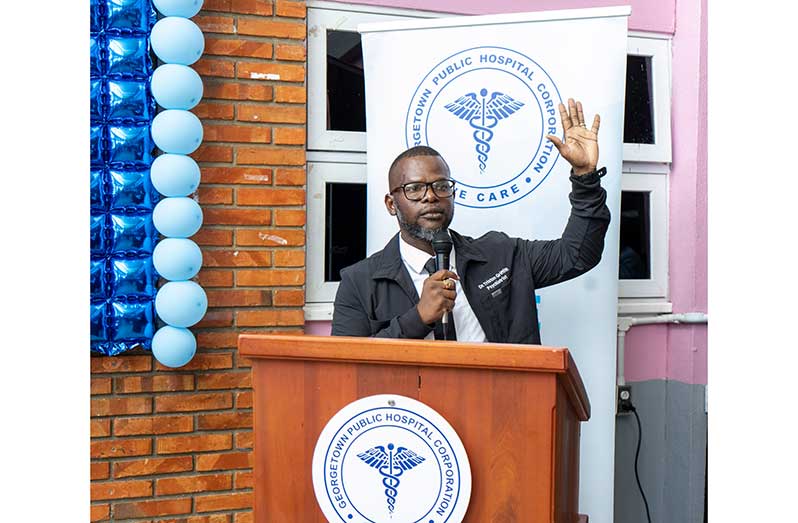
“Chronic inflammation in the body can also occur in the brain, which disrupts important neurochemical processes that govern our mood and our ability to sleep. A person with lupus or other autoimmune diseases that experience mental health conditions are not only affected by the psychological burdens of the illness,” Dr. Griffith said.
He urged persons experiencing mental health challenges to seek professional help and maintain open communication with family members and healthcare providers.
“Having mental health conditions while you’re also suffering from an autoimmune disease is not a sign that you’re a failure or that you’re weak, but it’s a direct manifestation of your illness. And so, speak to your physicians about how you feel. Have them seek expert opinions, if necessary,” he said.
Dr. Griffith also underscored the importance of family support in the recovery process.
“Talk to your family. The support system of your family is extremely important, but family members themselves can become burdened as roles tend to shift when persons have autoimmune diseases. And so sometimes people feel overwhelmed,” he explained.
“It’s important to ensure that as family members living with somebody that has an autoimmune disease, you are also taking care of your own mental health because you cannot pour from an empty cup.”
Addressing recent mental health-related deaths, Rambarran said the hospital continues to review and strengthen its protocols to better protect vulnerable patients.
“Mental health is a serious business and what happened to those patients was unfortunate. We wish we can save every patient, not just mental health patients, and especially patients who die from those circumstances. It is sometimes not easy for us to deal with,” he said.
To improve patient safety, GPHC has implemented several measures, including enhanced monitoring systems and modifications to facilities.
“We had to find ways of improvising how we put the grills on so that in the event of an emergency they can be easily removed, but not so easily removed by a patient,” Rambarran explained.
The hospital also utilises isolated wards for high-risk patients and ensures that staff members remain in close proximity to those under suicide watch.
According to Rambarran, the institution continues to see a significant number of suicide-watch admissions.
“We have also worked on improving our policies and clinical processes, how we manage these cases, and training the staff in a more advanced way. It’s quite an overwhelming number of patients that we have on a daily basis that are on suicide watch, double digits every day are admitted and placed on suicide watch,” he said.
Despite the challenges, he noted that the combination of medical intervention, counselling, social support and family involvement has been producing positive outcomes.
“Once they’re in our care and we start talking to them, get the doctors and social workers involved, get the family involved, have some conversations, and have them assigned to doctors or social workers directly for counselling, it has been working,” Rambarran said.




