






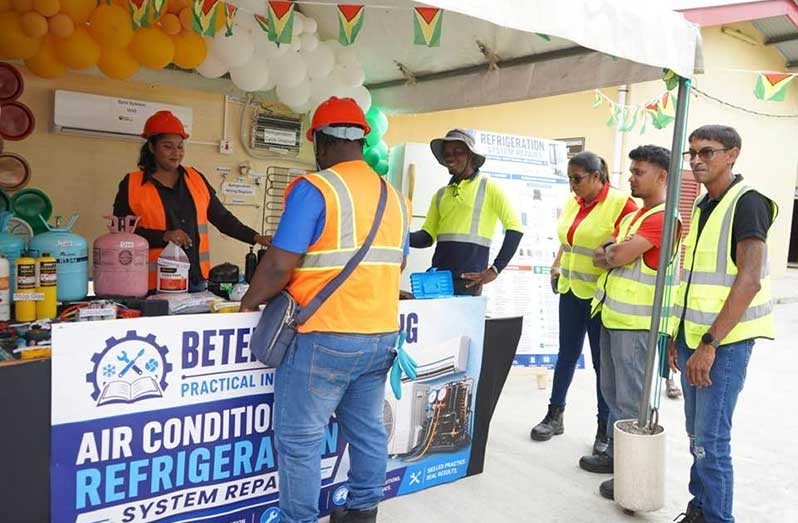

 TRAINEES of the Board of Industrial Training (BIT) demonstrated the practical skills and knowledge they acquired over the past several months during a final Practical Exhibition held recently at the Beterverwagting Practical Instruction Centre (PIC), highlighting the growing importance of technical and vocational education in Guyana’s rapidly expanding economy.
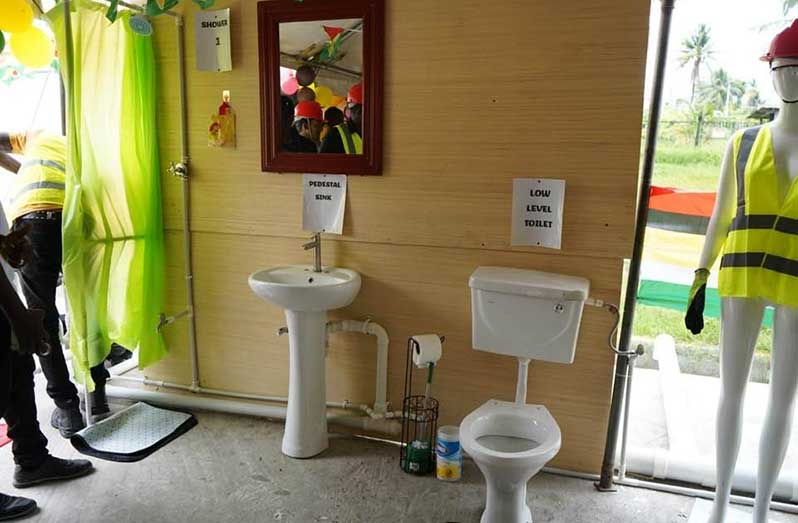
The exhibition featured participants from the Buxton and Beterverwagting training centres who displayed projects and portfolios developed through a range of competency-based programmes, including Commercial Food Preparation, Furniture Making, Electrical Installation, Information Technology, Air Conditioning and Refrigeration, Plumbing, Agro-Processing and Joinery.
Visitors were treated to an array of exhibits showcasing the trainees’ abilities, from professionally prepared meals, pastries, cakes, desserts and beverages to handcrafted furniture, plumbing installations and air-conditioning systems.
The event was attended by BIT’s Chief Executive Officer, Richard Maughn, Senior Monitoring, Research and Evaluation Officer, Nateica Garraway, Technical Officer, Quinola Legall and other officials, who commended the trainees for their dedication and the quality of their work.
The exhibition marked the culmination of months of hands-on training and provided trainees with an opportunity to demonstrate the competencies they have gained in preparation for employment, entrepreneurship or further technical education.
Officials noted that the practical displays reflected the Board’s continued focus on equipping Guyanese with industry-relevant skills that can support both personal advancement and national development.
The showcase comes at a time when demand for skilled labour continues to increase across Guyana, particularly in construction, manufacturing, hospitality, information technology and industrial services sectors. As the country’s economy expands, technical and vocational education has become a critical component of efforts to build a workforce capable of meeting emerging labour market needs.




