–Toshao highlights impact of government interventions on Region Seven community
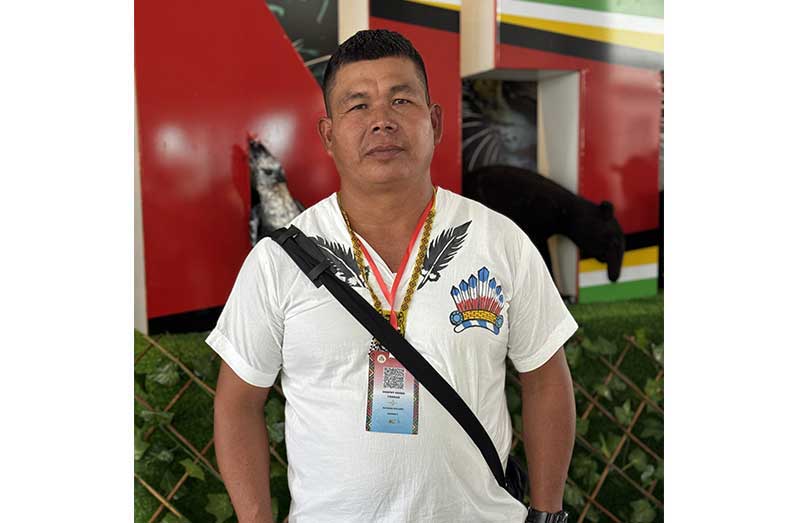
RESIDENTS of Batavia Village along the lower Cuyuni River are experiencing significant improvements in quality of life driven by recent government investments in education, energy, infrastructure and public services, according to Toshao Murphy Gomez.
Speaking during a recent government outreach in Region Seven, Gomez said the riverine community, which is home to approximately 700 residents, has undergone notable transformation since 2020, with upgrades in essential services and community facilities reshaping daily life.
The outreach brought together members of the Cabinet and local residents, providing a platform for direct engagement between policymakers and community leaders.
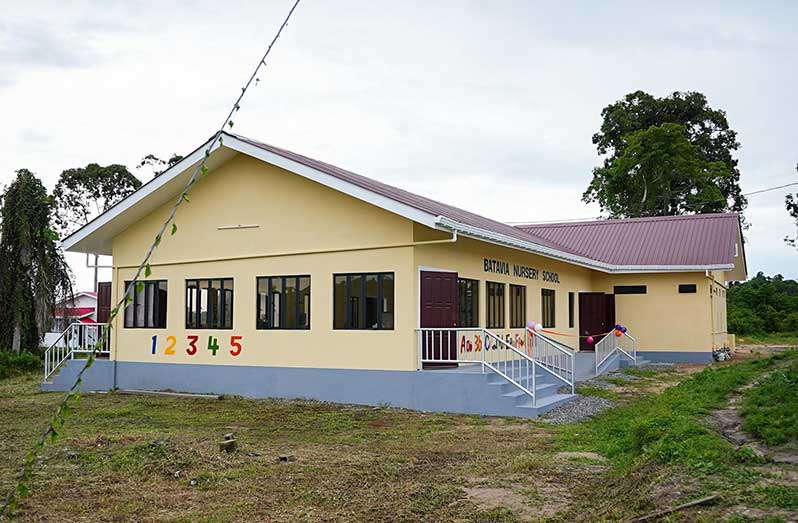
Among the most significant developments highlighted was the construction of a new nursery school, which Gomez said has improved early childhood learning conditions in the community.
“For education, we want to say thank you to the Ministry of Education for the new nursery school. Our children can now be in a comfortable place to learn on a daily basis, separated from the primary school,” he said.
The improvement forms part of broader efforts to strengthen educational access in hinterland communities, and improve learning environments for young children.
ENERGY TRANSITION THROUGH SOLAR POWER
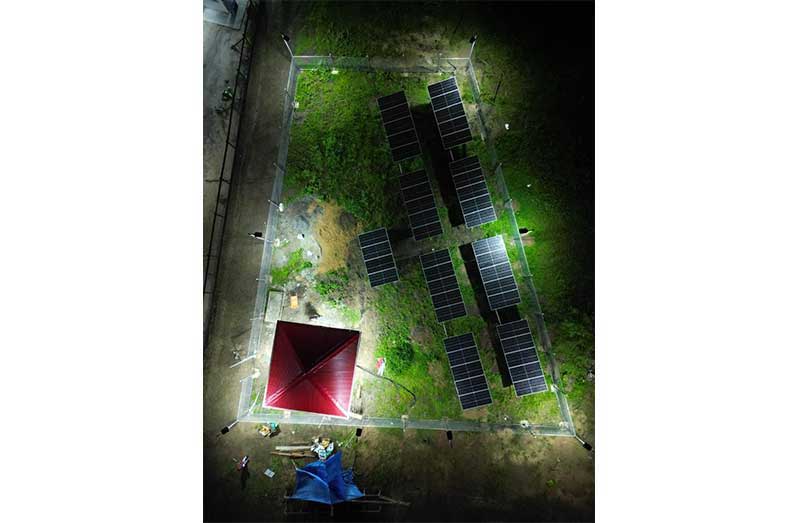
Gomez also pointed to major gains in energy access following the installation of a US$1.4 million solar energy project executed by CNOOC Guyana.
The project, launched in 2021, includes two fully operational solar farms supplying electricity to key community facilities, including Arian Island and the village centre, where several government buildings are located.
Previously, Batavia relied heavily on gasoline-powered generators, which residents described as costly and unreliable.
In addition to the solar farms, 51 household solar systems have also been distributed to families in the community.
“I want to say a big thank you to the Government of Guyana, also CNOOC, for providing us with two solar farms and 51 household solar systems,” Gomez said.
Access to clean drinking water has also improved with the commissioning of a newly constructed well, which now supplies potable water to residents across the community.
The development has contributed to improved public health conditions, and reduced dependence on limited or untreated water sources.
AGRICULTURE AND LIVELIHOODS
Agricultural development has also been a key focus, with residents benefiting from support through shade house projects, improved farming inputs and technical assistance.
Gomez said farmers have received seeds, pesticides and planting materials through the National Agricultural Research and Extension Institute (NAREI), helping to boost cash crop production in the village.
“For agriculture, we are grateful for the cash crop farmers being provided with the necessary crops they request from NAREI, seeds, and also pesticides, etc. Our shade house project, which was recently erected, is also progressing,” he said.
In the area of sports, Batavia has received a $1 million annual grant from the Ministry of Culture, Youth and Sport to upgrade its playfield.
Works are currently ongoing, including the installation of floodlights, aimed at improving recreational facilities for young people and encouraging greater community participation in sport.
“For sports, we are grateful to the Minister of Culture, Youth and Sport for granting us the $1 million to enhance our playfield,” Gomez said.
Residents have also benefitted from improved transportation services, particularly through the introduction of a school boat provided by the government.
The vessel now transports students and residents between riverbanks and key community facilities, including the school, health post, market and other public buildings.
“For transportation, we are thankful for the school boat that was given to us by the Government,” Gomez said. “It helps transport our school children daily and also serves residents travelling across the village.”
COMMUNITY SAFETY AND INFRASTRUCTURE
The village has also reactivated its Community Policing Group (CPG) in collaboration with the Guyana Police Force, strengthening local security arrangements and community involvement in safety efforts.
Infrastructure development has further included the construction of new bridges and a newly completed doctor’s quarters, improving access and services within the community.
Gomez also referenced national initiatives such as the Low Carbon Development Strategy (LCDS), the government’s cash grant programmes, the Ministry of Education’s Because We Care cash grant, and support from Community Service Officers, noting their collective impact on household welfare.
He said these programmes, alongside local investments, have contributed to improved living standards and strengthened confidence in national development efforts.
Concluding his remarks, the Toshao urged continued cooperation between residents and government, saying ongoing collaboration remains key to sustaining development gains.
“Let us continue to support our government. I want to say proudly and boldly that we are in good hands,” he said.