






—says Guyana remained firm and united as the country awaits the World Court’s ruling in the border controversy case
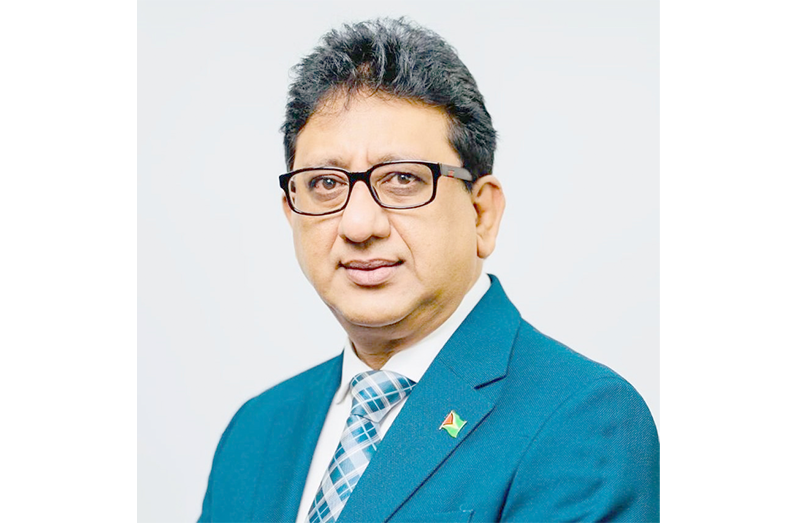
ATTORNEY GENERAL and Minister of Legal Affairs, Anil Nandlall, SC, has credited President Dr Irfaan Ali’s leadership as instrumental in steering Guyana through one of the most critical periods in its border controversy with Venezuela.
He also expressed confidence that the country will emerge successful at the International Court of Justice (ICJ).
Speaking on Tuesday night on his weekly programme, Issues in the News, Nandlall praised President Ali’s stewardship during heightened tensions surrounding the controversy.
He said the President’s approach helped Guyana maintain international support while remaining firm in defence of its territorial integrity.
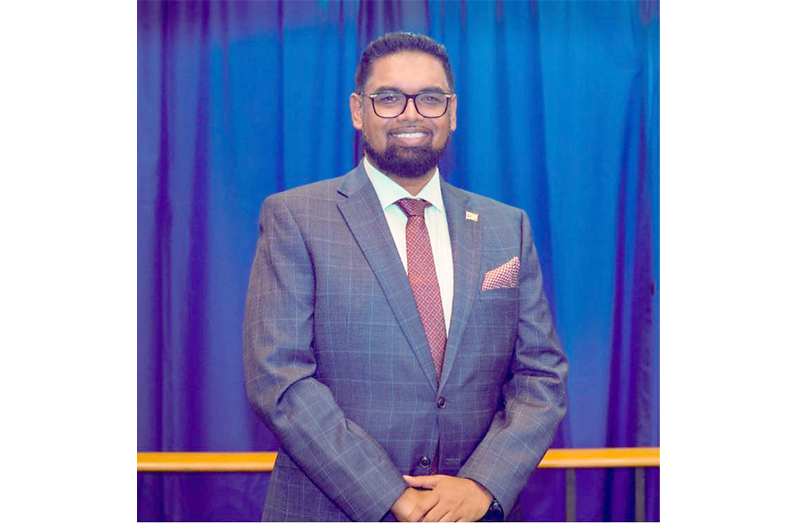
“His leadership demonstrated a level of maturity that far belies his age,” Nandlall said of President Ali. He added that the Head of State’s leadership was marked by “diplomacy, firmness, magnanimity” and calmness during periods of heightened tension.
According to Nandlall, President Ali played a significant role in rallying global support for Guyana’s position in the controversy and consistently demonstrated leadership during challenging circumstances.
“And I believe he was able to garner to our side most, if not the entire world. And he led from the front,” the Attorney General said, while recognising the President’s contribution nationally, regionally and internationally in advancing Guyana’s cause.
Reflecting on the period since the People’s Progressive Party/Civic administration returned to office in 2020, Nandlall said Guyana faced numerous challenges while pursuing the matter before the ICJ.
He noted that the country had to confront Venezuelan resistance to the court’s jurisdiction, acts of provocation and aggression, attempts to administer Essequibo through legislation, a referendum to disengage from the court, incursions into Guyana’s Exclusive Economic Zone (EEZ) and injuries to Guyanese soldiers.
Nandlall stated, “These were not normal circumstances to overcome, to remain calm, to keep the international and regional community on your side, while at the same time maintain a strong front.”
Despite those challenges, he said President Ali and the government remained unwavering in Guyana’s commitment to international law and the ICJ process.
“Not once did President Ali and the Government of Guyana waver from our position of principle,” Nandlall said, pointing to Guyana’s adherence to “the validity of the 1899 Arbitral Award, allegiance to international law, submission to the processes of the United Nations,” and reliance on the international system to resolve disputes among nations.
“We stuck to that path faithfully and fiercely,” he added. Nandlall disclosed that oral hearings in the case concluded on May 11 and that Guyana now awaits a ruling from the ICJ.
He further expressed optimism about Guyana’s prospects, noting, “From all indications, our legal team is very confident that we will succeed.”
The Attorney General also commended Guyana’s legal team, saying the country’s arguments before the court were strongly grounded in law, documentary evidence and historical facts.
He stated, “Our arguments were far superior in law, well supported by legal authorities, as well as documentary evidence and historical facts, when compared to that of Venezuela.”
He said the conclusion of oral hearings marked the end of Guyana’s direct contribution to the proceedings.
“As a litigant, we concluded our contribution in the matter, and all that is left now is for a decision from the court,” Nandlall said, describing the completion of hearings as “a crucial stage of the proceedings.”
Nandlall also acknowledged the contributions of numerous individuals and institutions, including officers of the Ministry of Foreign Affairs, whose diplomatic efforts, he said, laid the groundwork for Guyana’s case.
Among those recognised for their contributions were the late former Commonwealth Secretary-General and distinguished Guyanese statesman, Sir Shridath Ramphal, and the late Ambassador Elisabeth Harper.
“I want to recognise the work of Sir Shridath Ramphal, who did not see us to the end. He made a tremendous contribution,” Nandlall said, adding that Harper “also made a tremendous contribution” despite not seeing the matter through to its conclusion.
Guyana formally instituted proceedings before the ICJ on March 29, 2018, seeking a final and binding judgement confirming the legal validity of the 1899 Arbitral Award, which settled the land boundary between Guyana and Venezuela, and the boundary determined thereafter.
According to the Government of Guyana, that boundary was further confirmed through a 1905 agreement between the then British Guiana and Venezuela, which adhered to the unanimous decision of the arbitral tribunal for decades.
The ICJ has already ruled twice on its jurisdiction in the matter, first on December 18, 2020, and again on April 6, 2023, both times affirming that it has the authority to hear and determine the case. In addition to jurisdiction rulings, the ICJ has issued multiple provisional measures aimed at preserving the status quo while the case is pending.
The ICJ, colloquially known as the World Court, is the principal judicial organ of the United Nations. Headquartered at the Peace Palace in The Hague, Netherlands, its judgements in contentious cases are final, binding, and without appeal for the involved parties.




