IN a land on the north-eastern coast of South America, once a lost world, a hidden paradise, the eyes of the world have now been opened to its astounding beauty and uniqueness that enthral the mind and captivate the heart.
Guyana – the land of many waters.
Kara inhaled deeply as the plane reached its destination.
“Home, after twenty years.”
Her family had migrated to England when she was just eight years old, and she had never returned, Europe becoming home for her. But deep within her heart, as she grew from a child to an adult, the connection to a place that had once been home remained unbroken.
“It’s kinda strange,” she mused. “Or maybe it’s because the bond between mother and child is never broken.”
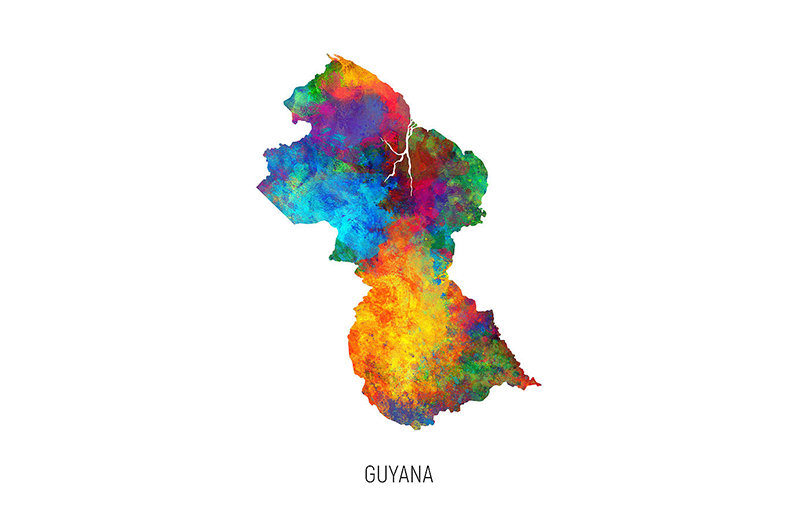
Her career as a journalist had taken her to many countries across the world, but the thought never left her mind that one day she would return to the land of her birth.
It was late at night when the plane landed, and as she stepped out of the airport, the cool breeze sent a warm thrill through her. She stopped and closed her eyes, embracing that moment, and announced, “I’m home, dear Mother.”
The hotel had sent a cab for her, and on the drive to the Princess Hotel on the East Bank, she was quite impressed by the improvements to smooth double-lane roadways and streetlights.
She smiled, a happy feeling within her as she checked in at the hotel and said to herself, “From tomorrow, I will become acquainted with you again, dear land.”
Kara awoke late the next morning and went downstairs to the restaurant for a scrumptious brunch with two of her cousins from the city. She had met them twice in New York and London when they were on vacation, and it was a happy moment seeing each other again. They had arrived earlier at the hotel, waiting to drive her to her old home in the ancient county of Berbice.
After the brunch, which Kara quite enjoyed, her cousin Vinita asked, “Are you ready?”
“Yes,” Kara answered excitedly. “Looking forward so much to this trip.”
The long drive was a journey to remember. Kara was awed by the green, lush landscapes, the grandeur of modern architecture, and the impressive housing schemes.
“New chapters of economies that have opened new frontiers of development,” she observed. “A third-world country on the rise.”
But what she loved even more were the food stalls along the roadway, selling tasty Guyanese delicacies, fresh fruits, sugarcane juice, and thirst-quenching coconut water.
“This is marvellous,” she exclaimed, sitting on a wooden bench under the shade of a huge flamboyant tree, relaxing in the ambience of the peaceful countryside.
They had stopped at a roadside stall, and she was enjoying the tasty cassava balls with hot mango sour that brought tears to her eyes.
The journey continued with a few stops for Kara to take pictures of old colonial churches and houses they saw along the way, priceless pieces of history. Soon they reached Rosignol, a community Amar said had come a long way, boasting some fabulous houses that were real showpieces and the Berbice River Bridge.
“Remarkable accomplishment,” Kara expressed.
They bought tasty, crispy cassava, plantain and sweet potato chips with mango sour from vendors who rushed to the car. It was afternoon as they drove along the Palmyra/No. 2 Road and turned into Canje to Kara’s old home in a sprawling settlement on the western side of the main road. The streets were paved, and she exclaimed in surprise, “This is wonderful!”
She asked Amar to stop the car so she could walk to get a feel for the street that held childhood memories, like falling off her bicycle on the then-bad road. She looked at the houses as she walked past, beautiful country homes with a variety of fruit trees and blooming flower gardens.
She saw faces she could not remember, who looked at her curiously, knowing from her outlook and accent that she was a foreigner. So she introduced herself, recognised by her father’s name, and soon the modest home she had lived in saw a steady flow of neighbours and extended family. It gave her such a wonderful feeling to be home again, and she listened, fascinated, to the Creole spoken, a unique mix of languages.
Kara was nudged awake early the next morning by soft devotional songs, the aroma of breakfast in the air and the creole fowl-cock crowing. She began her day with a splendid Indian breakfast of dhal, roti, steamed callaloo and stewed dry fish.
“Oh darn,” was all she could say after that meal, her eyes misting from the spiciness.
Later in the morning, she shared candies with the children in the neighbourhood who were thrilled by her British accent, and one young boy boldly remarked,
“You like wan ah dem James Bond 007 gyal friend.”
“What!” she said, laughing, surprised they knew the Scottish actor.
“The children these days,” Vinita told her, “know everything because every home has a television now.”
“That’s great.”
And in a moment of reminiscing, she said quietly, “Growing up as a child here, we had radio and storytelling nights.”
The next day, she took a walk along the streets where she used to play games and ride her bike. She had the names of some people her father had given her to get acquainted with, but most of them were no longer there.
“Where has everyone gone?” she asked, a bit perturbed.
“Migration,” was the answer.
“Oh yes,” Kara acknowledged. “My family was a part of that exodus.”
Looking at the list of names in her hand, a tinge of regret touched her heart. A separation that left a deep yearning where hands could not touch anymore, distanced from loved ones by thousands of miles, for life had created more journeys other than across the Kala Pani.
That night, she took some family members and neighbours out to New Amsterdam. The town had risen to greater heights with television stations, hotels, supermarkets, restaurants and nightclubs. It was a night of fun, laughter and great food, Banks Beer and El Dorado rum, when the troubles of the world were forgotten.
A couple of days later, she went on a trip to the Corentyne, another wonderful experience for her because this place she had no memory of. Vinita, a regular visitor to Corentyne, described to her the developments over the years, leaving Kara truly impressed. But what impressed her more was the University at Tain, a world of opportunity for the young people striding with the great advances of tertiary education.
“It had some problems, though,” Amar stated.
“What doesn’t?” Kara responded. “Problems are a norm all over the world, but it’s how you address issues to find solutions that make a difference.”
“Totally agree with you,” Vinita said. “But right now I’m hungry.”
They stopped at a Chinese restaurant, and Kara surprised her cousins by saying she could speak Chinese, having completed a few assignments in China. The proprietor was quite pleased with his new customer, and even more so when she told him she had once eaten at his uncle’s restaurant in Zhi Jian.
“Talk about a small world,” Vinita expressed. “And you’re quite an amazing woman.”
After quite an enjoyable lunch, they drove further up the countryside through Springlands, an established township; the impressive Skeldon Market; the historical sugar estate; the beautiful community of Line Path; and into Crabwood Creek. This was an area that was remarkably developed through farming, business, and trade with neighbouring Suriname. The ferry crossing at Moleson Creek was another great accomplishment and the end of the visit.
Kara felt a deep sense of satisfaction as they left Corentyne, back to Canje to relax for another day. Everywhere she went, and everything she saw was beyond her expectations, leaving an indelible mark on her mind. So when it was time to leave, she felt sad saying goodbye to a place where a piece of her heart had always been.
“So you know what,” she declared, “this is not ‘Goodbye’, this is ‘See you again later’.”
There were many places left to visit, so many more amazing things to see that she knew she would definitely make more visits.
And as she left her beloved land at the end of her vacation, the thoughts in her mind were:
“I came back after such a long time because my identity was not lost, my legacy of belonging not broken, and with that I can paint a rainbow in the sky.”