






–MoH’s Epidemiologist
THE discovery of widespread, previously undetected vision problems among children and senior citizens has prompted the Ministry of Health to expand its eye-testing and spectacles voucher programme to all age groups in 2026.
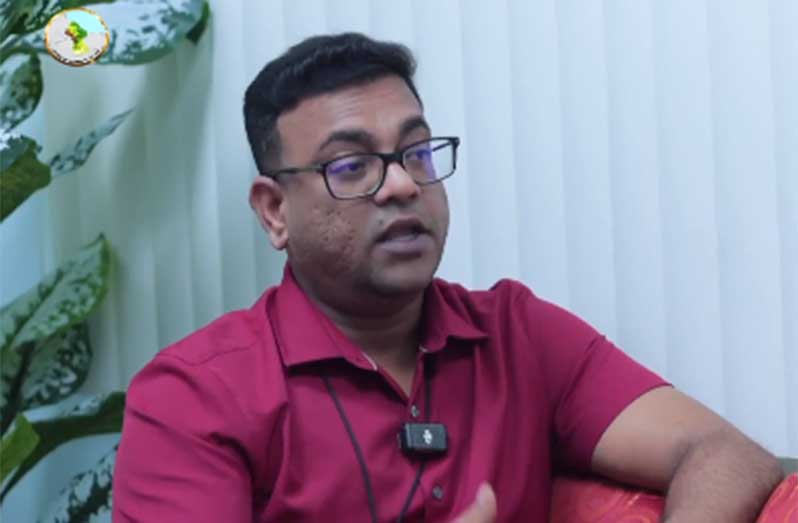
Epidemiologist Dr Anand Persaud said findings from the programme revealed that many Guyanese were unknowingly living with eye conditions, including short-sightedness, farsightedness and cataracts, highlighting the need for earlier intervention and broader access to screening.
“We saw in the results that we were getting a number of persons, whether they be children and senior citizens, that [sic] had several ailments of the eye,” Dr Persaud said during the Ministry of Health’s “Health Matters” programme.
“We saw a lot of persons with short-sightedness, farsightedness. In some of the senior citizens, we saw a lot with cataracts.”
According to Persaud, those findings, coupled with strong public demand, influenced the government’s decision to widen the initiative beyond its original target groups of children under 18 and adults over 65 years old.
He explained, “We had a great public demand, so across the healthcare facilities, across the service providers, we saw a lot of persons coming out to get their eyes tested.”
“The ranges between those two previous ranges – working adults and so on – they also said, ‘Hey, we want to be included too.’”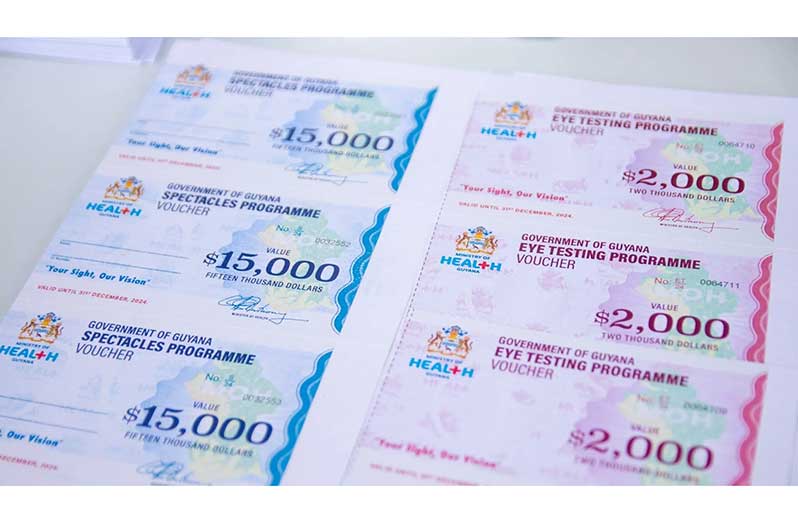
The eye-testing programme, introduced in 2024, initially focused on children and senior citizens, providing a $2,000 voucher for eye examinations and a $15,000 voucher to assist with prescription spectacles. Under the expanded initiative, Guyanese of all ages can now benefit.
Dr Persaud stressed that untreated vision problems can significantly affect education, productivity and quality of life.
“Eye health determines your livelihood, it determines your education and it determines your personal advancement,” he stated. “Whether you’re a child, whether you’re a senior citizen, a working adult, your vision plays a vital role.”
He explained that one of the biggest challenges is that many people wait until their vision worsens before seeking help, rather than screening early.
“You don’t necessarily think it’s important until something develops and impedes your vision, then you panic,” Persaud said. “What we’re trying to do is prevent that. We’re saying the government is providing the resources for you to go and test your eyes before.”
To underscore the importance of early testing, the epidemiologist shared his own experience of being diagnosed with short-sightedness as a child after teachers noticed a decline in his academic performance.
“I was unable to see on the board, and so I was not performing as well as I should,” he recalled, noting that many children may unknowingly struggle in school due to undetected vision problems.
Dr Persaud urged parents and working adults to take advantage of the programme, warning that early screening can prevent complications from worsening over time.
“You don’t necessarily think that a child might have an eye issue until you get to the optician and do the tests,” he said. “Utilise the opportunity, let your kids get their eyes tested. You might be able to identify refractive errors or issues that can be fixed from the early onset.”
Dr Persaud explained that persons must first use the $2,000 voucher to access an eye examination at an approved private provider.
If the examination determines that spectacles are needed, the individual can then return to a health centre or the Ministry of Health with the prescription to uplift the $15,000 voucher to assist with the cost of glasses.
He noted that the ministry has worked closely with private service providers to make eye care more affordable, with some providers lowering costs and, in certain cases, offering spectacles at prices close to the value of the $15,000 voucher.
The vouchers are available at health centres nationwide, with adults required to present identification such as a national ID card, passport or driver’s licence. Parents can also uplift vouchers on behalf of children under 18.




