






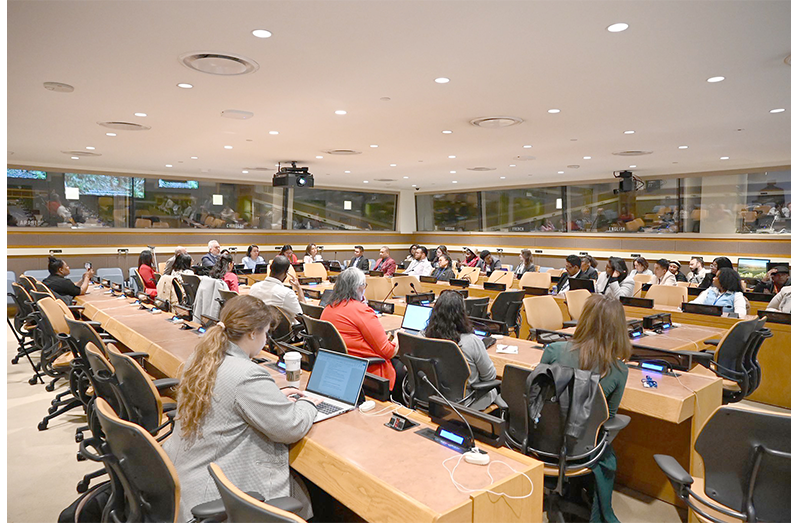
THE Government of Guyana, in partnership with Colombia, the World Health Organisation (WHO), and the National Toshaos Council (NTC), co-hosted a high-level side event during the 25th Session of the United Nations Permanent Forum on Indigenous Issues, highlighting efforts to strengthen healthcare delivery in Indigenous communities through self-determination.
The event, titled “Promoting Self-Determination while Advancing Quality Healthcare in Indigenous Communities”, brought together international stakeholders to examine inclusive, culturally grounded approaches to healthcare.
It was moderated by Guyana’s Permanent Representative to the United Nations Ambassador Carolyn Rodrigues-Birkett, while Minister of Amerindian Affairs Sarah Browne-Shadeek underscored the importance of empowering Indigenous communities to shape policies affecting their well-being.
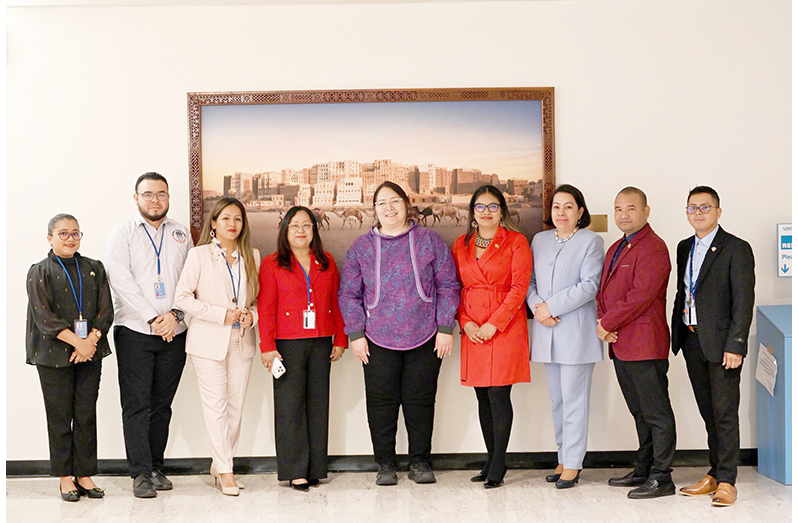
Presentations reflected a range of global and local perspectives. Colombia’s Deputy Permanent Representative Ambassador Raúl Sánchez addressed Indigenous health governance in conflict settings, while WHO’s Werner Obermeyer highlighted ongoing disparities in healthcare access.
Guyana’s contribution, delivered by Dr. Orin Lewis, emphasised the country’s commitment to integrating Indigenous voices into healthcare planning and delivery.
Additional contributions from government officials and NTC representatives spotlighted grassroots initiatives, and the critical role of community leadership in advancing sustainable health outcomes.
The forum drew participation from delegations including Kenya, Nicaragua, Indonesia, Colombia, and Canada, along with Guyanese civil society actors.
Notably, the Amerindian Peoples Association (APA) commended Guyana for its significant progress in improving healthcare access and promoting self-determination among Indigenous populations.




