






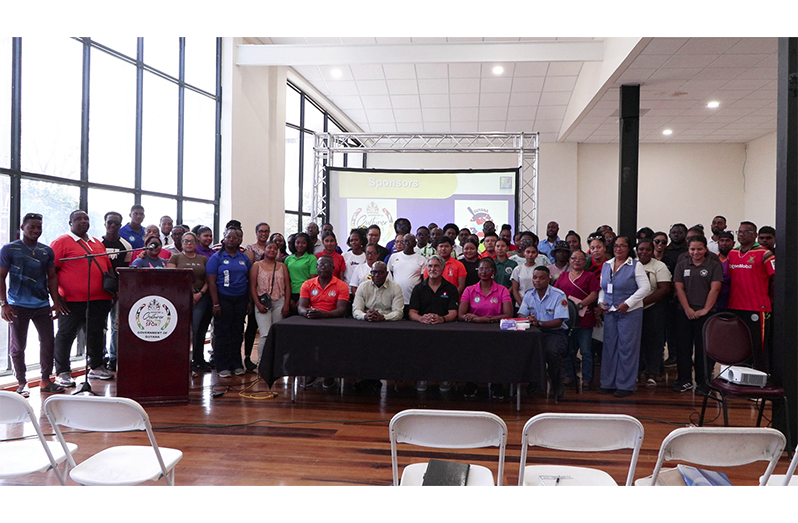
THE Cliff Anderson Sports Hall became the hub for a significant push in sports safety on Monday, as over 50 administrators and coaches gathered for an intensive First Aid and CPR training certification.
The initiative, a collaboration between the Guyana Life Saving Society (GLSS), the Canadian Life Saving Society, and the National Sports Commission (NSC), is designed to move the local coaching fraternity beyond mere technical instruction.
Instead, the programme aims to ensure that those leading Guyana’s athletes are equipped with the life-saving skills necessary to act as first responders during medical emergencies.
Director of Sport, Steve Ninvalle, described the collaboration as “unparalleled and historic.”
“The government of Guyana sees the safety of sportsmen and women, administrators, and every Guyanese as something important,” Ninvalle said during the event. “What we will learn from this First Aid programme, let us not keep it to ourselves; let us share it.”
The workshop is part of a broader safety mandate the NSC is implementing.
This strategy includes the recent certification of 13 waterfront lifeguards at Lake Mainstay last Friday, as well as the re-certification of 15 existing lifeguards—a process that is mandatory every two years to ensure standards remain high.
According to Ninvalle, the push for increased emergency preparedness is a direct response to the massive surge in public participation in sporting initiatives.
The government’s ‘Learn to Swim’ programme has seen a sharp increase in interest, climbing from 1,500 registered participants in 2025 to over 3,000 in 2026.
Faced with this growing demand, the NSC has committed to making the training seminar an annual fixture.
The Director of Sport emphasised that while the certification itself may only require renewal every three years, the Commission is prioritising the continuous development of personnel to keep pace with the growth of local sports.
Patrick D’Almada, representing the Canadian Life Saving Society, underscored the universality of the training. “First Aid is a life-saving skill, and we know something could happen to anybody,” he noted.
D’Almada highlighted the longevity of the partnership between the Canadian body and Guyana, which dates back to 2012.
He stressed that these workshops serve as vital building blocks, providing a structured pathway for participants to eventually reach instructor and advanced coaching levels.




