






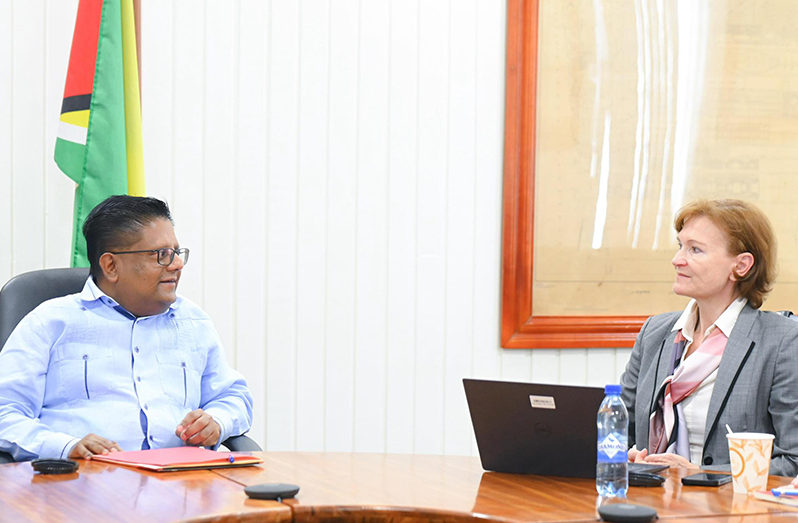
WORLD BANK’S Country Director for the Caribbean, Lilia Burunciuc, has commended Guyana for its tangible investments in climate-resilient infrastructure, highlighting the country’s efforts to preserve the gains it has made.
Speaking during a recent discussion on Guyana’s economic transformation on the National Communication Network, Burunciuc said investments made in building resilience have already demonstrated their value during recent episodes of intense rainfall across Guyana’s capital and other regions.
She recalled being warned of widespread flooding in Georgetown shortly before her arrival in the country.
“When I was preparing to fly to Guyana, the country office here called me and said, ‘Guyana is flooded. Georgetown is flooded because there are heavy rains. Make sure you take appropriate shoes,’” she said.
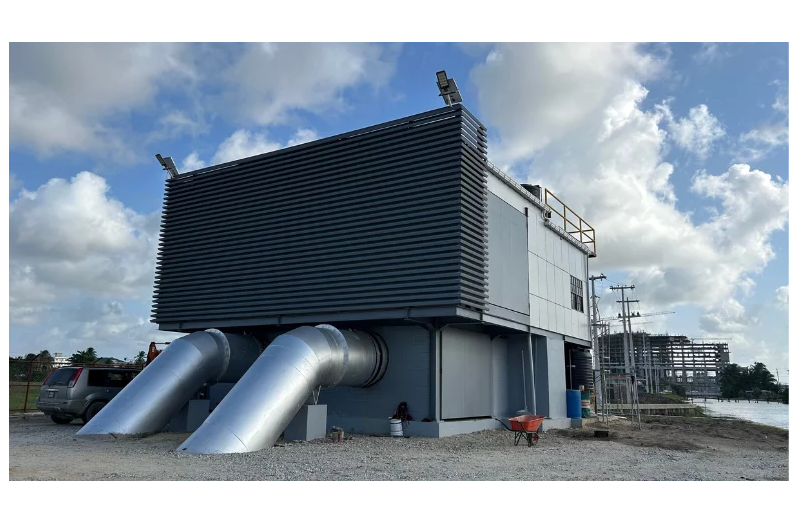
“So I land in Guyana, I come to Georgetown, and I asked people, ‘Where is the flooding? Where is the water?’ And they said the Liliendaal pumping station worked so well that it actually pumped out the water faster than we thought. So the water receded much faster than we expected.”
She stressed that such investments remain crucial to economies as they preserve assets and gains that countries have made.
“You can build a lot of infrastructure. You can put in place new buildings, new roads, new houses, but if they are flooded, then you have to start building everything from scratch. So investing in resilience is very important.”
The Liliendaal “bullet” drainage pump which Burunciuc references, is located on the East Coast of Demerara, and forms part of a wider programme to strengthen drainage and irrigation systems and flood-risk management infrastructure across Guyana.
Joining the discussion, Senior Minister in the Office of the President with Responsibility for Finance, Dr Ashni Singh, noted the facility has become an “invaluable” asset in protecting Georgetown and its environs.
Dr Singh explained that, for decades, Guyana’s low-lying coastal plain, much of it below sea level, has been highly vulnerable to flooding due to the combination of heavy rainfall and high tides. Successive Peoples Progressive Party/Civic (PPP/C) governments have invested heavily in sea defences, drainage canals and irrigation structures, but progress was constrained by limited fiscal space.
“In particular our vulnerability to climate change was for a long time because of our topography, because of the fact that we have a low-lying coastal plain below sea level. Any combination of heavy rainfall and high tides make this low lying coastal plain very, very susceptible to flooding,” he said adding:
“Any combination of heavy rainfall and high tides makes our low-lying coastal plain, very, very susceptible to flooding. And so for decades, in fact, perhaps for centuries, those parts of our population, the greater part of our population, which reside on this low-lying coastal plain, successive generations, have had to deal with the challenge of flooding, and we’ve recognised this for a long time.”
The pump station was constructed in partnership with the World Bank as part of a broader effort to reinforce the East Demerara Water Conservancy and upgrade drainage and irrigation networks along the coast. The Government is also using climate revenues from the sale of carbon credits under Guyana’s Low Carbon Development Strategy to fund further improvements, including upgrades to critical drainage structures and the construction of new canal systems.
Burunciuc further stressed that investment in resilience is essential to safeguarding Guyana’s recent development gains.
Guyana is currently among the fastest-growing economies in the world, supported by oil production and expanding non-oil sectors. However, its government and development partners have consistently warned that climate vulnerability remains a central challenge.
The World Bank’s support to Guyana now combines flood-risk management, climate-resilient infrastructure, and broader programmes aimed at strengthening human capital, including investments in education, digital skills and health systems. According to Burunciuc, the Liliendaal pump station is emblematic of how targeted climate investments can deliver immediate protection for citizens while underpinning long-term sustainable growth.
The modern infrastructure serves not only Liliendaal but also reduces flooding for Georgetown and nearby communities, including Turkeyen, Cummings Lodge, and as far as South Ruimveldt, due to the interconnected canals and drainage system.




