






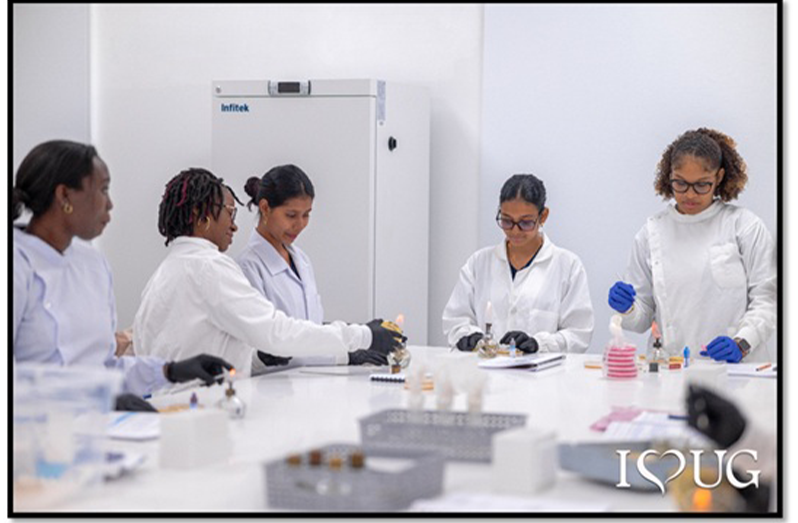
THE University of Guyana is set to launch a nationwide pre-medical programme across all ten administrative regions in early April, marking a major step toward expanding access to medical education, and strengthening Guyana’s future healthcare workforce.
The initiative, led by the university’s College of Medical Sciences, is designed to support the country’s growing demand for trained medical professionals, particularly as government advances plans to construct 14 new hospitals.
According to the university, the programme will initially accommodate approximately 200 students, and was developed in record time to meet urgent national needs. It forms part of UG’s long-term “One Graduate per Household” vision under its Blueprint 2040 strategy, which aims to broaden access to tertiary education nationwide.
Vice-Chancellor Paloma Mohamed Martin said the rollout represents a decisive move toward making medical training more accessible, while aligning with national healthcare priorities.
“The University’s goal is to ensure that the expansion of our medical faculty keeps pace with the national health vision,” she stated, noting that the regional programme is a critical step in widening opportunities for students outside Georgetown.
The rollout comes alongside other academic expansions, including engineering and infrastructure programmes already being delivered in several regions through the Faculty of Engineering and Technology. New construction-related courses are also expected to begin shortly at UG’s Tain Campus.
In parallel, the university is exploring options to support Guyanese medical students currently studying in Cuba. A team led by Dean Ranjini Kurup is working on a framework that could allow those students to continue their studies locally if necessary.
UG said the process is being treated as a priority, and involves coordination with key government agencies, including the Ministry of Health, Ministry of Education, and Ministry of Public Service and Government Efficiency. Any transition pathway, the university noted, will depend on academic assessments and regulatory approvals.
Oversight of the programme’s implementation has been assigned to Deputy Vice-Chancellor Emanuel Cummings, a former dean of the medical sciences faculty, to ensure that all initiatives meet international accreditation standards.
The expansion is supported by significant upgrades to the university’s infrastructure, including a new medical sciences building at Turkeyen, enhanced clinical training facilities at the Georgetown Public Hospital, and modern laboratory resources funded through partnerships with international and local stakeholders.
UG officials say these developments collectively position the institution to play a central role in delivering a modern, regionally accessible medical education system capable of meeting Guyana’s evolving healthcare demands.




