






-slams ‘incompetent’ City Hall for failing to keep drains clear, execute other basic responsibilities
DECLARING that the stark reduction in flooding that has long plagued the capital was a “clear result” of Central Government’s interventions, President Ali blasted the Mayor and City Council (M&CC) for its chronic incompetence and repeated failure to execute the most basic municipal tasks.
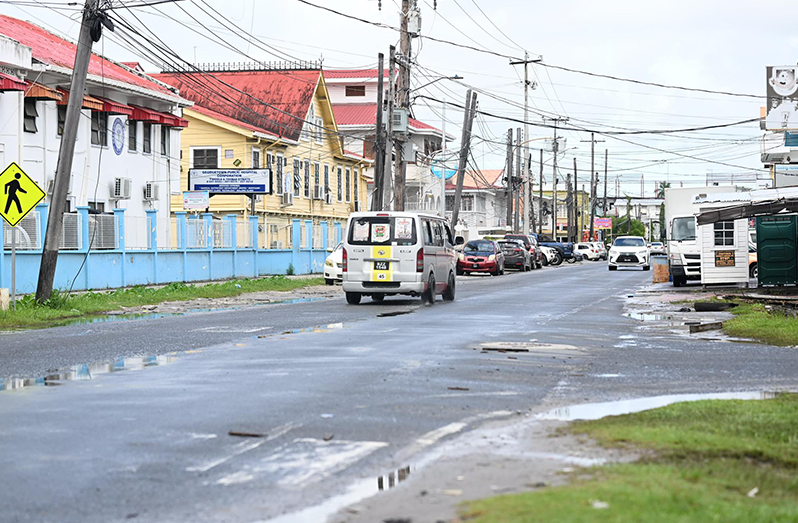
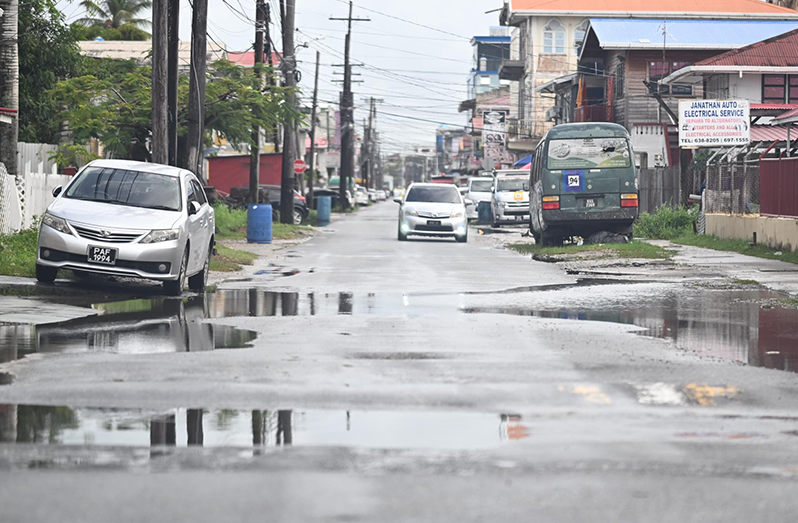
In a Facebook post on Sunday, the Head of State shared photographs of dry streets in Georgetown that are usually prone to flooding.
“This is what the city looks like today after prolonged, intense rainfall yesterday led to flooding across Georgetown — a clear result of the Central Government’s interventions to improve drainage in the city. Through the clearing of internal drains, the installation of pumps, and the desilting of outfall channels, floodwaters receded quickly,” he said.
Turning his attention to the City Council, President Ali emphasised it continuous failure to implement effective anti-flooding measures.
“What remains a major problem, however, is an incompetent City Council that has failed at the most basic responsibilities, including keeping drains clear, and ensuring proper garbage collection; failures that were once again exposed by the flooding,” he said.
Within the past week, the country has experienced intensive rainfall resulting in flooding mainly in Georgetown and its surroundings, including the East Coast of Demerara.
The government on Saturday activated a full-scale, nation-wide flood response as persistent heavy rainfall disrupted livelihoods and flooded homes. Ministers were deployed across multiple regions to assess conditions, engage residents, and ensure that critical drainage and emergency systems are fully operational.
The mobilisation came as the Hydrometeorological Service warned of the increased risk of flooding due to heavy rainfall.
On Sunday, the Civil Defence Commission (CDC) informed the public that the Hydrometeorological Service advises that rainfall with the potential for significant flooding is expected to continue over Guyana until Tuesday.
The CDC used the opportunity to urge all members of the public to take the necessary precautions during periods of rainfall and flooding; precautions which include avoiding flood-prone areas whenever possible, exercising extreme caution when driving or walking during rainfall, especially in areas affected by pooling water, keeping drains, trenches, and waterways clear to reduce the risk of flooding, and securing important documents, household items, and other valuables.
It was noted that recent rainfall has already saturated soils, and forecast conditions are expected to increase the risk of flooding, particularly in low-lying and poorly drained areas. Hilly regions may also face the risk of mudslides during periods of heavy rainfall, and thunderstorms may bring strong winds and lightning, adding to hazardous conditions.
According to the weather forecast, until Tuesday, the public should expect cloudy conditions with periods of showers, and that rainfall will be light to moderate with the heaviest on Monday, especially inland and southern areas (up to 60 mm), and then reduce to lighter showers by Tuesday and Wednesday (10–20 mm). Further, the Commission said forecasts indicate that Regions Five (Mahaica-Berbice) to 10 (Upper Demerara- Berbice) will continue to experience very unstable conditions for the remainder of the week, while coastal areas will also experience mild to moderate convection during the morning period, and inland areas will continue to experience unstable conditions.
The expected impact of severe weather include coastal flooding, drainage overflow and road inundation, agricultural flooding (crops and livestock at risk), riverine flooding, and possible community isolation, mining and hinterland access disruptions and transportation delays (airstrips, trails).




