






—As new technical staff strengthen nationwide communication amid upgrades to content
THE Ministry of Education’s Distance Education Unit (DEU) is advancing efforts to deliver equitable, high-quality learning across Guyana through a series of targeted training initiatives, content development programmes and planned technical upgrades.
Central to this push is the recent training of 20 site managers, described as the “eyes and ears” of the system, who monitor and maintain relay stations in remote communities, ensuring consistent transmission of educational content.
These efforts are supported by plans to upgrade transmission infrastructure and improve signal quality, alongside initiatives to gather feedback and data to guide decision-making.
Speaking to the Guyana Chronicle, Head of the unit, Phillip Williams, shared that by strengthening both the technical and content delivery aspects of the system, the Ministry aims to enhance the quality of education for every student, with a clear focus on improving examination performance and access to education.
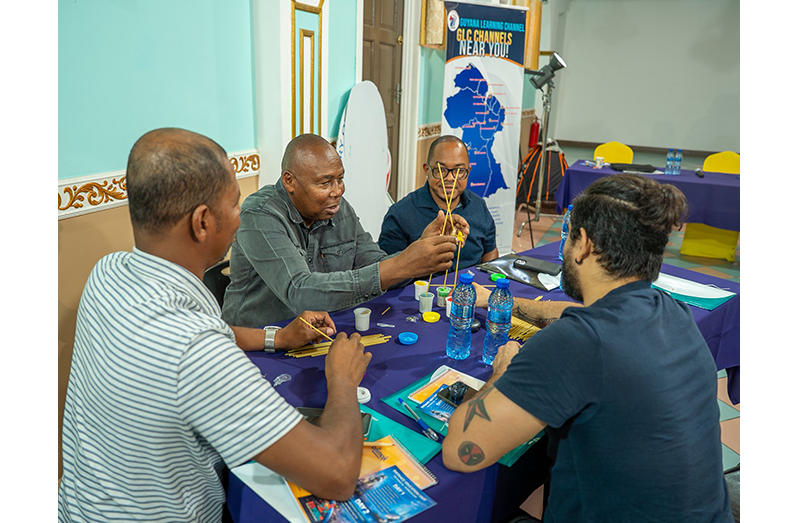
Following a two-day workshop this week, the Ministry of Education’s Distance Education Unit (DEU) is now better equipped with some 20 site managers. A simple yet impactful push saw these professionals trained to better facilitate communication across the region.
Giving insight into the work that these professionals will perform, Williams explained that these managers will be stationed at EdYou FM’s relay stations.
“The relay station takes the signal that we transmit to the satellite, pulls it down and then broadcasts it in the local community,” Williams pointed out.
The site manager’s role, he added, is to give a daily report on the equipment so that the main office can assess whether there is a need for maintenance or any other issues. The training, he added, aimed to equip them with the necessary tools.
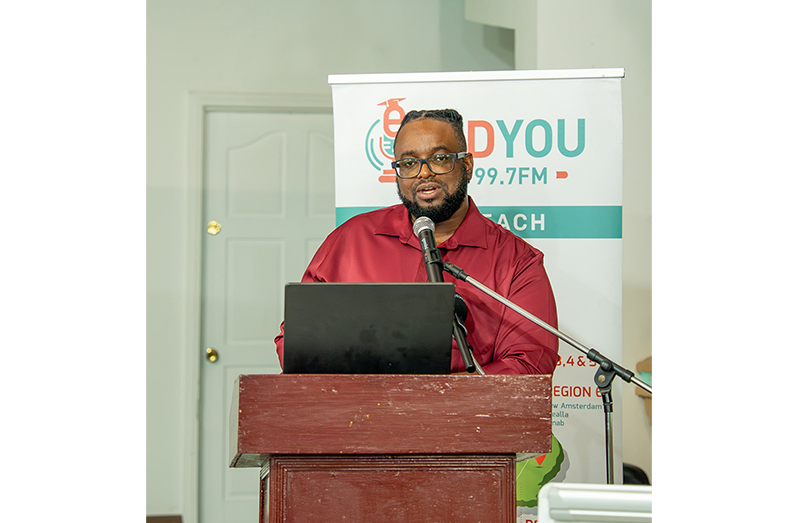
“The objective of this workshop was to give them basic troubleshooting skills so that we don’t have to send a team into the region all the time. We wanted to equip them with the ability to make minor adjustments, give us more accurate readings and understand how significant their role is in the network we have here in Guyana.”
This forms a part of the unit’s main goals and mandate. As Williams shared, the role of the DEU is to ensure that the same quality education that is delivered on the coast is delivered in the hinterland and remote areas.
Site managers, he added, are central to this goal, adding, “If a site is down and the site monitor doesn’t report it, then we wouldn’t know, so it is very important that they report accurately and in a timely manner.” While access to education continues to develop across Guyana, Williams shared that for a number of remote communities, EdYou FM is vital.
“This is affecting the lives of children and people in the community. In some communities, like Kato, we are the only radio station there, and this is the only source of news or information they get about what is happening outside of that area. They depend heavily on the education radio. It really speaks to the entire community. Our judgement is how well children do at exams, so they are helping to facilitate that by getting information to these areas.”
Moving forward, the DEU also aims to make technological improvements to the quality of its broadcast. As Williams shared, the aim is to upgrade the quality of the signal and revamp the content to better fit a wider demographic of students.
“There is an upgrade plan to improve the quality of the signal that we send. The first workshop was about improving content and making it more relevant to our demographics. The hardware upgrade and the content upgrade have to work in tandem, and we are pushing both simultaneously as we go through the year,” Williams said.
This comes as the unit has seen a growing response, as Williams highlighted that feedback has underscored the importance of the content delivered.
“When the station is down, you realise how many people depend on it because we receive a lot of complaints. That is one way we understand the impact,” he added.
Moving forward, the unit also has plans to expand its reach to more communities. As Williams explained, the current hurdle is Guyana’s topography and establishing radio stations and strong connections across the country’s hilly terrain.
“Many neighbouring communities to the places where we already have stations still need access. It is challenging because of the topography; you can have high mountains and low valleys. People in the mountains may get the signal, but those in the valleys may not,” he said.
In the year ahead, the unit aims to focus on improving coverage, connectivity, and reliability before shifting to expansion into more communities later in the year.
“For the second quarter, we are focusing on maintenance and improvement where we already have coverage, and later we will look at expanding our reach to neighbouring communities,” Williams said.




