






GUYANESE karting is set for a seismic shift this weekend as the “arms race” of engine tuning is swept aside in favour of a new, standardised era of motorsport.
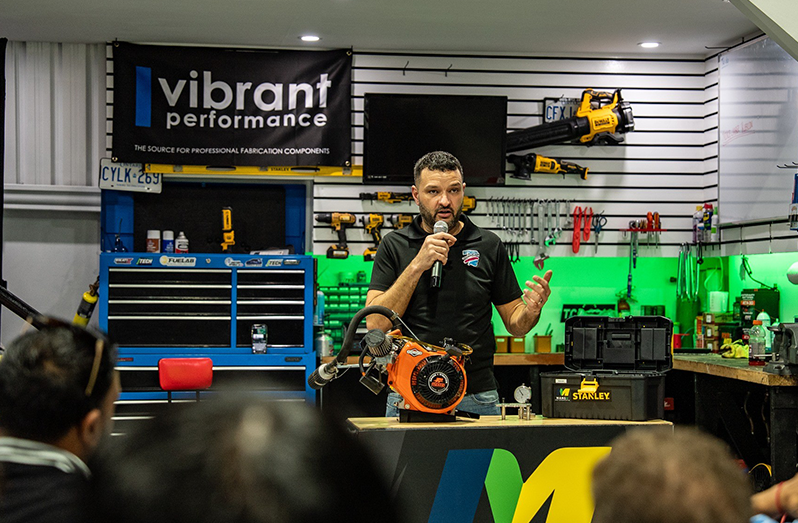
Led by the Jeffrey cousins, Kristian, Stefan, and Jean-Claude, Mango Motorsports hosted a pivotal technical seminar on Tuesday, marking the formal introduction of the Briggs & Stratton LO206 class to the local grid.
The session, held at the Automotive Art Workshop, served as the ultimate masterclass for mechanics and drivers looking to master the category that has become the gold standard for spec racing across North America.
For years, the barrier to entry in high-level karting has often been financial rather than physical. In many classes, the driver with the deepest pockets—and the most tuned engine—holds the advantage before the lights even go out.
The LO206 changes that. By using factory-sealed engines, the category effectively removes mechanical advantage, putting the result entirely back in the driver’s hands.
“This is the purest form of racing,” says Kristian Jeffrey of Mango Motorsports. “It’s about who can hit their apexes, who can manage their tyres, and who has the best race craft. It levels the playing field for everyone.”
To ensure the local contingent hits the ground running, expert Canadian race engineer Darryl Timmers was drafted in to lead the induction. Timmers spent the afternoon breaking down the technical nuances of the sealed power units, ensuring local mechanics are up to speed with the “out-of-the-box” philosophy.
The new class will see its first competitive induction this Sunday at the Guyana Motor Racing & Sports Club (GMR&SC) ‘Revival Karting’ meet.
The event is expected to showcase a packed grid of identical machinery, promising the kind of bumper-to-bumper action rarely seen in open-development classes.
“The session was really about bringing everyone together,” Timmers explained. “We want all racers to feel confident that they are starting on equal footing. When the engines are the same, the talent shines.”
For the Jeffrey family, the move is less about individual glory and more about the sport’s sustainability in Guyana.
By lowering the cost of entry and removing the need for constant, expensive engine rebuilds, the hope is to attract a new generation of talent to the track.




