






–strengthen power grid resilience in Guyana through collaborative initiative with GEA
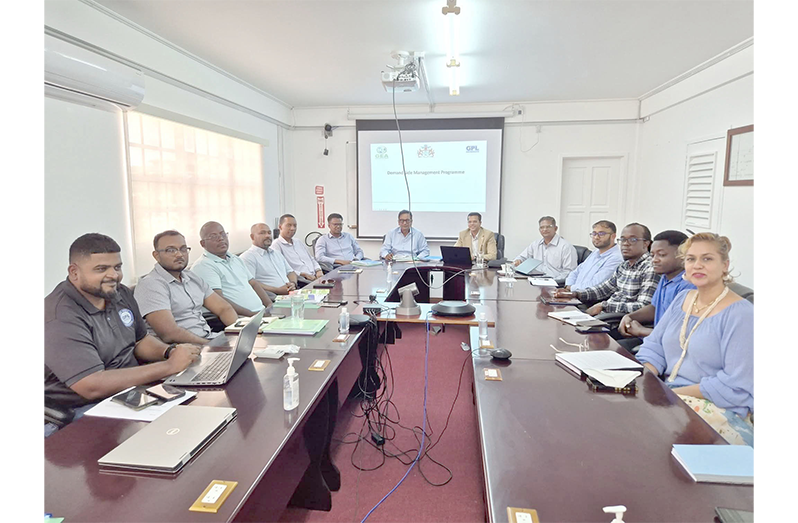
THE Guyana Energy Agency (GEA) and Guyana Power and Light (GPL) Incorporated met last Thursday at GPL’s Headquarters for the inaugural Demand Side Management (DSM) Programme meeting.
Demand Side Management, according to a press release from GPL, is a strategic solution for managing consumer electricity demand by promoting energy efficiency and conservation, so consumers can adjust the level and pattern of their electricity use, rather than relying on the expansion of power generation capacity.
It aims to improve electricity usage, reduce overall consumption across Guyana, prevent grid overload, enhance system stability, and lower emissions from the power sector.
Technical personnel from both agencies concurred that there is significant potential for demand side management to improve energy efficiency and encourage more responsible energy consumption.
A primary focus is enhancing energy efficiency through the adoption of energy-efficient equipment, including optimising existing devices and appliances to reduce electricity use without compromising consumer satisfaction.
This includes promoting efficient inverter air conditioners and refrigerators, upgrading outdated appliances that consume excessive electricity, and encouraging the purchase of Energy Star rated devices. These measures will help to lower overall electricity consumption and reduce energy costs for consumers.
Additionally, to support maximum-demand customers, the programme will facilitate energy audits and assessments in collaboration with relevant governing bodies, particularly across business sectors. These audits will identify opportunities to enhance energy use, reduce costs, and reinvest energy savings into operations.
Implementing energy audits and power factor correction initiatives enhances efficiency for high-demand customers, while strengthening overall grid performance.
Small-, medium-, and large-scale consumers and businesses will be educated and advised on these measures, with the utility company playing a key role in supporting, guiding, and enforcing corrective actions to ensure maximum-demand customers maintain an acceptable power factor.
Another integral action area of the DSM programme is the promotion of renewable energy sources. The programme will bring awareness to consumers building homes that are energy-efficient by using quality insulation, airtight construction methods, efficient windows and appliances, and renewable energy options like solar where feasible.
Through public awareness initiatives, consumers will be encouraged to adopt grid-tied solar photovoltaic (PV) systems for their households and businesses, especially first-time homeowners applying for electricity, to help meet growing energy needs and drive long-term behavioural change.
GRID-TIED SYSTEMS
Grid-tied systems integrate a building’s solar PV system directly into GPL’s network. These systems operate by capturing solar energy through photovoltaic arrays, which are then converted by an inverter to power the building’s electrical load.
Any excess energy is sent to the utility grid. The Net-Billing Programme allows customers with grid-tied solar PV systems to earn credits for any excess electricity that is fed from their PV system back into the utility grid.
It provides an additional financial incentive for renewable energy adoption, while helping consumers manage electricity costs and contribute to living sustainably.
A customer with a grid-tied installation is referred to as a ‘Prosumer’. The grid-tied and net-billing arrangement is formalised between GPL and the prosumer through the signing of a Standard Offer Contract (SOC), which outlines the relevant terms and conditions. Under this arrangement, GPL will compensate the prosumer for any excess energy exported to the utility grid.
“This is a programme that brings GEA and GPL together and provides a structured approach to developing a sustained and comprehensive demand side management programme,” said Dr Sharma.
According to Nandlall, the initiative is a timely collaborative effort that will help to foster behavioural change among consumers, and most importantly, drive the transition to renewable energy.
Under Guyana’s Low Carbon Development Strategy (LCDS) 2030, the Demand Side Management (DSM) Programme supports building a sustainable, low-carbon energy pathway by promoting energy efficiency and conservation solutions to improve the stability and performance of the national power grid.
By implementing these measures, the programme provides the utility company with an advantageous position in managing electricity supply and demand.




