






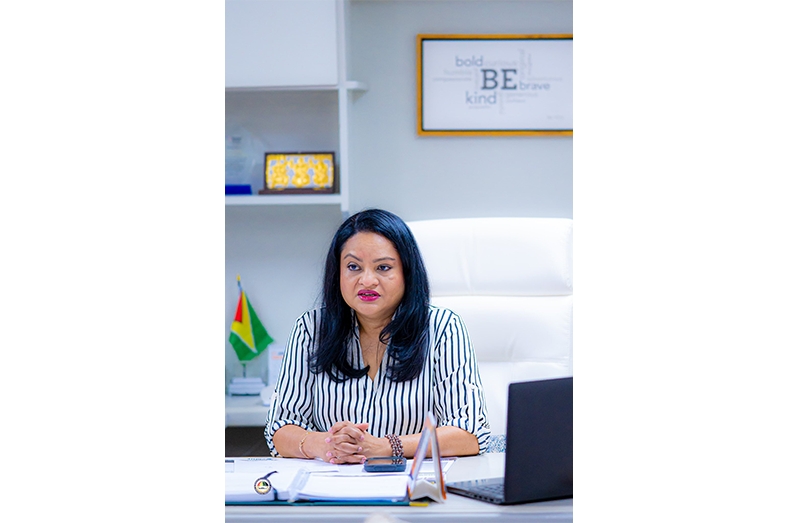
–Minister Persaud says in message on World Down Syndrome Day
MINISTER of Human Services and Social Security, Dr Vindhya Persaud, has emphasised the need for persons to continue giving hope and love to those living with Down Syndrome.
In her message on the occasion of World Down Syndrome Day, Dr Persaud said: “Today, I pay tribute to the many caregivers out there who are giving real support, care and love, to the many children and young people and the people who are living with Down Syndrome.”
On the topic of inclusion, the minister said true inclusion is not just making space at the table, but also ensuring that each unique voice at the table is heard.
“It is recognising that there is much more to be done, but it is also providing hope to all those who live with Down Syndrome,” Dr Persaud said, adding: “Let us ensure that we give hope, we give love and we combat loneliness.”
She remarked that it is also about recognising the many developments that have happened in the world, noting that it is not only about a diagnosis, but recognising milestones that have been achieved by consistent, patient work.
World Down Syndrome Day was observed on March 21, 2026, under the theme, “Together Against Loneliness.”
World Down Syndrome Day is observed annually on March 21. This special day was created to celebrate the lives of persons with Down Syndrome, and to ensure they have the same freedoms and opportunities as every other person.
According to the United Nations, Down Syndrome occurs when a person has an extra partial (or whole) copy of chromosome 21. There is no known cause for Down Syndrome, but it has always been a part of the condition. Down Syndrome exists across the globe, and commonly results in variable effects on learning styles, as well as physical characteristics and health.
This year’s theme, the UN said, is focused on raising awareness of how loneliness disproportionately affects people with Down Syndrome, and other intellectual disabilities, and their families.
This campaign called for real inclusion in schools, workplaces, and communities, and emphasised that being present does not equate to being included or truly connected. It asserts that everyone has a role to play in the creation of welcoming spaces, as well as meaningful relationships to help people feel they belong.
The theme also framed loneliness as a human rights issue, and urged for collective action to turn the UN Convention on the Rights of Persons with Disabilities into concrete change that ends isolation, and promotes full participation in society.




