






–U.S. mission to fan out at various health facilities across Guyana
OVER the next few weeks, the Lesser Antilles Medical Assistance Team (LAMAT) Mission will work with local health authorities to strengthen medical capacity as the mission begins its 2026 initiative here.
During the opening ceremony, which was held on Monday at the Guyana Marriott Hotel, it was noted that this is the third such mission here, and the collaborative medical mission will be conducted from March 16 to March 27.
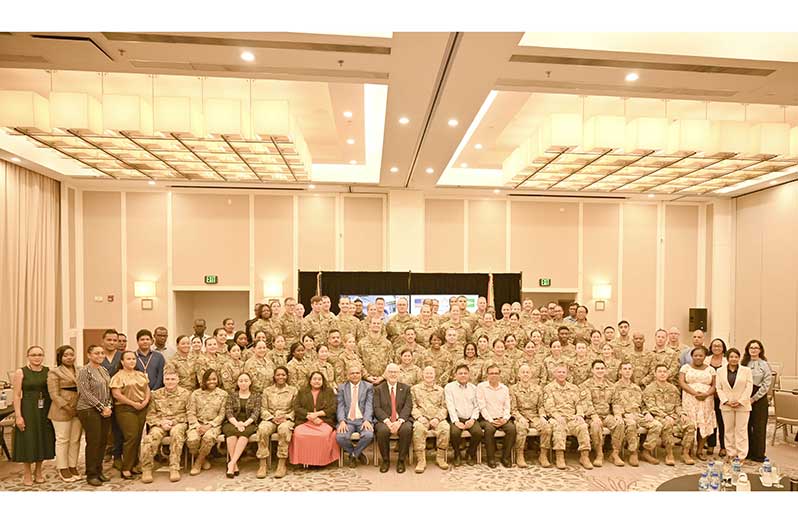
The visiting contingent comprises around 80 U.S. medical personnel who will execute the LAMAT 2026 medical mission.
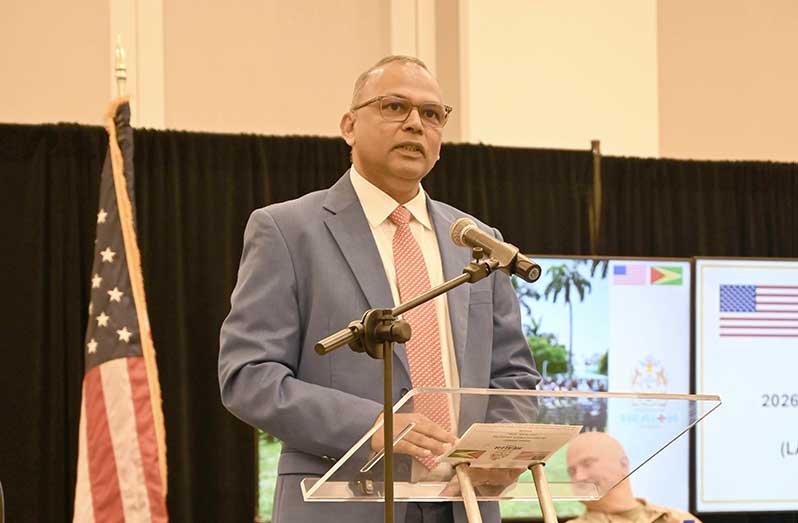
Speaking at the opening ceremony for the mission, Minister of Health, Dr Frank Anthony, welcomed the return of the United States-led medical team and emphasised the value of the exchanges between local and visiting professionals.
“We’re very appreciative of this mission coming to Guyana, and this is the third mission, so probably we must be doing something right to get you guys to come back so often,” the minister remarked.
Reflecting on the impact of the previous engagements, Dr Anthony noted that the collaboration has already helped to expand the scope of medical services offered locally.
“One of the things that we learned from those missions was that the team coming from the US was able to work seamlessly with our local teams, and we were able to build a lot of capacity,” he added.
Dr Anthony pointed to an example from a previous mission, during which specialists were able to perform a complex ophthalmological procedure that had not previously been attempted in Guyana.
“There were surgeries that we hadn’t done in Guyana before… one that stood out was surgery for a child that was almost nine, and they were able to operate on that child to provide some vision,” Dr Anthony said.
Against this backdrop, he noted that such exchanges allow local professionals to extend the boundaries of where they can go in medicine, while also giving visiting teams an opportunity to gain experience working in different healthcare settings.
This year’s engagement is expected to be the largest since the mission began operating in Guyana, with visiting medical teams working alongside local healthcare providers at several institutions, including the Georgetown Public Hospital Corporation, the Cheddi Jagan Dental School, Diamond Regional Hospital, West Demerara Regional Hospital and the De Kinderen Regional Hospital.
Dr Anthony also noted that the mission will include an additional training component, with specialists from the University of Miami expected to join the programme to support training, and professional development for local healthcare workers.
“We look forward to this partnership being an enduring one, because we really want to see many more training opportunities,” he said.
The Health Minister went on to add that collaboration with international institutions can help to strengthen what is already being done here.
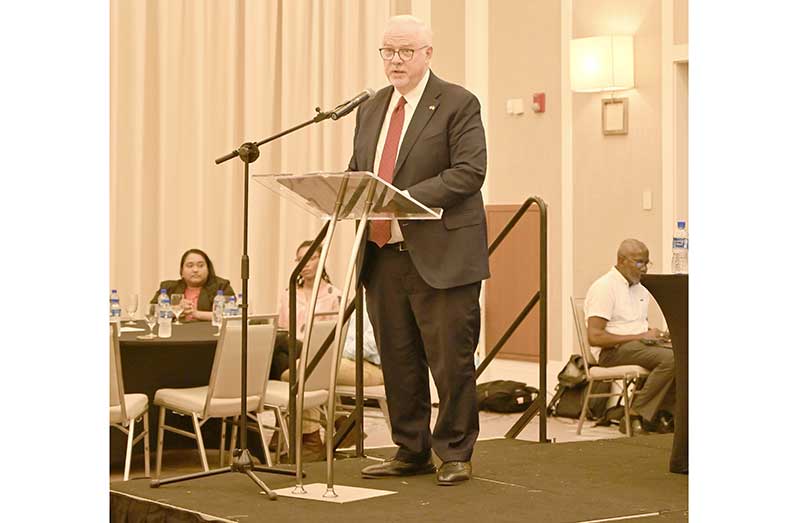
Meanwhile, Deputy Chief of Mission at the U.S. Embassy in Guyana, John Crippen, said the mission forms part of broader regional efforts to strengthen healthcare systems and partnerships.
“LAMAT’s overall goal is to work with and support the medical professionals in Guyana, Suriname, St Lucia and St Kitts and Nevis to provide medical and dental treatment to patients in need,” Crippen said.
He added that the initiative will utilise more than US$300,000 in medical supplies while facilitating the exchange of knowledge and experience among medical professionals.
“Over the next two weeks, we look forward to working alongside Guyanese partners to deliver essential medical services, exchange expertise and engage with communities across the country,” he said.
Additionally, mission commander Colonel Theodore Liszeski underscored that the initiative is built on partnership rather than one-sided assistance.
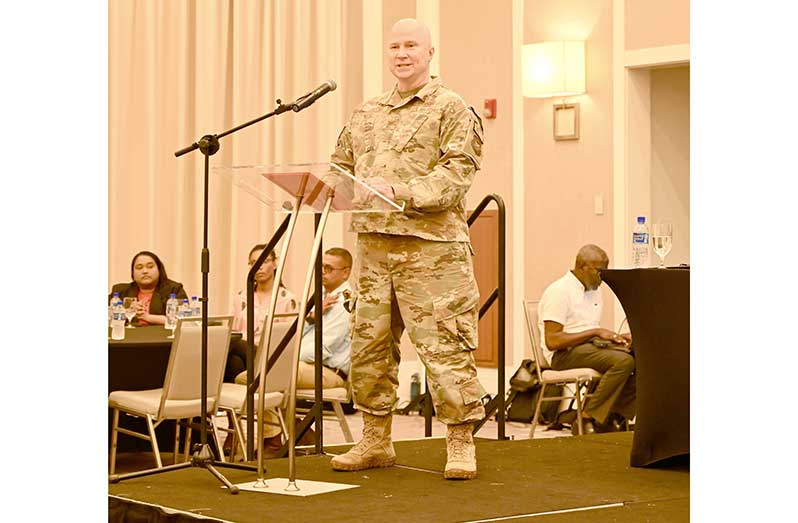
“LAMAT is about working side by side, sharing expertise, strengthening medical capacity and building the relationships that make our teams stronger together,” he said.
Liszeski disclosed that such collaborations are critical for improving readiness to respond to future public health emergencies and natural disasters.
“Readiness begins with relationships. By working together today, we ensure when future challenges arise… we are already ready to respond with trusted partners,” he noted.




