





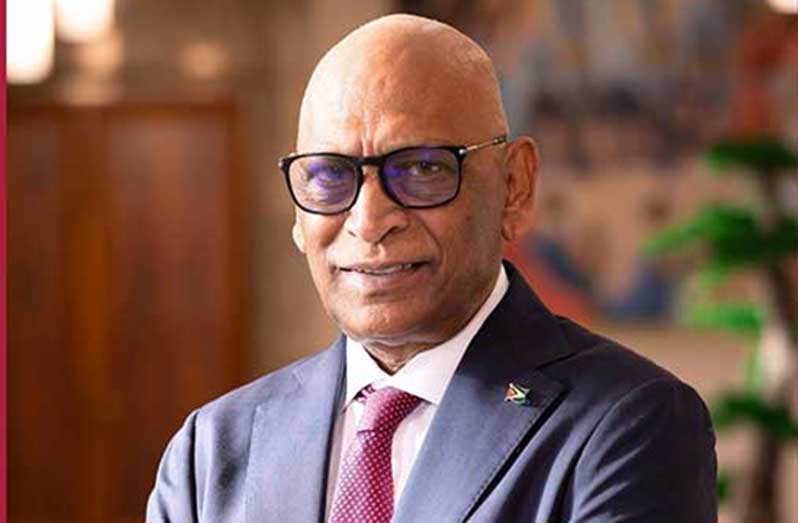
GUYANA can eliminate cervical cancer by 2050 if it builds a fully HPV-literate population, expands vaccination and screening, and strengthens treatment access, according to Dr Leslie Ramsammy, Chairman of the Georgetown Public Hospital Corporation and head of the Presidential Commission on the Prevention and Control of Non-Communicable Diseases (NCDs).
In a message marking International HPV Awareness Day on March 4, Dr Ramsammy said education and awareness about Human Papilloma Virus (HPV) are central to defeating cervical cancer, which remains the second most common cancer among women in Guyana.
“An HPV-literate population is a powerful barrier against cervical cancer,” he stated, commending the Ministry of Health and the Government for what he described as aggressive efforts to promote HPV awareness, testing and vaccination.
Cervical cancer accounts for approximately 121 new cases and 63 deaths annually in Guyana, with women aged 15 to 44 among the most affected. The country’s incidence rate stands at more than 20 per 100,000 women, five times higher than the 4 per 100,000 threshold considered by the World Health Organization (WHO) as elimination.
Dr Ramsammy said Guyana must meet the WHO’s “90-70-90” targets by 2030: 90 per cent of girls vaccinated against HPV before age 15; 70% of women screened by ages 35 and 45; and 90 per cent of women with pre-cancer treated and 90 per cent with invasive cancer managed
More than 200 HPV types exist, most of them harmless. However, HPV 16 and 18, both prevalent in Guyana, are responsible for over 90 per cent of cervical cancer cases. While cervical cancer is the most documented outcome, some HPV strains are also linked to other cancers.
Guyana introduced the HPV vaccine in 2010 and now provides it free to girls and boys between the ages of 9 and 15. Current vaccine coverage exceeds 60 per cent, with a goal of reaching 90 per cent of girls before age 15 by 2030. Guyana is also among a small number of developing countries utilising the advanced Gardasil 9 vaccine.
The Commission also praised the Government’s policy of offering free HPV testing, with a target of screening more than 70 per cent of women by 2030. HPV-positive women are monitored for early signs of cervical cancer, allowing for timely intervention.
Treatment capacity has expanded significantly. Guyana now provides Visual Inspection with Acetic Acid (VIA), chemotherapy, radiotherapy, and is preparing to commission a brachytherapy centre, completing a comprehensive treatment programme for HPV-related cervical cancer.
GLOBAL MOVEMENT TO ACCELERATE ELIMINATION
Guyana is part of a growing global push to accelerate cervical cancer elimination ahead of the WHO’s 2120 target. The WHO’s Global Strategy for Cervical Cancer Elimination was adopted in November 2020, setting elimination as a public health problem as the ultimate goal.
Dr Ramsammy noted that while high-income regions such as North America and Western Europe are on track to eliminate cervical cancer between 2040 and 2050, low-Human Development Index countries continue to face significantly higher incidence and mortality rates.
He highlighted Guyana’s diplomatic engagement, including collaboration with the country’s Permanent Mission in Geneva, to advocate for a global elimination target of 2080, 40 years earlier than the WHO’s current projection.
Globally, cervical cancer results in approximately 600,000 new cases and nearly 339,000 deaths annually, accounting for 6.5 per cent of new cancer cases and 7.7 per cent of cancer deaths among women.
Drawing parallels with the eradication of smallpox, Dr Ramsammy argued that the world possesses the scientific tools to eliminate cervical cancer within decades.
Smallpox, eradicated in 1980 following a coordinated global vaccination effort, remains the only human infectious disease to have been eliminated. Ending cervical cancer, he said, would mark the first time the world has eliminated a cancer.
“National, regional and global investments in the fight against HPV and cervical cancer are a ‘best buy,’” he stated. “The question must not be ‘if’ we can; it must be ‘when.”
He urged intensified investments in public education, expanded screening, broader vaccine access and strengthened treatment infrastructure to ensure Guyana reaches its goal of eliminating cervical cancer by 2050.





