






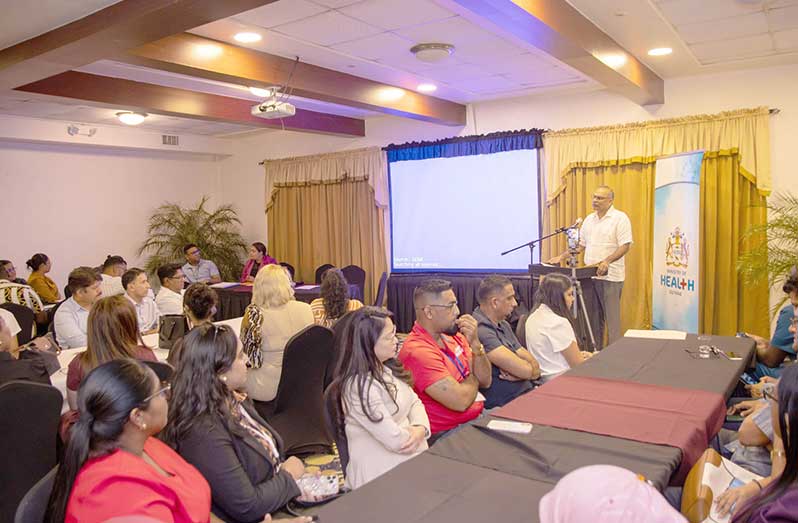
THE Ministry of Health is calling for increased participation in its national health voucher programme for children, noting that childhood is a crucial period for preventative care.
This call was made by the Minister of Health, Dr Frank Anthony, who said only 13,112 child laboratory tests have been conducted since the programme began, compared with 91,501 adult tests over the same period.
“That shows a clear disparity,” Dr Anthony said.
He went on to add, “We have a programme that works, but children are not accessing it at the same level as adults, and that is something we need to address.”
The child vouchers are intended to detect early-stage illnesses and conditions that may otherwise go unnoticed. Anthony explained that many children may appear healthy while carrying underlying pathologies. Early testing allows health officials to intervene and inform parents before these issues progress.
“Some kids we want to make sure they’re not sick… Some of them might have other types of pathologies,” he said.
The health minister said, “If we are able to check them, use these results early, we’ll know, and then we can assist that child, or let the parents know.”
Dr Anthony highlighted that expanding childhood screening is a critical component of the programme’s broader preventive-care strategy, which already includes adult testing for chronic diseases, eye care, and cancer prevention.
Anthony said there is potential for the child voucher programme to grow significantly, particularly through partnerships with schools, community organisations, and outreach initiatives in interior regions. He noted that while access is easier along the coast, children in remote areas remain largely unreached.
“We want this programme to be available to all children, not just those near the coastal regions,” he said. “By expanding testing, we can identify conditions early, intervene promptly, and reduce long-term health risks.”
Against this backdrop, he urged parents, guardians, and service providers to support the programme, highlighting that early intervention in childhood can prevent serious illness later in life.
“Childhood is a crucial period for preventive healthcare,” Anthony said. “If we can reach more children and screen them early, we can make a real difference in the health outcomes for our population in the years to come.”




