






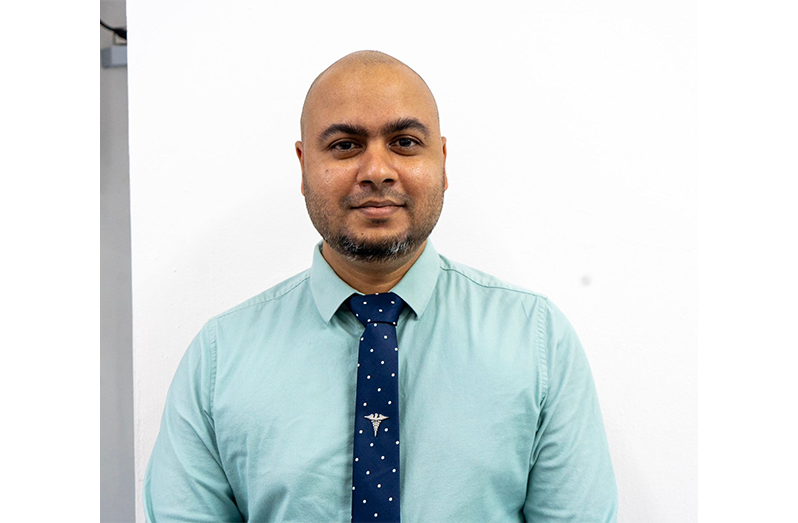
MORE than twenty years ago, Dr Alex Persaud first worked at the Georgetown Public Hospital Corporation as a pharmacy assistant. Today, he serves in the same institution as a neurologist, caring for patients with complex conditions of the brain and nervous system. Though he proudly considers himself “a farmer first,” those early experiences shaped the discipline, resilience, and compassion that now define his medical career.
Dr Persaud earned a scholarship to study medicine in Cuba, where he completed his medical degree before specialising in neurology. He later pursued a fellowship in electroneuromyography at the Institute of Neurology and Neurosurgery in Havana, strengthening his expertise in diagnosing nerve and muscle disorders.
For over two years, Dr Persaud has been part of GPHC’s Neurology Department. He provides care to both hospitalised patients and those attending outpatient clinics. His work includes managing stroke, epilepsy, chronic headaches, movement disorders, neuropathies, and other neurological conditions. In addition to clinical duties, he oversees EEG services and contributes to the continued development of neurological care at GPHC, with the goal of strengthening services across Guyana.
Neurology captured his interest early in medical school. The brain’s complexity fascinated him. “It controls how we move, speak, think, feel, and remember,” he said.
He was drawn to the careful thinking required to diagnose neurological illnesses, where detailed history taking and physical examination are essential.
“Beyond the science, I was deeply moved by how neurological conditions affect not just individuals, but entire families. A stroke, seizure disorder, or degenerative illness can change a life overnight. I wanted to work in a field where thoughtful care, patience, and long-term support could make a meaningful difference,” he explained.
“The most rewarding part of my job is seeing patients improve, especially when they arrive frightened or uncertain about their future,” he says. “Whether it’s helping someone gain control over seizures, managing chronic migraines so they can return to work, or supporting a stroke patient through recovery, those moments of progress are incredibly fulfilling. Sometimes it’s not even about curing a condition, but about providing clarity and reassurance. Giving someone an explanation for their symptoms can bring tremendous relief.”
Dr Persaud believes that improving neurological services strengthens the entire healthcare system and increases awareness about brain health. He also works to address common misunderstandings. Many people believe neurological conditions are always permanent or untreatable. While some are chronic, many can be effectively managed, and some can even be reversed if caught early. Seizures, for example, are not always dramatic convulsions. They can appear as brief staring spells, confusion, unusual movements, or subtle behavioral changes. Education is essential to reduce stigma and encourage people to seek care.
When asked about one simple step people can take to protect their brain health, Dr Persaud highlights sleep. Good sleep supports memory, mood, concentration, and seizure control. Chronic sleep deprivation increases the risk of stroke and cognitive decline. He also encourages healthy eating, regular exercise, and careful control of blood pressure and blood sugar, especially since these are major risk factors for stroke in our population.
Over the years, his approach to patient care has evolved. While diagnosis and treatment remain central, he now places even greater emphasis on listening and communication. Many patients enter his office anxious. Taking time to hear their concerns and explain findings clearly builds trust. He believes that medicine is not only about treating disease but also about supporting people during vulnerable moments in their lives.
For those considering a career in neurology, Dr Persaud describes it as challenging but deeply fulfilling. He encourages young doctors to stay curious, sharpen their clinical skills, and practise empathy. Behind every scan and test result is a person who needs understanding and care. Through his work at GPHC, Dr Alex Persaud continues to bring both knowledge and compassion to the patients and families he serves. (GPHC)




