






By Faith Greene
WHILE February in Guyana is traditionally associated with Mashramani celebrations, the month also holds deeper significance as the country observes Black History Month, recognising and honouring the history, struggles and contributions of Afro-Guyanese to Guyana’s national development.
Black History Month 2026 is being observed under the theme “A Century of Black History Commemorations”, marking 100 years since the first observance of Negro History Week in 1926. This year’s commemoration also coincides with the 400th anniversary of the arrival of Africans in Guyana.
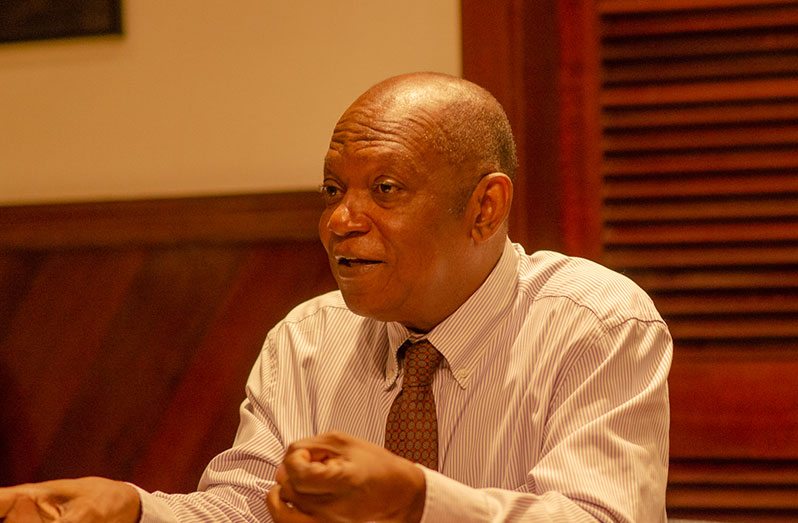
Director of the African Cultural and Development Association, Eric Phillips, has underscored that Black History Month should be a period of reflection, particularly for Afro-Guyanese, to critically examine their history and identity.
Phillips noted that Guyana has produced some of the Caribbean’s most distinguished scholars and intellectuals, including George G.M. James, Ivan Van Sertima, Walter Rodney, and Dr. Alvin Thompson, whose works have shaped global discourse on African history and heritage through texts such as Stolen Legacy, They Came Before Columbus, and How Europe Underdeveloped Africa.
He explained that understanding one’s ethnic roots and historical linkages, whether African, Indian, Chinese, or otherwise, is central to identity and self-awareness.
“Black History Month in Guyana should allow us to understand those parts as well as the whole. Because you cannot live in a vacuum. You’re African, you’re Guyanese, you’re Christian, you’re Muslim. I mean, you are so many things; and if you try to suppress one, you impact your own identity,” Phillips said.
He stressed the importance of Afro-Guyanese recognising that their presence in Guyana dates back 400 years, adding that there remains widespread misunderstanding and insufficient acknowledgement of Afro-Guyanese achievements. Phillips also pointed to the need to reframe historical narratives, particularly the distinction between Africans being “slaves” and being “enslaved.”
According to Phillips, Black History Month should not exist in isolation but alongside the histories of Indigenous peoples, Indo-Guyanese, Portuguese and Chinese communities, all of which collectively form Guyanese history.
Speaking on ACDA’s role, Phillips explained that the organisation is guided by two core pillars: culture and development. From a cultural standpoint, ACDA organises Emancipation activities, African Holocaust Day observances on October 12, Kwanzaa celebrations, and Black History Month events.
ACDA also operates its own school, where students follow Guyana’s national curriculum while being immersed in African culture, including dance, music, drumming, storytelling, and traditional African cuisine. Students are taught leadership, respect for elders, inter-racial harmony, and the principles of unity reflected in Kwanzaa.
Phillips revealed that every Saturday, the institution hosts free cultural classes open to persons of all races. Participants are transported from their communities to ACDA’s headquarters in Thomas Lands, Georgetown.
As part of Black History Month activities, ACDA will host an exhibition at its headquarters on Monday and will visit 20 schools throughout February to engage students on Afro-Guyanese history and heritage.
Looking ahead to the extended commemoration of the 400th anniversary spanning 2026 into 2027, Phillips disclosed plans to establish an African village constructed from tents, each depicting a distinct period of African history in Guyana, from the arrival of Africans in the 1600s, through emancipation, to modern contributions.
The initiative will highlight African monuments, national heroes, historians, musicians, athletes, authors, artists and other figures who have contributed to Guyana’s economic, social, and cultural fabric.
Phillips emphasised that as Guyana undergoes rapid transformation following the discovery of oil, there must be renewed focus on cultural cohesion, which he believes begins with a stronger emphasis on history education.
“We do not teach history in the school, which forces us to not understand who we are, and with more people coming in who speak Spanish and who speak other languages, we have to understand what that means in the future. But it’s a time for reflection for African Guyanese so that they can rebuild their self-esteem, rebuild their self-pride,” Phillips said.
He noted that Black History Month provides an opportunity not only for reflection but for reaffirming identity, unity, and national consciousness at a pivotal moment in Guyana’s development.




