– says Region Three Private Sector
THE Head of the Region Three Private Sector Inc. (R3PSInc), Halim Khan, on Tuesday, welcomed the Government’s 2026 national budget as a decisive shift toward broad-based growth, saying the package of measures positions Region Three to become one of the country’s most dynamic investment and manufacturing corridors.
Speaking in the wake of Finance Minister Dr. Ashni Singh’s presentation to the National Assembly, Khan said the budget’s emphasis on small and medium-sized enterprises (SMEs), housing, infrastructure, and value-added production directly reflects years of advocacy by the private sector in Region Three.
“This budget sends a clear signal that national development is no longer confined to Georgetown or a few coastal pockets,” Khan said. “For Region Three, it opens real opportunities for manufacturing, agro-processing, logistics, and small business growth.”
PRIVATE SECTOR PRIORITIES
Budget 2026 introduces a series of measures aimed at lowering business costs and widening access to financing, including the establishment of a capitalised Guyana Development Bank to provide zero-interest microcredit to small entrepreneurs, and the expansion of co-investment financing through commercial banks. It also removes VAT on locally made furniture and jewellery and expands export incentives for value-added forestry products.
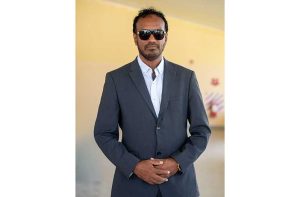
Khan said these initiatives directly benefit the clusters of small manufacturers, contractors and agro-processors operating in West Demerara and along the Essequibo coast.
“For years, businesses in this region have struggled with access to affordable capital and high input costs,” he noted. “What we are seeing now is a deliberate policy shift to empower local producers, not just importers.”
The budget also raises the low-income mortgage ceiling from $20 million to $30 million and extends the facility to insurance companies, a move Khan said will stimulate construction and related industries in Region Three, where several new housing areas are being developed.
At the same time, government’s plans for expanded infrastructure, including roads, utilities and community services, are expected to further integrate Region Three into the national economic grid.
“Every new house built means work for carpenters, masons, electricians, hardware suppliers and transport operators,” Khan said. “This is how you create a local economic ecosystem.”
Budget 2026 is the first in the new term of the PPP/C administration and is being framed by the government as a transition budget, one that uses oil revenues to build a more diversified and resilient economy.
While the oil and gas sector continues to expand, significant emphasis is being placed on manufacturing, agriculture, services and small business development.
“Oil has given us the resources, but it cannot be the only engine of growth,” Khan said. “Region Three is strategically located between the capital and the Essequibo coast, and it can become a manufacturing and logistics hub if we get the policies and infrastructure right. This budget moves us in that direction.”
The Region Three Private Sector Inc., Khan explained has engaged both central government and local authorities on issues ranging from drainage and irrigation to port facilities and industrial zoning.
“This is not accidental,” he said “It shows that sustained, organised advocacy is starting to shape national policy.”
Khan cautioned that implementation will be key, but said the policy direction is now unmistakable.
“The private sector is ready to do its part,” he said. “If these measures are executed properly, Region Three will not just benefit from national growth, it will help drive it.”
As Guyana enters another year of rapid economic expansion, the response from Region Three’s business community suggests that the country’s development story is increasingly being written beyond the capital, with regional private sector groups like R3PSInc positioning themselves as central players in the next phase of growth.
Meanwhile, Khan added that no serious development agenda can succeed without modern aviation infrastructure and dependable utilities as such the Ministry of Public Utilities and Aviation has a major role in overall development.
“Aviation and utilities are two of the quiet pillars of national development. Without reliable air transport, you cannot fully integrate the hinterland, support tourism, or move goods and people efficiently. And without stable electricity and water, no economy, whether manufacturing, agriculture, or services, can truly function or grow. Investing in these sectors is not optional; it is foundational to sustainable development.”
With the expansion of regional hospitals, the rollout of electronic health records, and the training of over 5,400 nurses and allied health professionals, Khan highlighted that “access to quality healthcare is no longer limited to urban centres; residents in West Demerara and surrounding areas will now enjoy improved services, shorter wait times, and better preventative care.”
He stressed that these initiatives are crucial not only for individual well-being but also for sustaining a productive workforce capable of driving regional economic growth.
On education and national security, Khan emphasised that Budget 2026 reinforces long-term human development as the foundation for stability and prosperity.
Investments in scholarships, free university education, technical and vocational training, and digital schooling programmes ensure that young people in Region Three can acquire the skills necessary for high-demand sectors, including healthcare, engineering, and technology.
“Education is the ultimate security measure,” Khan noted. “A well-educated population strengthens our communities, reduces social vulnerabilities, and provides the human capital needed for sustainable economic and social development.” By prioritising both learning and safety, the budget aligns national growth with tangible improvements in the quality of life for every Guyanese.