






BRYAN Washington’s new novel, Palaver (Farrar, Straus & Giroux, $25.00), is a word that traditionally suggests a peaceful—if sometimes tense—conversation between disparate personalities attempting to resolve a lingering conflict. It is a fitting name for a book whose plot turns on the long-unsettled rift between a mother and her son; closely entwined with this conflict is the fact that the son is gay.
Palaver is Washington’s fourth work of fiction, following closely on the heels of his much-lauded debut story collection Lot (2019), the novel Memorial (2020), and Family Meal (2023). A gay Black writer from Texas, Washington has built an oeuvre attentive to queer lives and concerns—though in Palaver, queerness is not the central crisis so much as an indelible fact. Gayness in this novel is presented simply as a matter-of-fact mode of being, one that neither requires justification nor invites debate. At its core, the book is about filial ties: how they bind, how they wound, and how they endure.
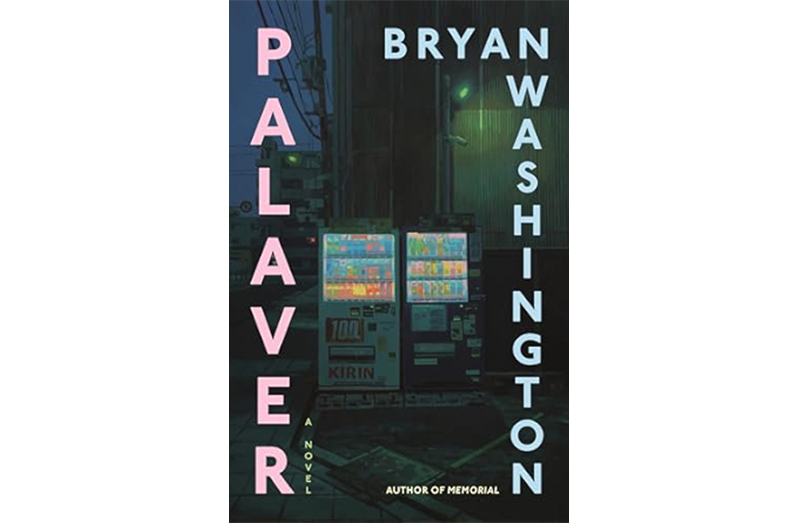
The novel is set in Tokyo, where the protagonist—referred to only as the Son—has been living for over a decade. He teaches English to a rotating roster of students and is embroiled in an affair with a married Japanese man, the father of a newborn. The Son’s life is upended when he receives an unexpected visit from the Mother—also never named—who arrives from Houston, Texas. Their dynamic is immediately fraught: the Son is abrasive, while the Mother is combative and unrepentant. Over time, as they uneasily share his cramped apartment—quarrels punctuated and sometimes softened by the presence of the Son’s cat, Taro—their history begins to surface. We learn that the Mother favoured his brother Chris, a homophobic, drug-dealing convict; that she abused the Son in the past because of his sexuality; and that she is herself marked by losses and migrations. A Jamaican immigrant who first moved to Canada and then to Texas, she once had a deep bond with her gay brother Stefan, who died of AIDS many years ago. She is now a widow; she works in a dentist’s office; she carries her own accumulation of grief.
Tokyo, in Washington’s rendering, is vivid, cosmopolitan, and teeming with immigrant life. The Son’s friends come from all across Asia and span the queer spectrum. Some of the novel’s most electric moments take place in gay bars and other haunts where the Son and his friends gather—scenes that feel lived-in, frank, funny, and sometimes piercingly tender. Washington explores the subtle hierarchies and shifting textures of friendship with particular acuity. Meanwhile, the Mother’s attempts to navigate a foreign city supply both humour and unexpected warmth; her interactions with strangers offer relief from the sometimes suffocating tension between her and her son, giving the novel pathos and breathing room that keep it from tipping into despair.
What stands out most about this thorny Mother–son relationship is its realism—its fine precision of gesture, tone, and emotional weather. Their conversations, caustic as they often are, carry a casual naturalism. The novel never raises its voice; its intensity lies not in dramatic outbursts but in the steady pressure of ordinary argument.
Washington’s prose has the consistency of a breeze—rising, falling, and looping back with a lyrical, almost hypnotic ease. His sentences move with the steadiness of poured honey. Palaver maintains an even keel in all respects, including its pacing, which is leisurely and assured, like a conversation that unfolds at its own necessary rate. This is a novel of nuance, one deeply attuned to the texture of everyday living and being. It is a wonderful read: immersive, affecting, and quietly exhilarating.




