.jpg)





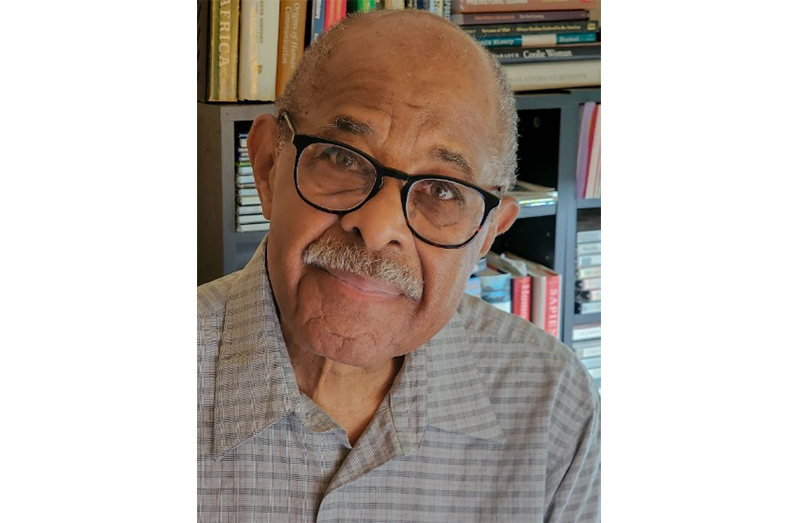
- Dr Vibert Cambridge reflects on tradition, change, and the enduring spirit of Christmas at home and in the diaspora.
EVERY year, Guyanese of all walks of life, around the globe, celebrate the Christmas season the way only Guyanese do. From the traditional foods found only here to the music, sights and sounds of the season, Christmas in Guyana is unlike Christmas anywhere else. These unique traditions, foods and celebrations were not coincidental, however, but were crafted by our history, individuality and sense of self, as were those of much of the country. Speaking to Pepperpot Magazine from his home in Minneapolis, Dr Vibert Cambridge, Professor at the University of Ohio and a leading scholar in Caribbean media and culture, highlighted the roots of what makes a Guyanese Christmas, how our traditions have changed, and how different a Guyanese Christmas is for those in the diaspora.
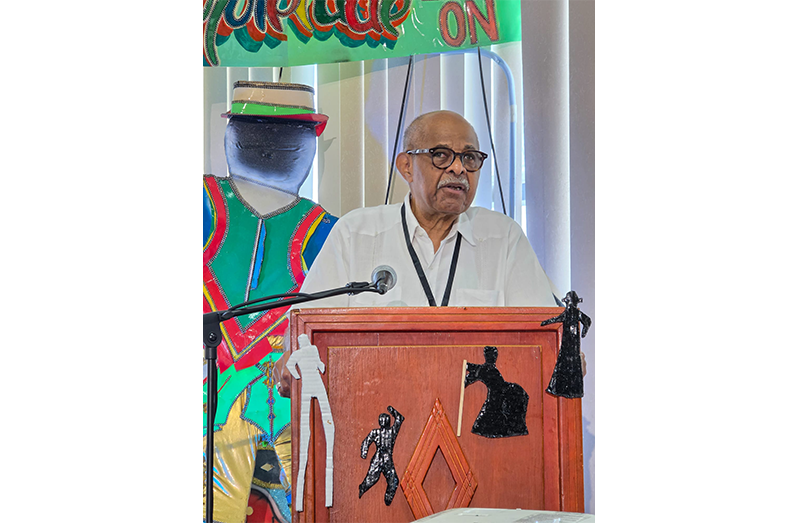
Guyana’s holiday traditions, like all of our culture, were shaped by the various ethnic groups that have called Guyana home. As Dr Cambridge highlighted, almost every Guyanese Christmas food, music and celebration was crafted by one group and adopted by others.
“All of the elements that make up Christmas have their roots in all the ethnicities and traditions in the Guyanese family. If you were to start with our Indigenous brothers and sisters, that’s your pepper pot, that’s your cassareep.”
He added, “If you were going to talk about your black cake and that kind of pastry tradition, you were talking about our English ancestry. If you’re going to talk about your garlic pork, you’re talking about your Portuguese ancestry. If you’re talking about your masquerade, you’re talking about your African and Afro-Caribbean roots and ancestry.”
But over time, some things have become part of Guyanese Christmas, among them Christmas cleaning and preparation.
“Among the constant things about Guyana as it relates to Christmas is the whole process of preparation. There’s a term we use in Guyana, and I think we still use it, where you ‘break up the house’. That is about that whole process where you clean out the past year in your house.”
Christmas cleaning in Guyana has become more than a practice; it is a family event.
“For the Guyanese Christmas, an important part of that is breaking up the house, ensuring that the furniture is polished, that there are new curtains, the archetypal linoleum for the kitchen, new glasses, mansion polish, and that kind of stuff. That seems to be constant.”
Apart from the food, drinks and cleaning, the holiday season in Guyana is shaped by a strong sense of family and community. For most Guyanese, Christmas is that one time of year when all the family comes together; neighbours exchange pieces of black cake and spend time together that is not always possible throughout the year.
“There are the social practices of visiting. You may stay home on Christmas Day, but you visit on Boxing Day. It’s the carol singing. It’s the new pair of pyjamas for Christmas Eve night, so you could wake up on Christmas morning. The Christmas season is a special season, and then there’s Christmas Day, and Boxing Day, and leading on to New Year’s Night and New Year’s Day,” Dr Cambridge stated.
However, while the core values of a Guyanese Christmas have remained the same, Dr Cambridge highlights that it has grown. Whereas Christmas decades ago gave rise to small, localised community celebrations along narrow roadways, today it is more of a national celebration, with Christmas shows becoming more popular than community and village celebrations.
“Guyanese Christmases, although they have a constant core, have changed over time. We have changed from small-town Christmases where your dominant roadway was the street, the road. Today you have highways, which is a whole different transportation infrastructure, and that has some impact, particularly on things like masquerade.”
He noted that the roads in Guyana are now multi-lane, from the East Coast, East Bank and West Demerara, compared to earlier times when donkey carts, tree carts and bicycles dominated.
One aspect of an old Guyanese Christmas that has diminished is the vibrant, multifaceted creativity in decorating, not just homes. As Dr Cambridge explained, in earlier days in Guyana, creativity in decoration extended to bicycles.
“Those days in the 50s, early 60s, when you had a lot of bicycles, the bicycle was a dominant mode of transportation, you would have decorated bicycles. I remember as a kid, my mother would take us to Big Market, and I think it was on New Year’s Night, you had the decorated bicycles, where the bicycle would have a lot of pepper lights and smoke lights.”
Today, he noted, the same bold vibrancy can be found in decorations in public spaces around Georgetown, highlighting a shift rather than a loss.
In essence, many of our Christmas traditions have shifted and adapted. Citing the masquerade as an example, Dr Cambridge highlighted that while the roadways have changed, stages for masqueraders continue to exist.
“Masquerade is operating in a different milieu now. The roads are different. The vehicles on the road are large and fast and could be dangerous for masqueraders. But what is interesting, if you look at what has happened to masquerade in 2025, there were very few before—I would say zero masquerades in state-sponsored events.”
He added, “This year, that’s not the case. Masquerade is around the place at these state-sponsored events—the market on the seawall, the event by Stabroek Market, the Christmas village. If we look, we see there’s a lot of young people. The masqueraders on the street this year are young. They are very young.”
But like the songs that describe a Guyanese Christmas and the recipes passed down through generations, masquerade tells a story of our history.
“Masquerade is multi-dimensional. Masquerade is not just one art form. Masquerade [has] multiple integrated art forms. It is costume design. It is dance. It is music. It is voice. It is poetry. It is community. It is something that tells us our history,” Dr Cambridge stated.
“If you listen to the masquerade chant, those that remain with us today, they tell us something. Poor Uncle Willie in the jail, having saw a fish tail and saw a ginger bear. Is that what the diet of people who were in our penal system experienced in the past?”
The Guyanese Christmas spirit is alive and well in the diaspora, Dr Cambridge said. As he explained, traces of Guyanese authenticity can be found almost everywhere.
“The tradition of festivity and sharing is alive and well in the diaspora. Maybe 20, 30, 40 years ago, it may have been difficult to find Guyanese elements for the Guyanese Christmas; that is no longer so. Guyanese trading patterns and Guyanese entrepreneurs ensure that you can have access to Guyanese foods and condiments around the world.”
He added, “For example, this Christmas I’m spending it in Minneapolis, and there’s a Guyanese store in Minneapolis which we’re getting ready to go to a little bit later on, and you can find Chico cough drops there.”
Describing the beautifully curated Christmas traditions of Guyanese in the diaspora, Dr Cambridge shared that these traditions are rooted in people, wherever they are. Nostalgia, he added, is very prominent, with the older generation working to keep their Christmas culture alive and the younger generation adding their own influence to the season. He also reminded readers that holiday celebrations in the diaspora are bigger than just Guyana.
“What happens in the diaspora is that you find your commonality. You begin to see that you have similar patterns with Trinidad and Barbados and Jamaica and Antigua and St Kitts. So in this larger Caribbean family, you have the Guyanese nuance to this big Caribbean tradition.”
As roads have widened, traditions have evolved, and Guyanese have scattered across the globe, the essence of a Guyanese Christmas endures. Whether it is breaking up the house in Georgetown, preparing pepper pot in Minneapolis, or watching masquerade bands dance through state-sponsored events, the core values of family, festivity and sharing remain unchanged. The songs may echo in different accents now, and the black cake might include innovations alongside tradition, but the spirit of a Guyanese Christmas lives on wherever Guyanese gather. Yet, for all the beauty and authenticity found abroad, Dr Cambridge reminds us that there is something irreplaceable about being home for the holidays.
“Most of us still miss coming home for Christmas, where you could have a lime. I think Slingshot captures it—there’s nothing like a Christmas morning in Guyana.”