.jpg)


BARAMITA, perched nearly a hundred metres above sea level in Guyana’s Barima-Waini region, is one of the country’s largest Amerindian settlements and the closest to the Venezuelan border.
For generations, the Carib (Kalina) people who call it home have relied on mining and subsistence farming to sustain their families.
Life here has always been defined by resilience and tradition. Yet, today, the community is embracing a new chapter; one that promises not just survival, but prosperity.
With the launch of the first-ever commercial swine project in the region, Baramita is stepping into a future of food security, empowerment, and economic opportunity.
The project was born out of a promise made during a presidential outreach in August 2025.
When President Dr. Irfaan Ali visited the village, residents shared their dream of producing pork locally to reduce dependence on costly imports and strengthen livelihoods.
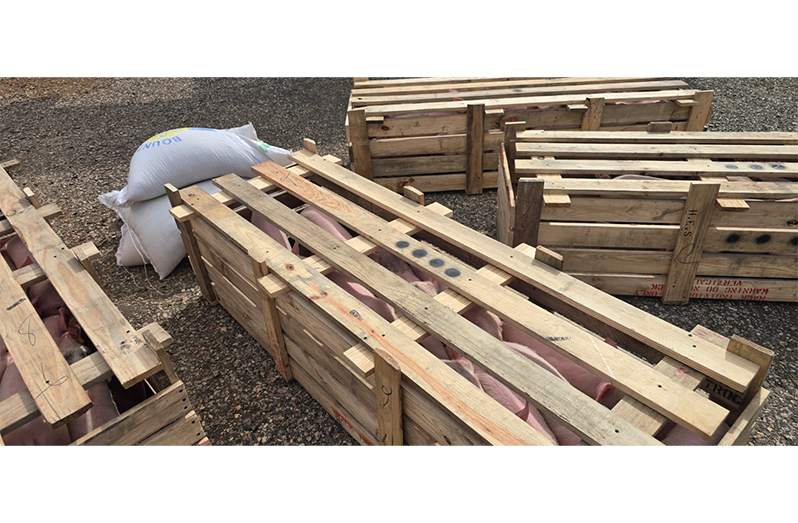
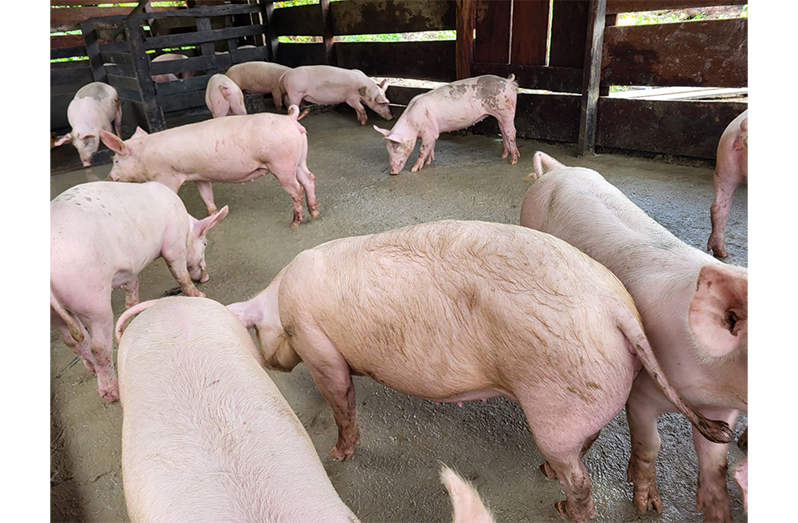
What was once a hope has now become reality. Fifty pigs have been introduced to the community, marking the beginning of a venture that could transform Baramita’s economic landscape.
Toshao Sharmaine Rambajue described the initiative as life-changing: “The President’s visit opened the door for a project we’ve dreamed of for years. For the first time, our Indigenous residents can participate in commercial agriculture. We are truly grateful; it gives our families hope, and the ability to earn a steady income,” she said.
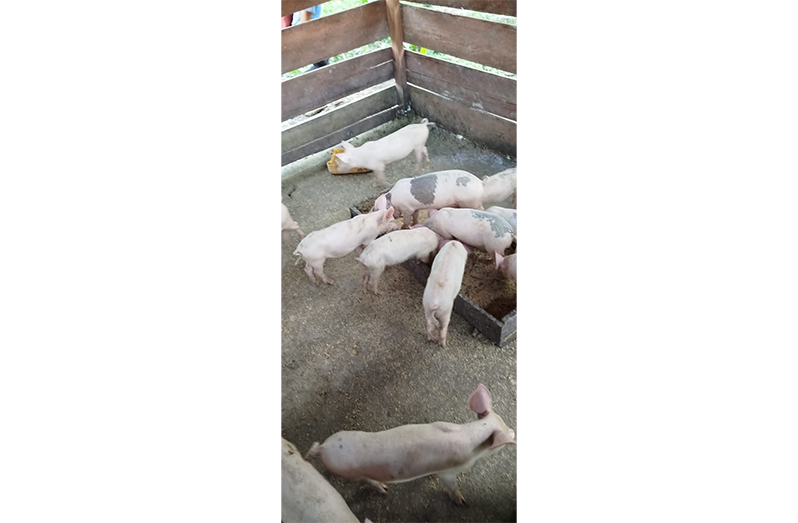
At the centre of the initiative is the Baramita Village farm, where nineteen pigs are housed under the supervision of the Village Council.
With technical guidance from the Guyana Livestock Development Authority (GLDA), the farm doubles as a breeding facility, ensuring the project’s sustainability.
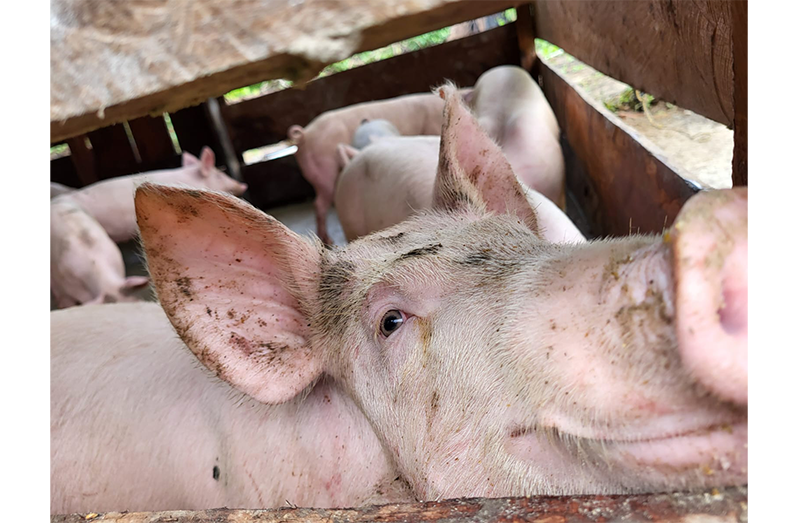
The chosen breed, Large White, is known for its fast growth, high reproductive rate, and adaptability; qualities that make it ideal for a community venturing into commercial pork production for the first time.
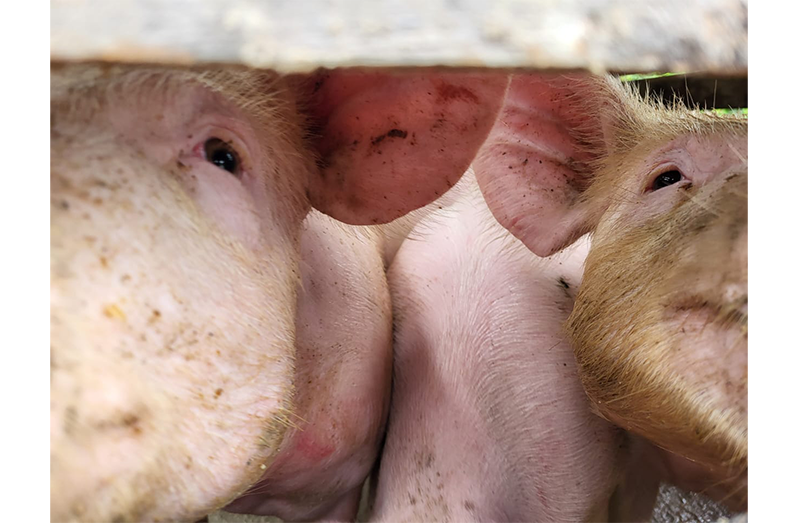
Beyond the farm, 15 villagers, including four women, each received two pigs to rear at home. For Rambajue, this is not just about agriculture but about empowerment.
“This is a real chance for women to contribute to the family income,” she said. “It’s empowering to know we can participate in something that makes a tangible difference in our lives and in our community.”
The project’s impact is already clear. For years, pork in Baramita has been a luxury flown in from the coastland and sold at an estimated $1,500 per pound.
Producing pork locally will not only reduce costs but also improve access to protein and create new market opportunities.
With careful animal husbandry and ongoing support from GLDA officers, villagers are optimistic that they will soon be able to sell pork to neighbouring communities and miners in the region, tapping into a lucrative demand.
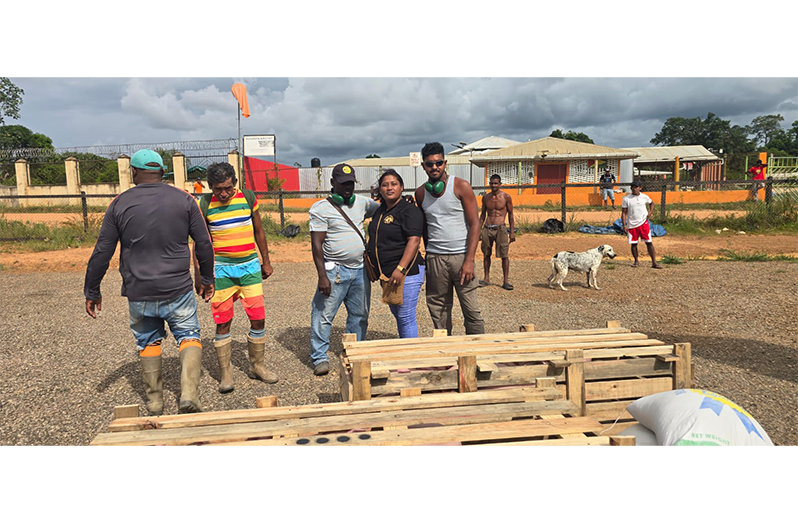
The farm is also diversifying. Alongside the pigs, 1,200 broilers are being raised, and are expected to be ready by January 2026.
Together, poultry and pork promise to reshape the village’s food landscape, offering nourishment and income.
GLDA officers continue to provide hands-on training in breeding, swine rearing, and disease management, thus ensuring that as pigs reproduce, offspring can be distributed to more families.
This cycle of growth and opportunity is designed to expand steadily, bringing more households into the fold.
Importantly, the project is aligned with the PPP/C government’s Low-Carbon Development Strategy (LCDS) 2030, which emphasises sustainable livelihoods for Indigenous and rural communities. By creating opportunities in agriculture that reduce reliance on costly imports and encourage self-sufficiency, Baramita’s swine project embodies the vision of a low-carbon future; one where economic growth is balanced with environmental stewardship and community empowerment.
For Baramita, the project is more than livestock; it is a symbol of dignity, empowerment, and the ability to chart a new course.
“What began as a simple request during a presidential outreach has transformed our community,” Rambajue reflected. “It is more than a project; it is hope, empowerment, and a future where our people, especially women, can thrive while feeding our families.”
There is anticipation in the air, a sense that the limitations of geography or tradition no longer bind the community.
Instead, it is stepping boldly into a future of self-reliance, sustainability, and possibility.