.jpg)





THE government’s housing programme is not just about building homes; it is also a key driver of economic empowerment, providing opportunities for youth, women, men, and skilled workers across the country.
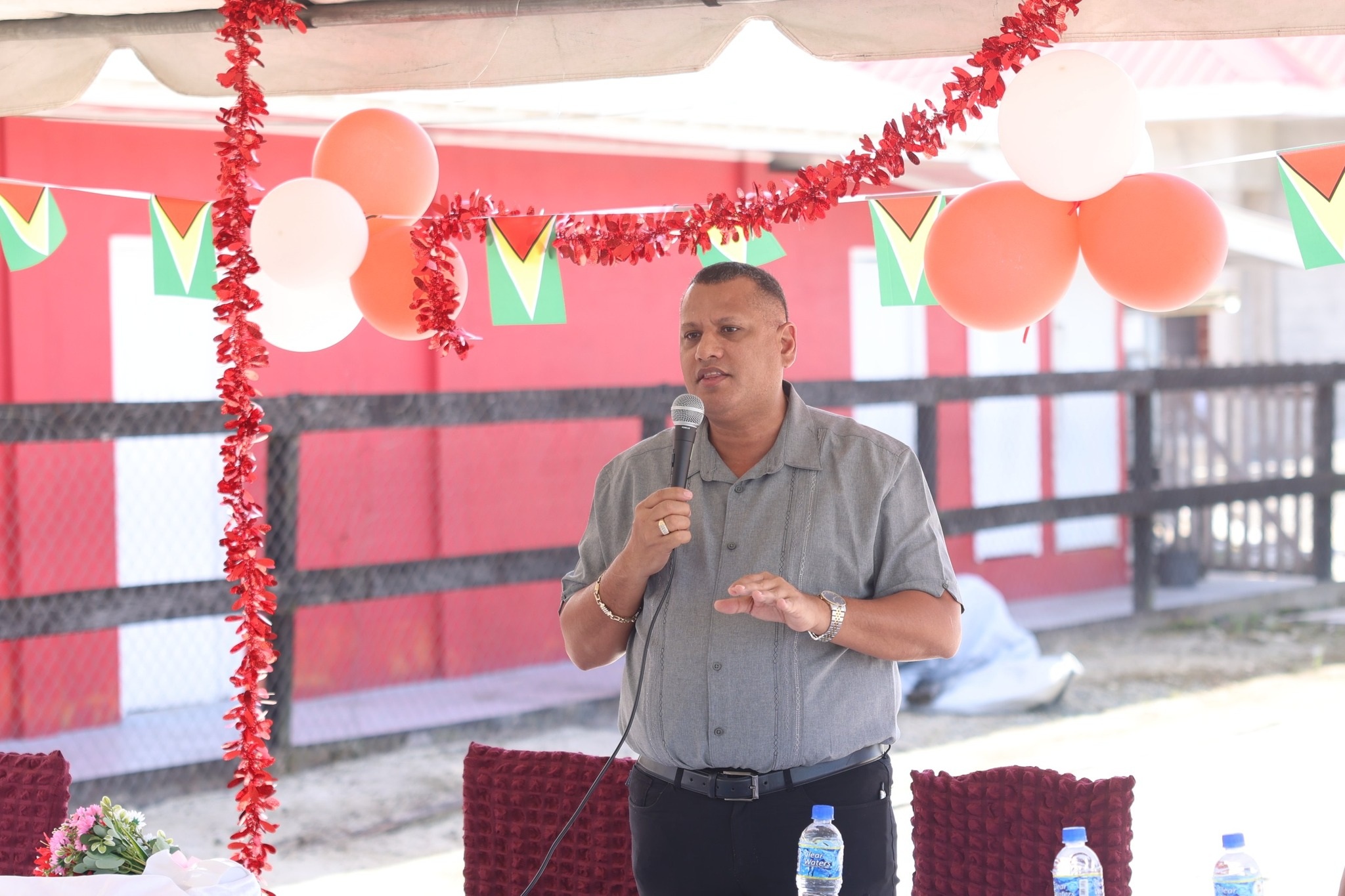
During a video address on Saturday via his Facebook page, Minister of Housing Collin Croal emphasised that the five-year strategy links homeownership, construction projects, and infrastructure development to enhance livelihoods and foster community growth.
“The housing programme continues to remain a pillar of economic empowerment. This has always been so under every People’s Progressive Party/Civic government,” Croal said, stressing that advancing citizens toward homeownership remains central to the government’s mandate. He reflected on President Dr Irfaan Ali’s address to the nation on December 17, highlighting the administration’s commitment to social and economic transformation over the next five years.
Central to the programme is addressing the backlog of pending housing applicants. Croal revealed that, while more than 53,000 allocations were made over the last five years, there are still over 78,000 pending applicants, with the largest block—over 52,000—located in Region Four.
While the backlog in Region Four cannot be fully cleared immediately, Croal assured that all other regions will see 100 percent clearance. Additional land is being acquired in partnership with agencies such as the Guyana Lands and Survey Commission, the National Industrial and Commercial Investments Limited, and the Guyana Sugar Corporation (GuySuCo).
He noted that the construction of new homes is a cornerstone of the programme, with the government targeting a minimum of 40,000 houses over five years, averaging 8,000 annually. Croal highlighted a shift to modular housing to increase volume and efficiency. “We received over 268 responses for the construction of modular houses. So, we can have volume.”
According to him, housing will cater to all income levels, including low-income households, moderate and middle-income groups, and young professionals, reflecting the rising demand among those with higher disposable incomes. Croal also emphasised the economic benefits of construction, noting that the sector provides ample employment opportunities. “In fact, we still have a demand for skilled workers for the construction sector. Anyone who is a very skilled carpenter, mason, plumber, or even electrician can gain employment,” he said.
He explained that this approach not only addresses housing needs but also strengthens the local workforce and supports small businesses providing goods and services to construction sites. Homeownership itself is positioned as a tool for economic empowerment. Croal explained that the government’s approach to homeownership aims to empower citizens by providing them with their own land, personal space, and security of tenure.
The minister disclosed that certificates of title are being processed aggressively, with over 25,000 titles or transports issued over the past five years, allowing citizens to use their property as collateral for loans or business expansion. Financial support for home construction and upgrades will continue through initiatives like the steel and cement programme, which has disbursed over $750 million in recent years.
Croal noted that Budget 2026 will expand assistance programmes targeting home completion and upgrades, particularly for those demonstrating financial need. The housing programme also prioritises youth and women. Croal reported that “54 per cent of allocations in the last period were to young people under 35,” signalling opportunities for homeownership at an earlier age than previous generations.
Women, particularly single mothers, are also benefitting, with over 43 per cent of allocations going to females. He stated, “Empowerment of our women…earning on their own allows them to manage their affairs on their own.”
Minister Croal explained that programmes like the Homestead Project at Yarrowkabra, which will construct over 250 houses, include economic components such as shade house projects to enable additional income generation. Hinterland communities are included in the housing programme, with over 400 homes already constructed in Regions One, Seven, Eight, and Nine. Croal emphasised that expansion will mirror the development along the coastline, providing both financial and material support to hinterland families.
Community development forms a key part of the five-year plan. Croal highlighted the government’s commitment to creating safe, clean, and well-lit communities with proper drainage, reduced noise pollution, green spaces, and functional recreational facilities.
According to him, infrastructure improvements, including roads, drainage systems, and utility networks, will accompany new housing developments to ensure a high quality of life.
“Infrastructure is part of the backbone of economic expansion. Whether construction of homes or the development of new housing areas, everyone benefits, including the transportation sector, hardware suppliers, aggregate suppliers, and even those selling snacks or meals to the workers,” Croal explained.
The Georgetown Revitalisation Plan has already started improving drainage and road networks, with similar projects planned across the country, Minister Croal said. Croal emphasised that these measures collectively advance homeownership while stimulating economic growth and improving the quality of life across Guyana.
He noted that the government’s broader housing strategy therefore aims not only to provide homes but also to create sustainable, economically vibrant communities where citizens have security, opportunity, and access to essential services.