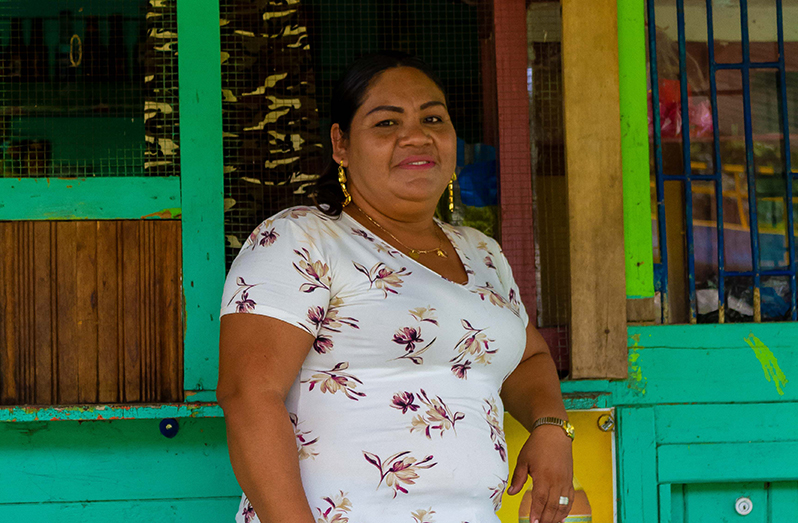
Bamia woman shares a message on the importance of togetherness
GUYANA is a very diverse country, and the village of Bamia in Region Ten showcases thus diversity in both its terrain and its people. Bamia is made up of a melting pot of individuals from all around the country.
Orleita John was born and raised miles away in the Pomeroon, before her husband brought her to the village of Bamia. Her love and admiration for the community have been crafted over the years, making her a notable member. Since the last time the Pepperpot Magazine visited several years ago, Orleita says Bamia has seen notable changes. However, she believes the community could see much more with better cooperation among its people.
Twenty years ago, Orleita had never heard about the village of Bamia. As she explained, she was led to Bamia because of her now-husband. “I came here through my husband. We met him at his workplace in Mabaruma. Eventually, we started a relationship, and he ended up bringing me down here. I’m originally from the Pomeroon region; a place called Kabakaburi,” she explained.
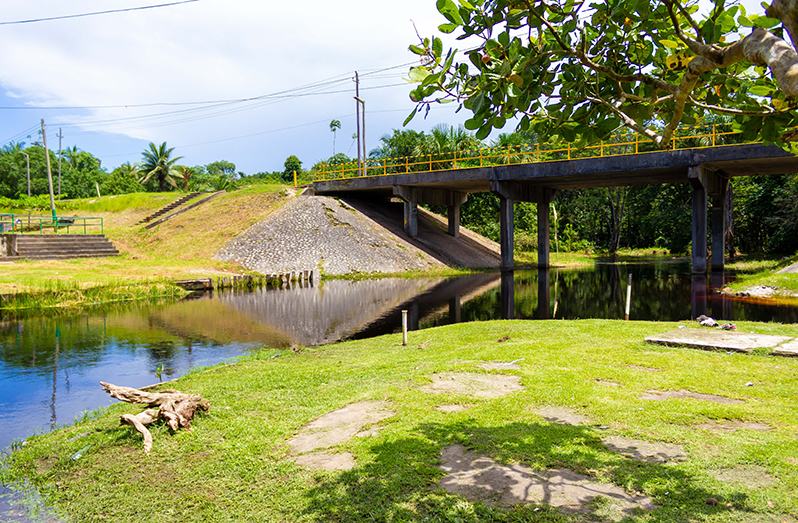
The move from the Pomeroon to Bamia was a big change, says Orleita. As she recalled, the roads of Region Ten were very different from the creeks of the Pomeroon. “The only difference in Pomeroon is because of the river and the road. In Pomeroon, you use a boat for any transportation,” she said.
Although different, Orleita says it is a positive change, as Bamia offers more convenience, especially in the last few years. “But here, it’s cars; it’s easier and simpler than the river. Sometimes you don’t have a boat, so you can’t go to the market as often as you want. Here, you can call a taxi or a bus and go anytime during the day. The market in Linden is every day, but in Pomeroon, only on Mondays,” she said.
Orleita and her family have called Bamia home for 14 years. In all those years, the community has seen a barrage of developments, many of which the people of Bamia championed. Adding necessities like electricity and water has had a far-reaching impact on Bamia. “When I came here in 2010, we had no light; we had to buy a generator, and didn’t have cellphone signal. In 2016, we got electricity in Bamia, and since then, life has become much easier. When I first came here, it grieved my heart to see children using lamps to study. Now, everybody is getting Wi-Fi. We fought for electricity, and it made people’s lives much easier,” Orleita said.
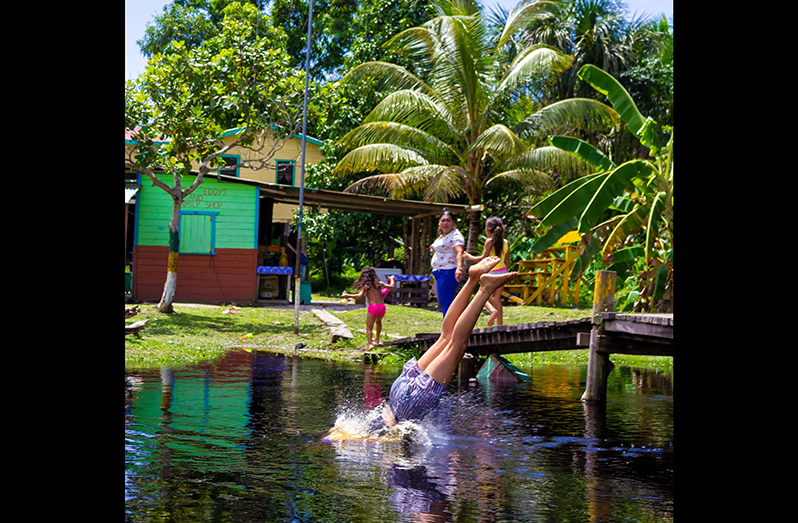
But amidst the improvements, there are some persisting challenges. Orleita and her family live by one of the many creeks in Linden, and the only one in Bamia. However, the picturesque location and seemingly captivating way of life certainly come with their own challenges, with flooding at the forefront. “The creek always floods high when we get rain. That’s the only disaster I suffer down here. But honestly, I still don’t want to move. This is the place where I live; I have my business here. On the weekends, people come out; parents bring their kids, and lovers come out to drink a cold beer and cool down in the water.”
Living on the outskirts of Linden by a famous creek, Orleita and her husband set up a small business. Beginning three years ago, their entrepreneurial venture has grown, and become a well-known alternative to a trip to Linden. Moreover, the creek, which is free to any passerby, brings people to the business.
As Orleita said, “On weekends, you get plenty of sales, because people go out. It’s free of charge to come into the shop. For me, it’s quiet where I live; I don’t have neighbours to bother me. If you decide to lock up and catch a five, you’ll be at peace.”
Bamia is a large village, stretching an estimated ten to fifteen miles. And although the homes may not be very numerous, they are far apart. A Community Development Council governs the village. Although an integral part of the community, Orleita hopes to see more CDC involvement with the people of Bamia.
As she explained: “For me, I’m not pleased at the moment with how the CDC runs. I need to see more activity. I need the people in charge of CDC to look into the community, listen to our concerns, and find solutions. If you’re in a political party and need votes, you need to show people what you’re doing. The elected leader who is called to be a leader will make sure things get done,” she said.
Although she wasn’t born in Bamia, Orleita’s three children were. This, among many other things, has crafted her unique and profound appreciation for Bamia. Seeing Bamia grow and overcome countless challenges throughout the years, Orleita urges people not to lose sight of what’s important: each other. “We have nice people in Linden, very cooperative persons living in Bamia. Socialising was a problem, but we overcame it. If the community could get people to come and get things done and mobilise people, we would see more development. Development means that a group of people have to come together.”
Orleita’s story is just one of many that showcase the impact of community and personal growth. Her journey from the Pomeroon to Bamia represents not just a geographical change but a shift in lifestyle and perspective. Similarly, we see the evolution of Bamia – from a place without electricity to a growing community with increasing amenities and opportunities.