






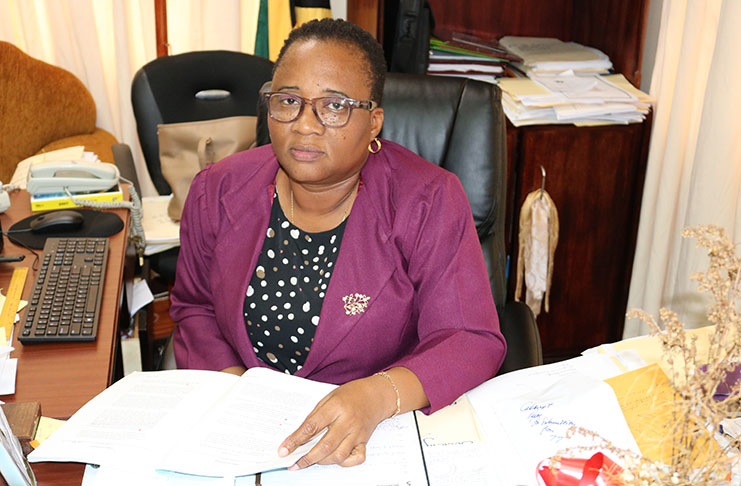
THE Co-operatives Department has supported the revitalisation of 170 co-ops, and registered 68 new ones from 2016 to date as government pushes for the revitalisation of co-operative movement in Guyana
Government sees co-ops as the third pillar of economic development. Some of the 170 societies were active but were not in compliance with the laws while some were dormant.
Head of the Co-operatives Department, Ministry of Social Protection, Perlina Gifth said non-compliant societies were guided towards becoming compliant while the dormant societies were resuscitated.
She added that there are various newly registered co-op societies.
“We have credit unions, manufacturing societies and different forms of agricultural societies such as chicken and sheep rearing, fish processing, block making, catering and baking among others,” Gifth said.
The Co-operatives Department is now pushing for the formation of the worker type co-op, which will significantly contribute to employment.
Gifth noted that the worker type co-op is not a new initiative but one that has been non-existent for a number of years. When on stream, all employees who are part of worker type co-ops must be paid.
“With the worker type co-ops we’re asking that the co-op societies be the employers and the members be the employees. So the societies will be providing employment for members. We’re aiming to aid in the reduction of unemployment. The act of free labour has passed and we’re promoting decent labour and with that, every society must ensure that once persons are employed they must be remunerated,” Gifth said.
Meanwhile, the Co-operatives Department is currently hosting training sessions on Anti-Money Laundering/Combating the Financing of Terrorism (AML/CFT) with co-op societies, in an effort to bolster compliance with this law.
The training is mandatory and was stipulated by the Financial Intelligence Unit (FIU). If societies are not trained within a certain time, their registrations will be cancelled, Gifth noted.
She said the formal part of the co-op movement began in 1948, when the department was established with a commissioner and a staff of five field workers.
It was registered and enacted under the British colony.
Today, the Co-operative Movement is seen as the third pillar of promoting growth in Guyana. An effective part of the programme is its integration with the Sustainable Livelihood Development (SLED) project, which is an avenue to assist community groups in creating profitable start-up businesses.
SLED continues to provide micro-financing assistance to over 40 co-operatives across the country.




