GUYANA is a nation-state which has been politically independent since 1966. During the 1960’s inter-racial conflicts between mainly the Afro-Guyanese and Indo-Guyanese culminated in death and destruction. On achievement of political independence, a racially wounded and divided nation was born. At the independence talks in London, when Britain finally agreed to end its colonial rule, the predominately Indo-Guyanese political party (PPP) boycotted the event. Thus, almost half of the population was unrepresented at that critical and historic occasion. Subsequently, a coalition Government made-up of the predominately Afro-Guyanese People’s National Congress (PNC) and The United Force (TUF) publicly committed themselves to promoting racial equality and defending the vital interests of the new nation.
THAT PROMISE WAS NOT KEPT. A political dictatorship was established and racism was institutionalised. The majority of the population was alienated and economically the country moved from the second most developed among the former British West Indies to the poorest in the hemisphere.
After a long and arduous struggle between 1966-1992, the last of South America’s dictatorship was replaced by the People’s Progressive Party (PPP) in an election which was supervised by international observers and certified as free and fair.
There is no doubt that racism was effectively used to construct and sustain the PNC dictatorship for over twenty-four years and was one of the major factors which contributed to the economic impoverishment of Guyana. There is a view that while the race problem has its genesis in colonial history, the politicians and decision-makers of the post-independence period are still trapped in it.
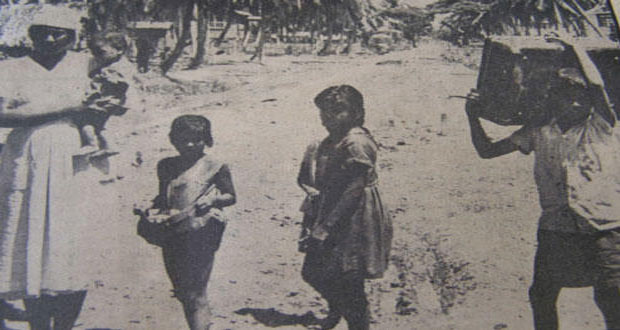
Pictured is a family, among the many who were most affected during the years-long struggle. (Excerpt from GUYANA: THE RACE PROBLEM, 1965-1992- Paul N. Tennassee)