






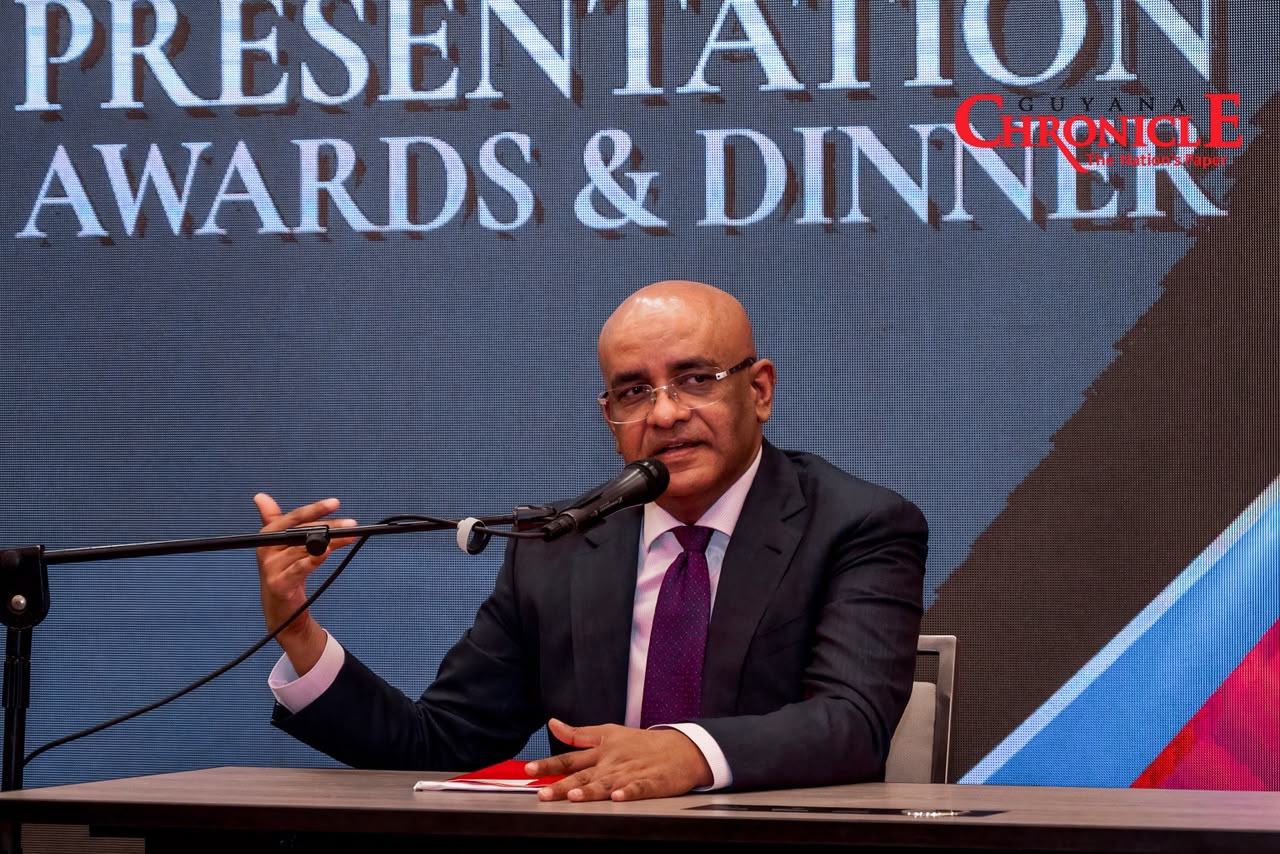
Vice President Dr Bharrat Jagdeo has outlined the government’s strategy to build a resilient, diversified economy that can thrive long after Guyana’s oil and gas resources are exhausted.
Central to this strategy is the deployment of resources today to develop industries that can generate sustainable employment, drive exports and create new avenues for economic growth.
Speaking at the 2026 Guyana Manufacturing and Services Association (GMSA) awards ceremony at the Marriott Hotel in Kingston, Georgetown on Thursday evening, the Vice President acknowledged the limitations of an economic model heavily driven by petroleum investments.
“We are looking at an economic model that’s driven a lot by oil and gas investments. We have recognised that. Although this model, oil and gas investment, has brought quite a bit in terms of revenue and business opportunities, it’s enclavic.”
He added, “It is also not that linked with the wider economy, except through the Local Content Act. It doesn’t generate a large amount of investments directly.”
Against this backdrop, the Vice President said the government is aggressively pursuing the development of a post-oil economy, even as global demand for petroleum resources remains strong.
“There’s still major global demand for oil and gases resources. But we need to start now. Discussing and building out the post-oil and gas economy.”
Dr Jagdeo recalled discussions over the years with several leaders of Trinidad and Tobago, including Patrick Manning, Basdeo Panday and Kamla Persad-Bissessar. He noted that despite being in the oil and gas business for more than a century, the twin-island republic had, in many respects, failed to adequately prepare for a post-oil economy.
Guyana, he said, has taken note of these lessons and their implications for employment, business development and long-term economic growth.
To this end, the government has identified several industries which, although smaller in scale, have considerable potential to drive exports and competitively substitute imports. Dr Jagdeo said these industries have the potential to generate between US$20 million to US$50 million in revenue, create thousands of jobs and establish strong linkages with the wider economy.
The government is also focused on building the institutional capacity necessary to support economic diversification.
Another critical component of the strategy is ensuring that economic opportunities and wealth are spread across the country. Dr Jagdeo said this requires targeted infrastructure investments beyond the capital, complemented by a suite of incentives to attract investors.
The Vice President also outlined the government’s willingness to co-invest in projects in Region Three and other regions to stimulate economic activity.
It is through this framework, Dr Jagdeo said, that Guyana can build lasting economic resilience and ensure the wealth generated from its petroleum resources translates into prosperity that outlives the industry itself.




