






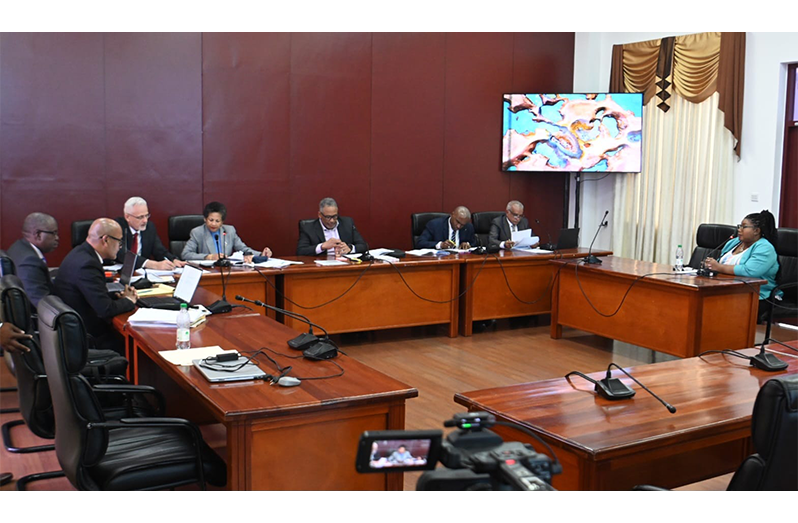
TESTIMONY before the Commission of Inquiry (CoI) into the sinking of the MV Barima revealed that the official tonnage figure recorded for the vessel’s final July 18 voyage was derived from an inherited accounting formula based on revenue, not an actual measurement of cargo weight.
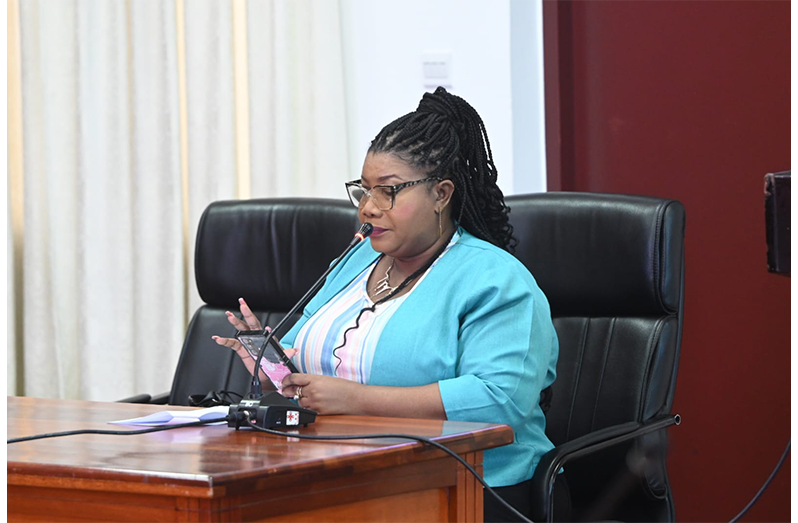
Testifying before the commission on Thursday, Kenese McLean, Cargo Cashier with the Transport and Harbours Department (T&HD) at the Kingston Wharf, explained that the estimated 268 tonnes of cargo attributed to the vessel was calculated mathematically from collected freight receipts.
McLean testified that the department arrived at the tonnage figure by taking total cargo revenue, such as the $1,281,698 recorded for general goods, and dividing it by a fixed rate of $6,200.
The total, 268.8 tonnes, was rounded down to the 268 tonnes. McLean gave that calculation to her supervisor the days following the vessel’s sinking. Other items such as bags of fertiliser, an all-terrain vehicle (ATV), pipes and a casket were added afterwards and were not part of the 268-tonne figure.
When pressed on the origin of the $6,200 divisor, McLean described it as a legacy practice passed down by departmental supervisors based on a historical blending of B-class and C-class tariff charges.
Under cross-examination, McLean acknowledged that the calculation was an administrative revenue conversion rather than a physical measurement of mass. Asked directly by Commissioner Nyree Dawn Alfonso whether she appreciated that dividing cash revenue by 6,200 did not reflect the true physical weight of the vessel’s cargo on July 18.
McLean conceded: “That’s true… It’s not giving me the actual weight.” She added that the cargo cashier’s role is strictly confined to financial accounting.
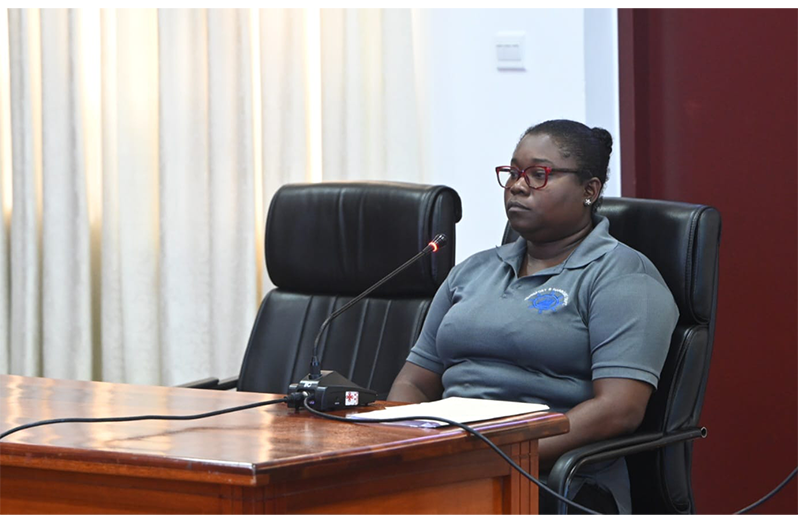
McLean’s testimony aligned directly with earlier evidence tendered by Michelle Reid, T&HD Assistant Traffic Superintendent at the Kingston Wharf. Reid informed the commission that operations at the wharf are conducted without any weighing scales or equipment to determine the exact weight of goods boarding vessels.
According to Reid’s testimony, personnel and vessel captains have had to rely on visual approximations, such as monitoring draft markings and the vessel’s load line in the water, to assess cargo depth rather than weighing individual consignments.
“He doesn’t have a scale, he doesn’t have a weight,” Reid said of the captain. The draft markings on the load line served as the only gauge of how much the vessel could take.
Commissioner Dr Andrzej Jasionowski scrutinised how the July 18 figures compared to earlier scheduled trips. Departmental invoice logs examined during Thursday’s hearing showed that on an earlier voyage on June 26, the MV Barima carried higher recorded revenue and substantially larger paper tonnage under the same formula.
Commissioners pointed out that the June 26 voyage generated over $2.16 million in cargo earnings, yielding roughly 295 calculated tonnes, marking an instance where the vessel reached its load-line draft while sailing safely, compared to the lower figures calculated for the July 18 departure.




