






THE Government is moving to overhaul solid waste management across Guyana through a five-year national strategy that will prioritise improved disposal infrastructure, stronger enforcement, recycling, composting and public education.
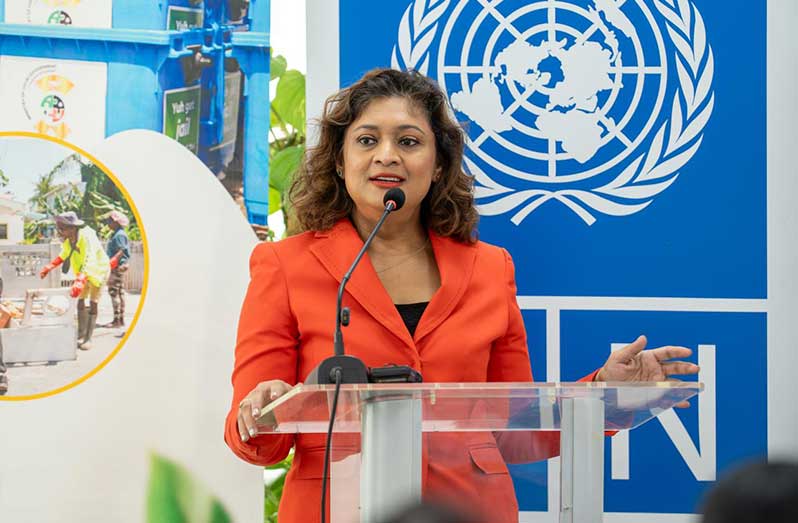
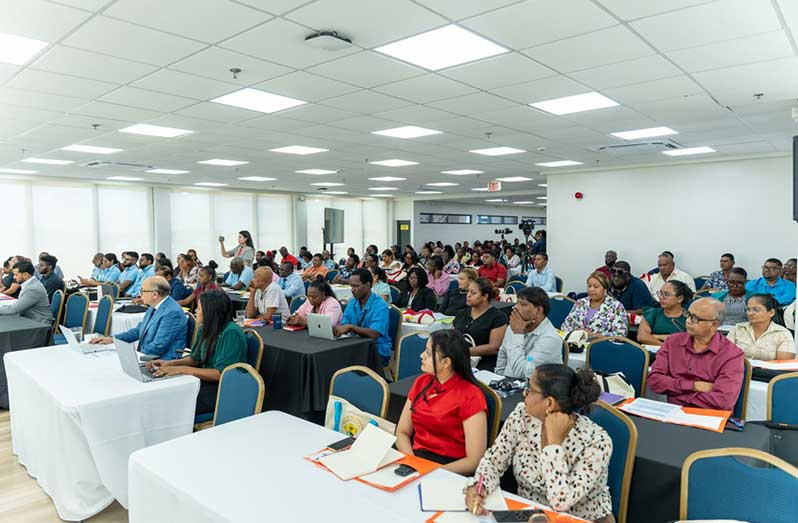
The proposed National Solid Waste Management Strategy and Action Plan was examined on Wednesday during a validation workshop hosted by the Ministry of Local Government and Regional Development, with support from the United Nations Development Programme (UNDP), at the World Trade Centre in Georgetown.
Addressing the gathering, Minister of Local Government and Regional Development Priya Manickchand stressed that improving the country’s waste management system requires a coordinated effort involving central government, local democratic organs, the private sector, development partners, households and individuals.
She said Guyana must move away from longstanding practices of improper waste disposal, acknowledging that some of these habits developed when communities lacked adequate equipment, resources and organised garbage collection services.
However, the minister emphasised that changing those practices must now become a central part of the country’s approach to managing solid waste, particularly as development places increasing demands on municipal and community infrastructure.
Manickchand also called for a shift away from conventional waste collection and disposal towards a circular economy, in which waste is treated as a resource that can generate economic and environmental benefits through recycling, composting and other recovery initiatives.
She said the national strategy must be informed by assessments of individual communities, including the quantities and types of waste generated, the resources required to manage it and the potential for recycling and composting.
Organic waste, she noted, could be converted into compost to support agricultural production and initiatives such as school gardens, creating a link between waste management and the country’s wider agricultural development objectives.
The minister said the five-year plan must establish clear objectives, measurable targets, deliverables and associated costs to ensure that its implementation can be properly monitored and evaluated.
On infrastructure, Manickchand outlined several interventions already being undertaken by the Government, including the distribution of garbage compactor trucks to municipalities and Neighbourhood Democratic Councils (NDCs) where the equipment can be effectively utilised.
Central government has also provided financial assistance to support the operation of the vehicles, including expenses associated with drivers, fuel and maintenance.
Additionally, eight new landfill sites are being developed across the country as part of efforts to replace traditional dumpsites with properly managed waste disposal facilities.
The proposed facilities are expected to support improved waste treatment, recycling and composting while reducing the risk of garbage entering waterways, contaminating land and affecting residential communities.
The minister also pointed to legislation aimed at strengthening enforcement against improper waste disposal.
A Bill recently laid in the National Assembly seeks to amend the Environmental Protection Act by expanding the categories of persons authorised to enforce regulations, institute charges and prosecute offences.
She further committed to having the Integrated Solid Waste Management Bill laid in the National Assembly before the end of the first quarter of 2027.
Turning to Georgetown, Manickchand highlighted the city’s recently introduced Solid Waste Management Plan as an example of how targeted interventions could address longstanding sanitation problems.
She identified several challenges, including contractors failing to adhere to garbage collection schedules, the discontinuation of parapet waste collection since 2017, inadequate monitoring of contractors and the absence of organised collection services in some communities, including Sophia.
Measures introduced to address these deficiencies include financial penalties for contractors who miss scheduled collections and the reintroduction of parapet waste collection in collaboration with the Mayor and City Council.
The Government has also deployed monitors across Georgetown’s 15 constituencies to oversee collection schedules, assess contractor performance and identify illegal dumping.
Electric bicycles have been provided to support the monitoring exercise, while garbage collection services are being extended to communities that were previously underserved.
Manickchand said the approach adopted in Georgetown, which involves identifying specific shortcomings and developing targeted solutions, would be replicated in other parts of the country.
She also underscored the importance of public education and behavioural change, warning that irresponsible disposal practices must not be passed on to future generations.
In this regard, the ministry is collaborating with UNDP on a training-of-trainers programme aimed at strengthening solid waste management education in secondary schools, with plans to eventually extend the initiative to primary schools.
The programme is intended to equip young people with a better understanding of responsible waste disposal and the consequences of poor sanitation for public health, communities and the environment.
The draft national strategy incorporates a diagnostic assessment of Guyana’s existing solid waste management arrangements, an examination of the regulatory and programme framework, and the conceptual design of a comprehensive national action plan.
UNDP consultant Dr Guillermo Roman Moguel presented the proposed strategy, which is organised around five key areas: strengthening institutional and regulatory frameworks; implementing pollution prevention measures; strengthening waste management controls; developing circular economy and financing schemes; and advancing communication, training and education.
The validation exercise provides stakeholders with an opportunity to assess the proposed interventions, examine their potential benefits, risks and impacts, and submit recommendations to inform the final document.
The workshop was attended by Permanent Secretary Miguel Choo-Kang, Deputy Permanent Secretary Godfrey Munroe, Director of Sanitation Satrohan Nauth and UNDP Officer-in-Charge Dhiraj Singh, alongside representatives of government agencies and other stakeholders.
UNDP Programme Analyst Colin Mattis facilitated the proceedings.
The validation workshop forms part of a wider technical mission that also includes solid waste management training for regional government officers, consultants and non-governmental organisations.
Manickchand reaffirmed the ministry’s commitment to implementing the strategy once finalised, stressing that the document must result in tangible and lasting improvements rather than remain a policy framework without practical outcomes.
“Anything we do, we must do it well. And if we’re going to look after garbage in this country, it will be done well,” she said.
The initiative forms part of the Government’s broader efforts to modernise sanitation services, strengthen local government capacity and establish a more sustainable and environmentally responsible waste management system nationwide.




