
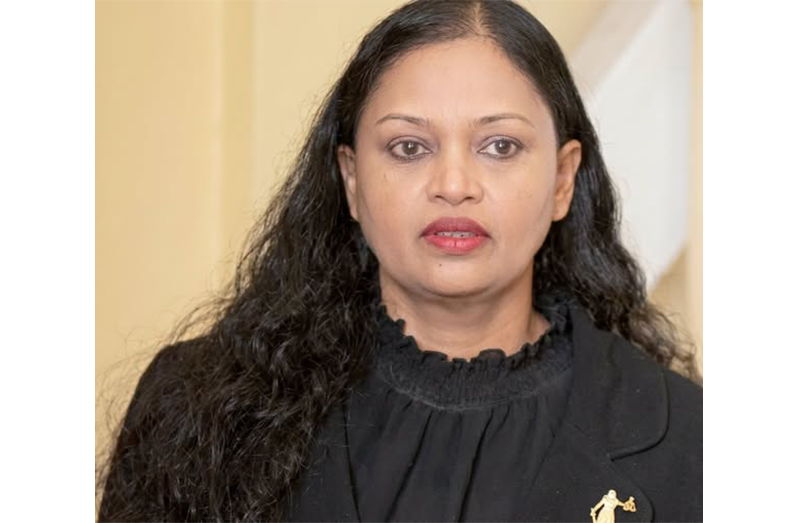
THE challenge brought by Director of Public Prosecutions (DPP) Shalimar Ali-Hack, SC, against Chief Magistrate Judy Latchman’s decision to maintain Opposition Leader Azruddin Mohamed’s $150,000 bail in the extradition proceedings is scheduled to be heard on December 21.
Following case management proceedings on Monday at the High Court in Demerara, Acting Chief Justice Navindra Singh directed King’s Counsel Terrence Williams, representing the DPP, to file written submissions by November 24.
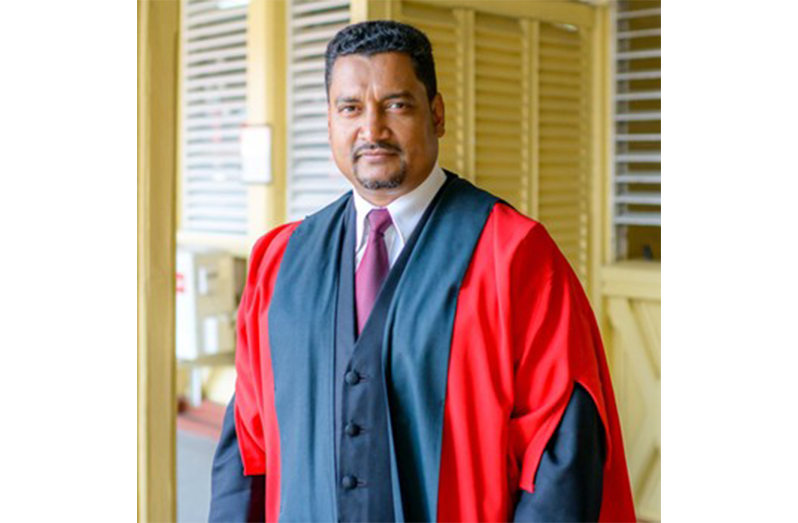
Mohamed, who is an interested party in the proceedings and is represented by Senior Counsel Roysdale Forde, and attorneys Siand Dhurjon and Damien DaSilva, has the same deadline. Senior Counsel Timothy Jonas, who represents Chief Magistrate Latchman, has until December 7 to submit his arguments. Williams and Forde will then have until December 14 to file replies.
The substantive hearing is scheduled for December 21 at 09:00 hours, with Justice Singh also setting time limits for the oral arguments to be presented by the respective legal teams.
The DPP is contending that Chief Magistrate Latchman erred in law when she refused to revoke Mohamed’s bail. The application was filed on behalf of the DPP by King’s Counsel Terrence Williams, and attorneys Herbert McKenzie and Celine Deidrick, the same legal team representing the United States in the extradition proceedings.
The prosecution argued that the Chief Magistrate improperly exercised her discretion when she rejected the request to revoke Mohamed’s bail. This was despite being informed that he had been arrested and charged with several offences, including firearm-related offences, attempting to obstruct the course of justice and cybercrime.
The DPP is seeking to quash the magistrate’s November 2 and 3 decisions and obtain declarations that her refusal was unlawful and in error of law. She also wants the court to declare that Section 7(1)(c) of the Bail Act does not require proof of a conviction or proof beyond reasonable doubt.
She is also seeking an order revoking Mohamed’s $150,000 bail and an award of costs
During the November hearings, the DPP said she informed Magistrate Latchman that Mohamed had been arrested and charged with unlawful possession of a firearm without a licence, unlawful possession of ammunition without a licence and attempting to obstruct the course of justice.
The charges stemmed from an October 12 incident in which Mohamed and other men were allegedly apprehended while conducting surveillance of the residence of Senior Superintendent Prem Narine, head of the Guyana Police Force’s Special Branch Unit and a witness in the extradition proceedings.
The prosecution also said Mohamed was charged under Section 9(2)(a) of the Cybercrime Act over the alleged unauthorised downloading and sharing of video data relating to the incident from the police database.
The DPP argued that the charges indicated that Mohamed had allegedly committed offences while on bail, interfered with a witness and presented a risk of similar misconduct.
The DPP criticised the magistrate for declining to hear police officers who were present and could speak to the allegations.
“The Applicant advised the Respondent that police officers who could speak directly to the allegations were present and could be examined by the Respondent, but the Respondent indicated that this was unnecessary,” the application states.
Here, the Applicant refers to the DPP, while the Respondent refers to Chief Magistrate Latchman.
The DPP said Chief Magistrate Latchman rejected its request on the basis that the charges alone did not establish that Mohamed had committed an offence or was likely to commit another offence. She records her reasoning: “there must be something substantial that elevates the charge to satisfy the court that the defendant has committed an offence or is likely to commit an offence.”
The prosecution argued that a conviction or proof beyond reasonable doubt is not required to establish grounds for revocation under the relevant provision.
INSUFFICIENT EVIDENCE
Chief Magistrate Latchman, in submissions filed through Senior Counsel Jonas, has defended her decision, maintaining that the prosecution failed to provide sufficient evidence to justify revoking Mohamed’s bail.
She also argued that the DPP had no standing to bring the judicial review proceedings or seek the orders requested. The Chief Magistrate contended that such authority under the extradition legislation rests with the requesting treaty territory after it obtains an Authority to Proceed from the responsible Minister.
She stated, “The Applicant herein, the Director of Public Prosecutions, has no standing to bring this action, or to seek the Orders sought herein.”
She said the prosecution had also relied on allegations that Mohamed could face charges of murder, attempted coup and evidence tampering, as well as claims of threats and verbal abuse against Narine. However, she said no particulars were provided about the alleged threats or a photograph circulated on social media.
The prosecution later relied on the firearm, ammunition, obstruction of justice and cybercrime charges as grounds for revocation. But Chief Magistrate Latchman maintained that pending charges, without more, did not satisfy the legal threshold.
“In making my decision not to revoke the Interested Party’s (Azruddin Mohamed) bail I considered that criminal charges without more did not satisfy the threshold set by section 7(1)(c)(i) (of the Bail Act),” she said.
She said she was not satisfied that Mohamed had committed any of the acts contemplated under the provision and had weighed his constitutional right to liberty against the effective administration of justice.
Chief Magistrate Latchman also defended her refusal to view social media recordings allegedly containing threats against Narine, stating their authenticity, source and chain of custody had not been established by a witness with personal knowledge.
She stated, “I therefore declined to view any recording whatsoever taken from social media which was not proved by a witness with personal knowledge of its source, authenticity or chain of custody.”
She described the recordings as potentially incomplete, inadmissible and unreliable, and potentially prejudicial.
She said she invited the prosecution to submit an affidavit showing that Mohamed was likely to commit another offence, interfere with witnesses, tamper with evidence or obstruct justice if released, but no such affidavit was submitted.
The Chief Magistrate said there was also no evidence that Mohamed was a flight risk, had provided a false address or breached his bail conditions.
“There has to be something on the Record that will satisfy the court that the defendant has committed an offence or is likely to commit an offence and in the matter before this Court. I am not satisfied that bail should be revoked based on the pending charges,” she said.
Although the Chief Magistrate declined to revoke Mohamed’s extradition-related bail, he has remained in prison since October 30 after being denied bail in a separate cybercrime case involving allegations of unauthorised access to and distribution of footage from the Guyana Police Force’s Safe Country surveillance system.
Mohamed also faces separate charges of unlawful possession of a firearm and ammunition, and attempting to pervert the course of justice, arising from a police investigation into a shooting incident outside the residence of Narine on October 12.
He was granted $750,000 bail in that matter by Principal Magistrate Faith McGusty on October 16, alongside his driver, Eugene Thorne, and videographer, Mario Mohamed.