






A Journey of Courage, Community and Collective Responsibility
By Frederick Halley
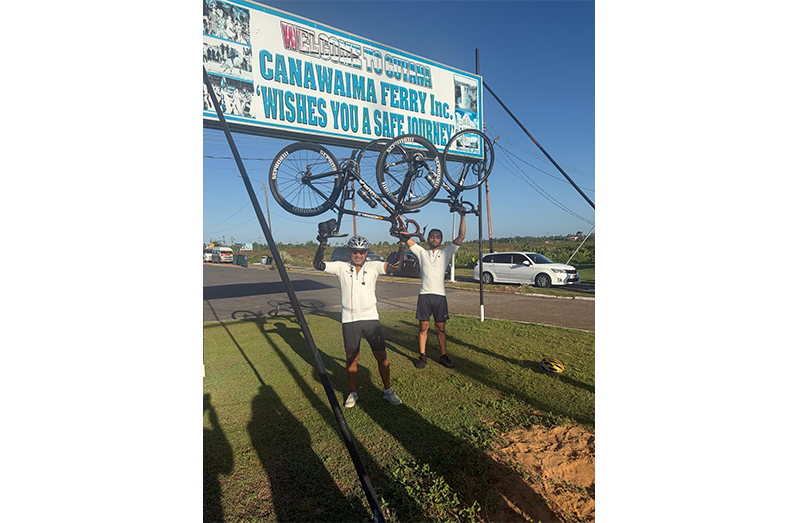
ON October 24 and 25, 2026, the roads of Guyana became the setting for something larger than a cycling event. Hope in Motion – Education & Empowerment brought together people from different communities, institutions and walks of life around a shared message: gender-based violence demands our attention, our compassion and our collective action.
The vision for the ride came from Harry Camlasaran, a Guyanese Canadian whose determination to use cycling as a means of advocacy inspired this inaugural journey. Andrew Ramphal and Amar Camlasaran joined Harry. Together, the three cyclists undertook a gruelling 188-kilometre ride over two days in temperatures reaching 38 degrees Celsius.
Despite the punishing heat and physical demands, they remained enthusiastic to the very end. Their endurance was a fitting expression of the determination needed to keep difficult conversations about gender-based violence alive.
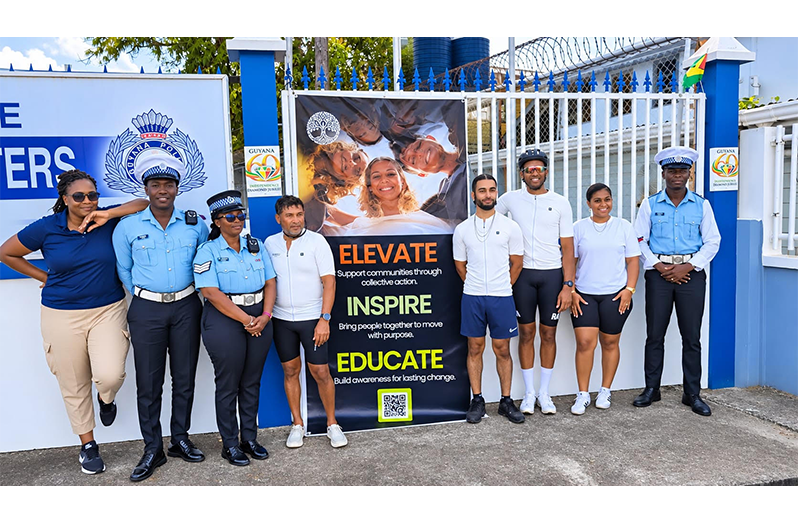
The organisers, MSM Global and Hope in Motion – Education & Empowerment, are sincerely grateful to Prime Minister Mark Phillips and the Office of the Prime Minister for their support and to the Ministry of Human Services for meeting to discuss the venture. They also thank the Ministry of Home Affairs, Guyana Police Force, and Guyana Fire Service for their assistance.
Special appreciation goes to Jasmine Louisy of the Ministry of Home Affairs, who worked diligently to connect the organisers with the police and fire chief and helped open the channels needed to coordinate this multi-region undertaking.
Rosalinda Rasul, Head of the Diaspora Unit of the Ministry of Foreign Affairs and International Co-operation, and Keisha Chung, President of the Rotary Georgetown Central, also received kudos for their engagement and support.
At 63 Beach, Overseer Khemraj and Vice Chairman Lakeram Singh extended a welcome and support. Their engagement showed how local leadership can connect a national concern to the communities where real change must take root.
Hope in Motion was sustained by the generosity of sponsors and partners whose contributions took many forms. These included Stena Drilling; Buddy’s Group of Companies and Shoreline Estates; Chef Dev; Personalised Gifts Guyana; Kids Reading & Research; 19 Labs; the Hear Her Foundation; Collette Venture Mortgages; Canada–Guyana Chamber of Commerce; Big Red’s Kitchen; and Leisa’s Salon and Beauty Supplies.
“Our appreciation extends to WANSAT for providing mobile internet connectivity along the route and to NCN Guyana and the Guyana Chronicle for helping give visibility to the initiative and its message. Thanks to CBN (Caricom Business Network), Let’s Talk Linden, Visit Guyana and the Guyana Independence Celebrations Committee for giving us space to discuss or mention the event. Each organisation contributed to an effort whose value lay not in publicity but in drawing attention to the safety and dignity of people affected by violence.”
According to the organisers, “Buddy’s Group deserves particular recognition for its generous sponsorship of overnight accommodation at its beautiful Shoreline Estates. After a demanding first day, our team arrived at beautiful, spacious, well-appointed apartments with all the amenities needed for comfort and rest. The accommodation was more than a place to sleep: it gave cyclists and volunteers a welcome opportunity to recharge. We enjoyed an excellent night’s rest and began Day Two refreshed and grateful. It was a thoughtful, substantial contribution to the journey’s success.
“At the close of Day One, Simple Pleasures provided relaxation and refreshments, compliments of Arav Jagroop, who travelled from Brooklyn to join us. That time together brought laughter, fellowship and a chance to reflect on the day. On Day Two, Donna Lisa Mohamed generously provided lunch: delicious local Guyanese dishes in abundant portions. These acts of hospitality cared for the people doing the work and strengthened the camaraderie that carried us to the finish.”
A public event is often remembered for the people visible at the front, but its success depends equally on those working quietly behind the scenes. The Hope in Motion organising team included Shawnde Lewis, Phinehas Haruna, Donna Lisa Mohamed, Adaeze Anyanwuntaku, Kerwin Moseley, Kiki Adigo, Rita Sookrit, Scott Charitar, Patrice Wishart, Eritha Huntley-Lewis and Wanica Persaud. Their contributions to planning, communications, outreach and coordination helped turn a demanding undertaking into a shared achievement.
Among the volunteers who provided support vehicles were Amar and Nadine Ram; Roze Camlasaran and Arav Jagroop; and William Moseley and Jennifer Simon. The on-the-ground volunteers included Lydia Fraser, Jezelle Zatorski and Eze Okpokiri, who worked alongside the Hope in Motion team at the National Park. “Their time, practical assistance and willingness to step in where needed were invaluable. Every person who helped, whether publicly or away from the cameras, played a part in bringing this initiative to fruition.”
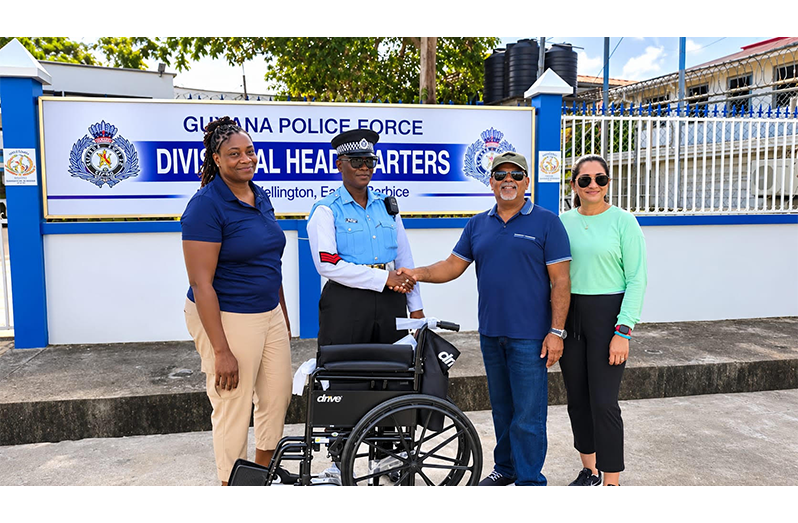
The journey also produced a practical act of generosity. 19 Labs donated a brand-new wheelchair, which it handed over to the Fort Wellington Police Headquarters for presentation to someone in need. “We are grateful for this thoughtful contribution, which offers a direct and meaningful way to support someone facing mobility challenges.
“We are also going to be directing funds received through Hope in Motion to Night Shelter. No final allocation has yet been made, but the possibility reflects our desire for the support generated by this initiative to benefit vulnerable members of our community beyond the two-day ride.”
According to Dr Michelle Moseley, founder of MSM Global and Hope in Motion – Education & Empowerment, “gender-based violence is not simply a private family matter. It affects children, relationships, workplaces and communities. Its forms include physical violence, psychological abuse, intimidation, coercive control and financial manipulation. The effects can endure long after the immediate incident has passed. Education is therefore essential: we must challenge harmful assumptions, listen without judgement, and help people recognise when they need support.
“We must engage men and boys as active participants in building respectful relationships, support survivors without blame and strengthen connections among public agencies, community organisations, schools, employers and faith-based institutions. A two-day ride cannot resolve a deeply rooted social challenge. It can, however, create space for a conversation that someone may have been afraid to begin.
“As I reflect on the journey, I am struck by how much was made possible through shared purpose. Public servants opened doors, businesses provided resources, volunteers gave their time, and communities offered encouragement. Leadership, I was reminded, is not merely about standing at the front; it is about making room for others to contribute their strengths to something that matters.
“To Harry, to our team, volunteers, sponsors, partners, officials and every person who encouraged us along the road: thank you. If this journey helped even one person feel less alone, seek assistance or reconsider an attitude that permits abuse to continue, it has served a purpose greater than the distance travelled. The cyclists have completed their ride, but our collective responsibility remains. Hope must remain in motion.”




