






–additional trees, decorative plants to complement improved parking, road safety, public spaces, Edghill says
THE preservation and restoration of Georgetown’s greenery remain key parts of the government’s ongoing infrastructure upgrades, with the Ministry of Public Works again assuring citizens that existing trees will be preserved and additional ones and decorative plants will be planted as the government’s hard-shoulder improvement programme progresses.
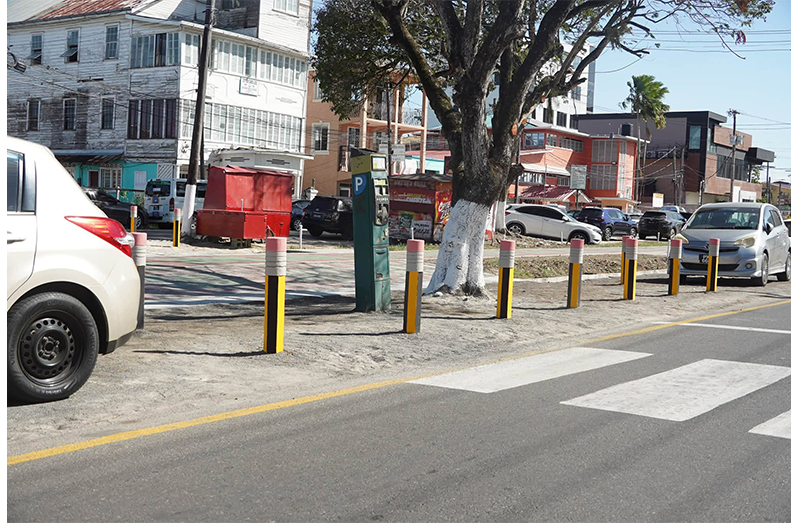
Minister of Public Works Juan Edghill, during a live broadcast from central Georgetown on Thursday, explained that the materials being used to strengthen the shoulders would still allow water into the soil, allowing grass and trees to grow back.
He also outlined the different approaches being taken across the city, including the removal of derelict vehicles, improvements to drainage and the creation of additional parking spaces.
Speaking from Carmichael Street, in front of the Bishops’ High School, the minister used the completed section to highlight what residents could expect when the programme is finished.
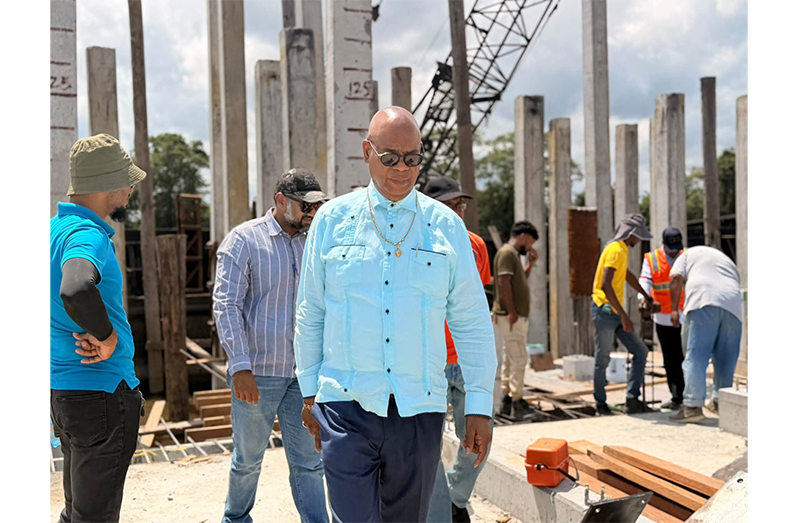
He said that the project was designed to enhance existing infrastructure while addressing longstanding challenges associated with muddy, uneven and often unusable verges, particularly during periods of rainfall.
According to Edghill, the grass currently covering some of the shoulders sits above mud, which becomes soggy when it rains, making parking difficult and creating hurdles for motorists and pedestrians.
The upgraded surface, however, will ensure the ground is more stable while still being able to absorb water.
Explaining the process, the minister noted, “In creating the shoulders, the material that is being used is that we are excavating the mud, we are compacting with sand, layers of sand, I think it is about six inches of sand, then you have crush-run or sifting, crush-run and then sifting again.”
This, he said, would create a solid surface without impacting the greenery.
The minister was keen to emphasise that the programme does not involve the removal of all existing trees and green spaces, explaining that efforts have been taken to protect trees while improving the surrounding infrastructure.
He also highlighted that some areas are already seeing visible improvements, with the next phase of work being focused on restoring greenery through the planting of additional trees and decorative plants.
He noted, “All trees will remain. And as a matter of fact, eventually we will be planting more trees and decorative plants.”
Edghill also explained that the programme will seek to improve each location, with wide verges allocated for parking, while other sections will be maintained as landscaped green spaces.
Beyond the environmental considerations, the minister highlighted the programme’s contribution to road safety and the removal of derelict vehicles that have occupied valuable public spaces across Georgetown.
He disclosed that more than 50 derelict vehicles had already been removed from the North Georgetown area since the commencement of the initiative, with approximately 58 additional vehicles identified for removal.
According to Edghill, reclaiming these spaces would create more opportunities for parking, improve access to businesses and provide residents with additional room to accommodate their vehicles.
The upgrades are also being undertaken alongside improvements to drainage, with the minister noting that Georgetown’s existing infrastructure can accommodate only a certain amount of rainfall.
He explained that the National Drainage and Irrigation Authority (NDIA) has been carrying out work across the city, including the operation of pumps, while alleyways and connecting areas are being raised to reduce the movement of mud and silt into drainage systems.
However, he acknowledged that the execution of some aspects of the hard shoulder programme had created concerns among residents, particularly where contractors had left excavated materials and sand along roadways without completing the necessary work.
Edghill said the ministry has already met with contractors and instructed them to work with better practices, stressing that residents must not be left to deal with unnecessary obstructions.
He noted, “You just cannot come and dump sand in the middle of the road or dump a truckload of sand in the middle of the road or because you hired an excavator for several hours that you’re not ready to fill,” adding, “We have stopped all of that, and where residents have been affected by that, we apologise.”
As the programme advances, Edghill said, the ministry was also strengthening its monitoring systems to ensure contractors deliver work of an acceptable standard, while also strengthening communication and public education of residents.
Looking ahead, Edghill said the ministry was working towards completing most of the heavy construction activities before Christmas, with further improvements and restoration efforts expected to continue into 2027.
“By Christmas, most of the heavy lifting should be done, and the city should be okay,” he said.
He said the city should be in a much better condition by the holiday season, as the upgraded shoulders, improved drainage, and removal of derelict vehicles begin to make a noticeable difference. The next phase will see greater emphasis placed on the planting of trees and decorative plants, restoring the appearance of the city and creating more attractive spaces for residents.
He acknowledged that the ongoing works may temporarily affect the appearance of some communities, but maintained that the improvements will ultimately benefit residents and motorists.
“Pardon our appearance; we are a work in progress,” he said, adding, “All that we are doing is for the better of every resident and every citizen in Georgetown and around the country.”




