






WHEN the call came that lives were in danger off the Essequibo Coast, fisherman Haresh Singh was already in bed.
He got up, woke his brother and called a fellow fisherman. Their boats were fuelled for the morning’s fishing. Instead, they headed into the darkness to search for survivors of the MV Barima.
Before they returned, 11 people, including children, would be pulled from a life raft into the safety of his boat.
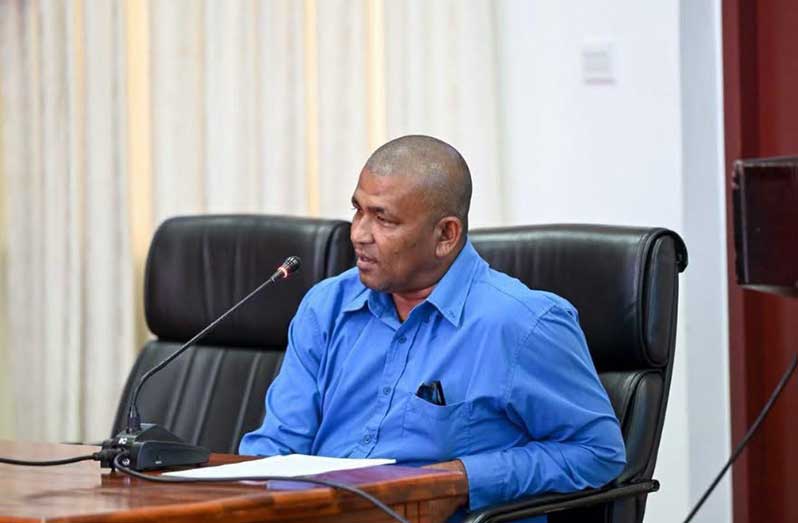
Testifying on Tuesday before the Presidential Commission of Inquiry into the ferry’s sinking, Singh recounted a rescue in towering waves, the anguish of parents who had lost children, and his subsequent effort to locate and mark the wreck.
A fisherman for 40 years, Singh brought intimate knowledge of the Essequibo waters to a mission launched after calls from Regional Chairman Devin Mohan and Minister within the Ministry of Public Works, Madanlall Ramraj.
He said three boats left the Hampton Court koker shortly before 1 am on July 19. Two police officers requested to accompany them, and he took them aboard in the event that more hands were needed. His sister-in-law also joined the mission.
At sea, waves rose as high as a lamppost, Singh said. The dark water, he told the commission, signalled a powerful current.
Flares guided the rescuers towards four life rafts. The first three were empty. In the fourth were 11 survivors. None, Singh said, was wearing a life jacket.
With planks tied to the raft, he climbed down to help bring them aboard.
“I go down from it, and with one hand, start putting some of them in the boat,” he recalled.
The survivors were in bad shape, particularly the children. The rescuers gave them food they had brought for the mission. But reaching safety could not quiet the accounts of what had happened in the water.
One woman said her child had slipped away. A man described having two of his children within his grasp before the current proved too strong. Singh told the commission how deeply those accounts affected him.
He took photographs and videos, sending updates to officials whenever the WiFi connection allowed.
His knowledge of the tides would also guide the search for the ferry. With reports placing it at four different locations, Singh urged a search elsewhere, reasoning from the current and the time it went down.
Then he encountered a smell unlike anything familiar from a lifetime at sea.
“This smell was totally wrong,” he said.
Perfume bottles, rum, bleach and a plastic bin floated nearby. He also saw bodies, which Coast Guard vessels recovered. A yellow rope helped convince him he had located the wreck.
Singh recorded GPS coordinates about 15 miles offshore, between Dartmouth and Better Success. As rain and rough seas closed in, he feared losing the position.
“I was a little scared,” he said.
He sent the location to Coast Guard Commander David Shamsudeen and sought assistance. Later, he attached a flag and a blinking red-and-green light to the rope, marking the site with equipment fishermen use at night.
When the rope subsequently came loose during diving operations, Singh returned and found the position again using his saved GPS coordinates.
The water there measured 55 feet deep about 15 miles from shore.
The commission is examining the July 18 sinking of the state-owned ferry, which was travelling from Georgetown to Port Kaituma, including the cause, compliance with maritime laws, and the search-and-rescue response.




