







ATTORNEY-General and Minister of Legal Affairs Anil Nandlall, SC, has warned that the alleged unauthorised extraction and disclosure of footage from the State’s Safe Country surveillance system could jeopardise national security, compromise public safety and expose the private movements of citizens.
Speaking recently on his weekly programme, Issues in the News, Nandlall said the controversy surrounding the alleged breach raised serious concerns about the security of the country’s surveillance infrastructure, and the privacy rights of the population.
He explained that the Safe Country programme, which involves the installation of closed-circuit television (CCTV) cameras across Guyana, was introduced as part of the government’s efforts to deliver safer communities.
The cameras are installed along the country’s highways, main carriageways and major roads in villages and communities, with recordings transmitted to a command centre at Liliendaal.
According to him, the system has the capability of capturing detailed information about the movements of individuals, including their locations, the vehicles they travel in and the people accompanying them.
“These images, they can establish the whereabouts, locations, and activities of you, every member of your family, your children, your loved ones, and even those you don’t like,” he said.
He explained that the system could identify vehicles through their registration numbers and establish when they passed particular locations.
Nandlall said: “If, for example, you’re living on the East Coast and you travel to Georgetown, they know that, at some point in time, you’ll have to return to the East Coast and exactly where you’ll have to pass because they know where you live.”
He stressed that the recordings were the property of the State and should not be regarded as information freely accessible to members of the public.
“These images belong to the State of Guyana.”
Nandlall said the compromise of the surveillance system could have far-reaching consequences, given the sensitive nature of the information captured.
“Every person’s safety can be jeopardised if this programme is compromised,” he warned.
He also highlighted the privacy implications, noting that the recordings could reveal where individuals had travelled, when they visited particular locations and whom they were with.
He said, “These images will tell you, can tell you where you have gone, when you have gone there, with whom you have went there.”
“Would you like all your private business wherever you are going to be disclosed, to get in the wrong hands?” he asked.
The Attorney-General said the issue was particularly concerning because the surveillance system records the movements of virtually everyone, including senior public officials and members of the security and judicial systems.
“The head of state, the head of the army, the head of the police force, our judges, our magistrates, our law enforcement officers, our ministers of government, our religious leaders, every single person is recorded on this camera,” he said.
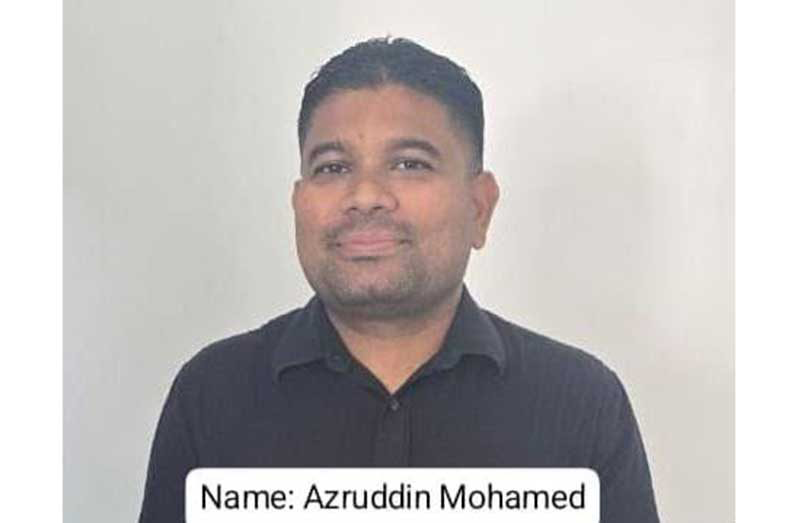
His comments come amid allegations that footage from the State’s CCTV network was obtained through an unauthorised arrangement involving two police constables, and Opposition Leader Azruddin Mohamed.
Nandlall referenced allegations that $800,000 was paid by Mohamed to obtain the recordings, questioning the justification being advanced that he was entitled to the footage for the preparation of his defence.
“And the allegation is, that one man, to provide a defence for himself, in a criminal case, has jeopardised the safety and security of all of us. The safety and security of the nation. And for what? Eight hundred thousand dollars,” he said.
Nandlall was referring to the criminal proceedings involving Mohamed and two of his employees, driver Eugene Thorne and videographer Mario Mohamed.
The three were jointly charged with unlawful possession of a firearm and ammunition, and attempting to obstruct the course of justice following the October 12 shooting incident outside the Kitty, Georgetown residence of Senior Superintendent Prem Narine, head of the Guyana Police Force’s Special Branch Unit.
They were each granted bail in the sum of $750,000
The senior counsel acknowledged that accused persons have constitutional rights to access facilities necessary for the preparation of their defence, as well as legal entitlements to relevant prosecution evidence.
However, he argued that those rights must be exercised through established legal procedures.
“There is no need for anyone to arrogate onto themselves the belief that they must go and steal or get someone to steal the evidence and then say that they are entitled to it as a matter of law,” he said.
Nandlall maintained that the prosecution has a common-law obligation to disclose evidential material that could assist the defence, while statutory provisions require disclosure of evidence intended to be used against an accused.
He questioned whether any society would permit a person facing criminal charges to pay someone operating a State surveillance system to retrieve recordings for their personal use.
“What society will ever allow a defendant charged in a criminal trial to pay a police officer to tamper with the State camera system and extract images from the State camera system and give it to him?” he questioned.
He further raised concerns about the alleged manipulation of the footage, stating images from different cameras were combined.
“The images, they are examined and they are being examined by the experts. Different images coming from different cameras were put together,” he said.
Nandlall also questioned the evidential value of the recordings following their alleged unauthorised extraction and public disclosure, warning that the circumstances surrounding their handling could affect ongoing criminal proceedings.
He said the controversy was not simply about access to evidence but also about the potential consequences for the administration of justice and the security of citizens.
Nandlall noted, “Just for the avoidance of doubt, these are criminal matters, highly criminal conduct. This strikes at national security. This is administration of justice.”
He added that the implications could extend to victims of crimes and their families, particularly if evidence held by the State could be obtained outside established disclosure procedures.
“And you can’t get a fair trial anymore because this evidence has now been perverted. It has lost its evidential value,” Nandlall said.




