





FOR a growing number of University of Guyana (UG) graduates, crossing the graduation stage in 2026 will represent more than the achievement of a university degree; it will mark a breakthrough for families and communities where higher education was once considered beyond reach.
Among the Class of 2026 are students from farming communities, Indigenous villages, riverain settlements and working-class neighbourhoods who have overcome financial hardship, unreliable internet access, family responsibilities and personal loss to become the first members of their families to earn university degrees.
Their achievements reflect not only individual determination but also the sacrifices of parents, relatives and loved ones who supported their journeys, often without having experienced university education themselves.
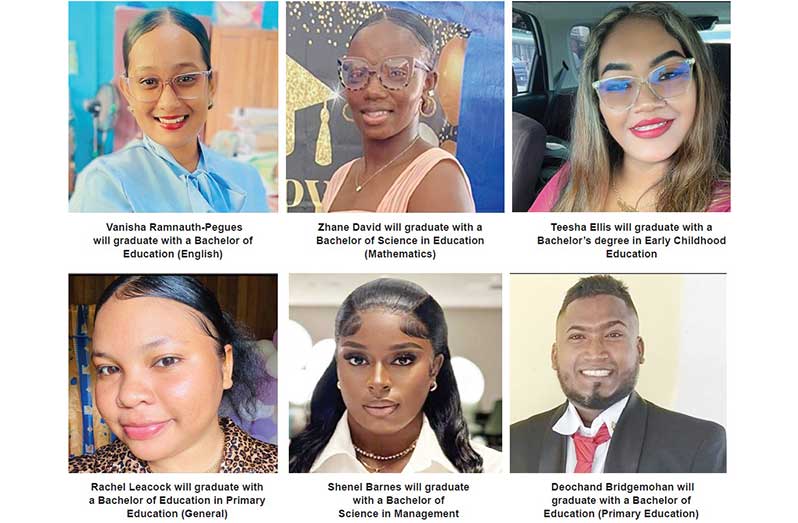
For Vanisha Ramnauth-Pegues, the journey was driven by her desire to secure a better future for her son. Originally from Nevis, she returned to Guyana with renewed purpose after becoming a mother and subsequently pursued teacher training before advancing to the University of Guyana.
She will graduate with distinction from the Berbice Campus with a Bachelor of Education in English, becoming the youngest among her siblings and the first in her family to complete a university degree.
Her parents played important roles in her success, with her father financing her first semester and her mother helping to care for her son while she pursued her studies. She had previously been recognised as the Best Overall Graduate in English at the Cyril Potter College of Education.
Another graduate whose achievement reflects the challenges of balancing education and motherhood is Zhane David, a mathematics teacher and mother of two.
David will earn a Bachelor of Science in Education (Mathematics), becoming the first in her family to obtain a university degree. Her university journey was postponed twice because of pregnancy and family responsibilities, and she eventually had to balance teaching, childcare and online classes that sometimes extended late into the evening.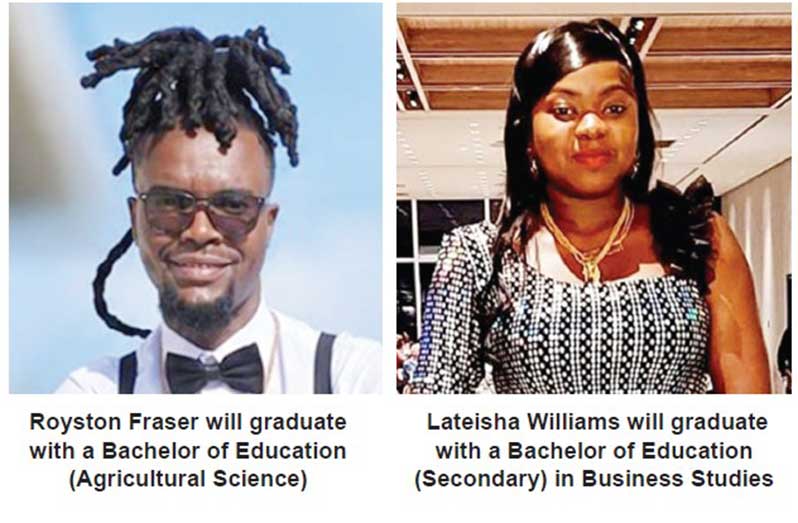
Despite moments when she considered giving up, she remained determined to finish what she had started, recognising the example her achievement would set for her children.
Similarly, 32-year-old Teesha Ellis of Toka, Region Nine, overcame considerable challenges to earn a Bachelor’s degree in Early Childhood Education.
The mother of three, who previously completed teacher training at the Cyril Potter College of Education, grew up as the second of seven children in a farming household. Studying from the Rupununi meant dealing with unreliable internet access, while pregnancy, morning sickness and childbirth added to the demands of her academic journey.
Now the first in her family to graduate from university, Ellis is encouraging young people in hinterland communities not to allow geographical isolation to limit their educational ambitions.
Rachel Leacock, 25, of Sand Hills in the Upper Berbice River, will also graduate with distinction in Primary Education.
Growing up as the second-youngest of 12 children, she wanted to challenge the perception that university education was beyond the reach of young people from communities with limited resources. Poor internet connectivity, sleepless nights and hospitalisation tested her resolve, but she remained committed to demonstrating what was possible through determination and hard work.
For Shenel Barnes of Haslington, East Coast Demerara, her achievement carries a deeply personal meaning. After initially choosing employment over higher education, she reconsidered her decision following the death of her father, who had repeatedly encouraged her to pursue a university degree.
She will graduate with a Bachelor of Science in Management from the School of Entrepreneurship and Business Innovation. Despite working full-time and having no immediate family experience of university to guide her, Barnes successfully navigated the demands of higher education with encouragement from her mother, sister and aunt.
She hopes to pursue a career in procurement and eventually complete a master’s degree in Procurement Management, while encouraging others to recognise that being the first in a family does not mean having to be the last.
The determination to overcome personal setbacks is also reflected in the experience of Deochand Bridgemohan of Eccles, East Bank Demerara, who will earn a Bachelor of Education in Primary Education.
As the youngest of four children, he was the only one in his family to advance beyond secondary education to the tertiary level. The death of a sibling during one of his semesters nearly derailed his studies, but encouragement from relatives and support from lecturers helped him complete outstanding examinations and assignments.
He is now urging other students to remain focused and persevere through difficult periods.
Royston Fraser of Union, West Coast Berbice, also set out to change the educational trajectory of his family. Growing up as one of seven children, he witnessed his older siblings leave school before completing their education.
Determined to break that pattern, he balanced employment and personal responsibilities with his studies and will graduate with distinction in Agricultural Science.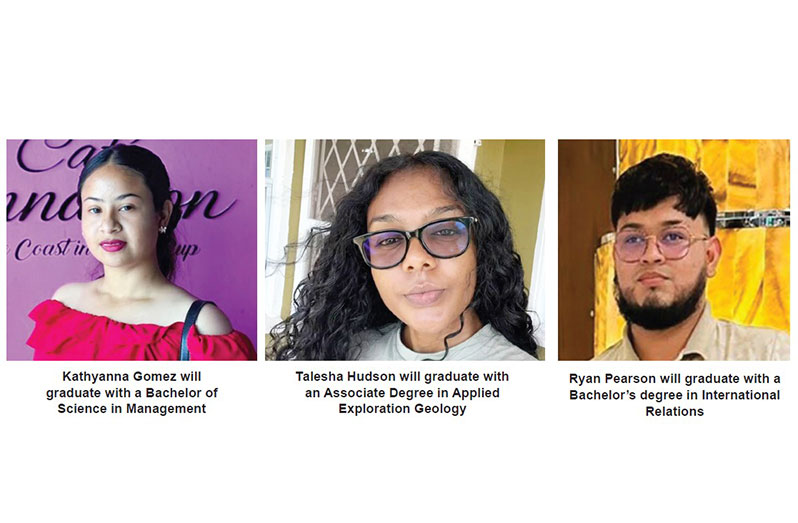
Meanwhile, Lateisha Williams, a Business Studies teacher at Houston Secondary School, will graduate with distinction in Secondary Education after balancing teaching, university studies and motherhood. Becoming pregnant during her first year at UG presented additional challenges, but support from her mother and colleagues helped her maintain strong academic performance.
Her achievement as the first in her family to earn a bachelor’s degree is one she hopes will create greater opportunities for her daughter and inspire other women pursuing education while raising families.
Kathyanna Gomez of Grant Success in the Lower Pomeroon River also overcame academic and financial obstacles to earn a Bachelor of Science in Management.
After initially failing Mathematics at CSEC and subsequently failing the university’s mathematics entrance examination, she persevered and passed on her second attempt. The introduction of free tuition at UG later eased the financial burden on her parents, although unreliable internet access continued to affect her studies when she returned to the Pomeroon for her final two years.
Another graduate from the Pomeroon, 27-year-old Talesha Hudson, will earn an Associate Degree in Applied Exploration Geology, becoming the first among her four siblings to obtain a university qualification.
Coming from a community where farming and gold mining are familiar livelihoods, Hudson pursued higher education to broaden her employment opportunities and improve her ability to support her parents. However, travelling between the Pomeroon and Georgetown, with one-way transportation costing more than $20,000, and securing accommodation presented significant challenges. The deaths of her grandmother and sister in February also added to her personal struggles.
For Ryan Pearson, 21, of Kuru Kururu, Soesdyke-Linden Highway, the journey to university began with a school trip to a career fair when he was in Form Three.
The third of five children of farming parents, Pearson will graduate with a Bachelor’s degree in International Relations, becoming the first in his family to earn a university degree.
His mother’s efforts to support the family’s education, including selling clothing and barbecue to meet school expenses and transportation costs, helped sustain his ambitions. He also overcame the disruption caused by the COVID-19 pandemic, financial difficulties and the death of an aunt during his third year.
Another graduate from the Class of 2026, Lateisha’s fellow first-generation achievers, are demonstrating that university education can be attained regardless of one’s background or starting point.
The University of Guyana, in congratulating the graduates and the wider Class of 2026, has highlighted their stories as examples of perseverance, family sacrifice and the transformative power of education.
Beyond the certificates and distinctions, their accomplishments represent new possibilities for younger siblings, children and entire communities, proving that one person’s decision to pursue higher education can change the expectations of generations to come.





