–China and St Lucia join as Alliance expands membership and advances plans for permanent headquarters in Guyana
THE Global Biodiversity Alliance (GBA) has expanded its international reach, with the addition of China and St Lucia bringing its membership to countries representing more than two-thirds of the world’s population, as the organisation moves to strengthen its work on biodiversity financing, scientific research and conservation.
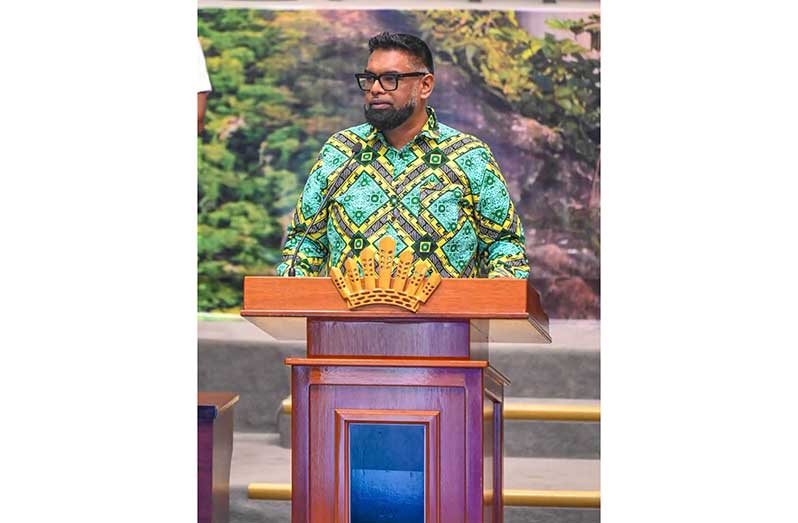
Head of State, President Dr Mohamed Irfaan Ali announced the latest additions during his address on the final day of the GBA Conference and Financing Forum on Saturday, where he highlighted the progress and impact of the summit has made.
Emphasising the growth in members an important step for the alliance, he said the two new members bring together some of the world’s largest and smallest countries under the Alliance, creating a unique opportunity to draw on a wider range of expertise, resources and experiences to develop practical solutions for biodiversity protection.
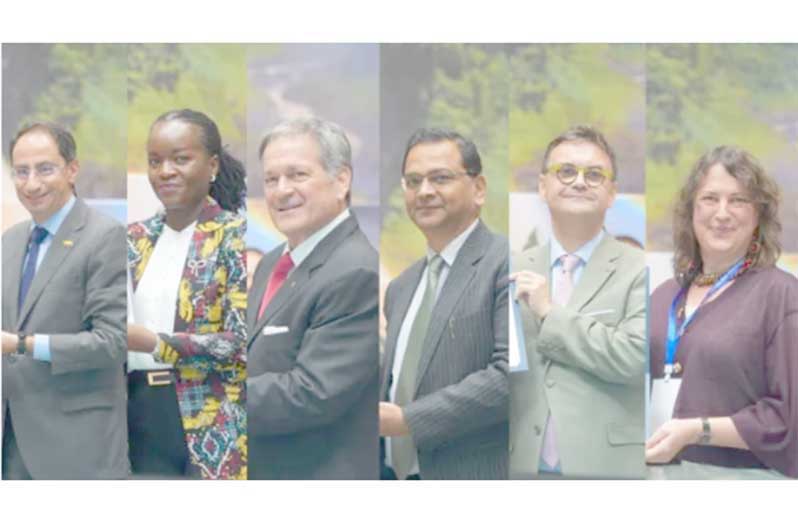
The Alliance, which was launched in Guyana a year ago, has grown from 17 founding members, with six countries, Colombia, Rwanda, Panama, India, France and the United Kingdom, joining on day one of the conference. President Ali called the addition of China and St Lucia significant, noting that the move brings both countries with large populations, including China and India, and smaller states into the same international platform.
As the Head of State shared, “Membership of the GBA, an initiative that was launched in this room just a year ago, now has country members that represent well over two-thirds of the world’s population,” the President said.
He added that the Alliance’s strength will depend on its ability to bring together the knowledge and contributions of its members, including universities, research institutions, scientists, technology experts and financing bodies.
Moreover, Dr Ali said the organisation must now move beyond discussions and use its collective membership, skills and expertise to develop an actionable agenda, with practical solutions to be advanced over the next 12 months.
Looking ahead, Dr Ali stated that members will be expected to contribute directly to the work, rather than simply provide support through a framework of action that is being developed to guide the Alliance’s next phase.
A major part of the Alliance’s work will be the establishment of a permanent international headquarters in Guyana, which Ali said is being advanced as a centre for collaboration, scientific research, innovation and practical conservation initiatives.
He noted, “We are progressing plans for a permanent headquarters for the alliance here in Guyana. A home for international collaboration, science, innovation and practical action,” the President noted. Furthermore, the President shared that the Alliance is also considering the establishment of large nurseries to preserve mangroves and other important tree species that could be lost during natural disasters. He cited the destruction of mangroves in Grenada following a major hurricane, arguing that having nurseries and a regional hub could allow countries to begin replanting and restoring natural assets more quickly after natural disasters.
He said Guyana would seek to work with Grenada and other members on this initiative. “We are going to try to work with Grenada. We are going to try to create a hub within CARICOM also to support the quick regeneration of natural assets when we have these disasters,” the President noted.
Financing was also highlighted through new partnerships involving private-sector organisations, investors and international institutions. Finance has been at the heart of this summit. As Dr Ali stated, “Finance is at the heart of our mission. And we need to find practical ways to mobilise private investment in biodiversity conservation. Importantly, the private sector and biodiversity risk companies must help design those solutions,” he said.
The President welcomed collaboration between Guyana’s private-sector representatives and the Villars Institute to bring together government and business leaders, international investors and experts to explore financing for practical biodiversity projects. He said the Alliance should help members share experiences and shorten the time needed to develop and implement conservation solutions.
The President also pointed to practical work under the Commonwealth Sustainable Cities Initiative, which is examining how biodiversity can be incorporated into urban planning and development.
He said a proposed Commonwealth Cities Investment Catalyst could help countries and cities develop projects to attract investment, noting, “Biodiversity is not just about forests and rural areas. It must also be part of how we design and develop our cities and here too, finance is essential,” he said.
The President said the Alliance will seek to develop practical models for incorporating trees into cities, including identifying species that can support biodiversity and improve air quality.
He proposed selecting a number of cities among member countries for pilot projects, allowing the impact of urban greening initiatives to be measured across different environments and city sizes. “We want to come up with practical models on trees within cities.
And the proximity of trees and the type of trees that will help promote biodiversity. Promote healthier air quality,” he added, “To come up with models for different city size, different city circumstances and to identify a few cities among alliance members,” he said.
The GBA summit is bringing together international representatives and partners to advance co-operation on biodiversity financing, conservation policy and scientific research under the theme, “Investing in Nature: From Global Commitments to Practical Action.”
With its expanded membership and plans for a permanent headquarters in Guyana, the Alliance is seeking to turn its growing international representation into coordinated action, stronger partnerships and measurable results for biodiversity protection.