CHRIS parked the Range Rover at the side of the main road on the East Coast and stepped out, pulling his cap low so no one would recognise him. He stood there for a little while, looking at the place he had come to visit. It was quiet and secluded, and after a deep breath, he walked a little way to a narrow lane the villagers called Old Road. It led through a small village where he had lived as a little boy.
“This road I can never forget,” he said to himself. “My footprints are probably embedded in the dirt.”
He had walked it as a little boy, going to school in worn boots and wrinkled uniforms, and he had held his drunken father’s hand to guide him home.
“The suffering of those days,” he said, a wry smile on his face.
He walked farther and saw the old house he had lived in still standing, but neglected. Nothing much had changed in the little village, nestled between silk cotton, tamarind and genip trees, a place time seemed to have forgotten.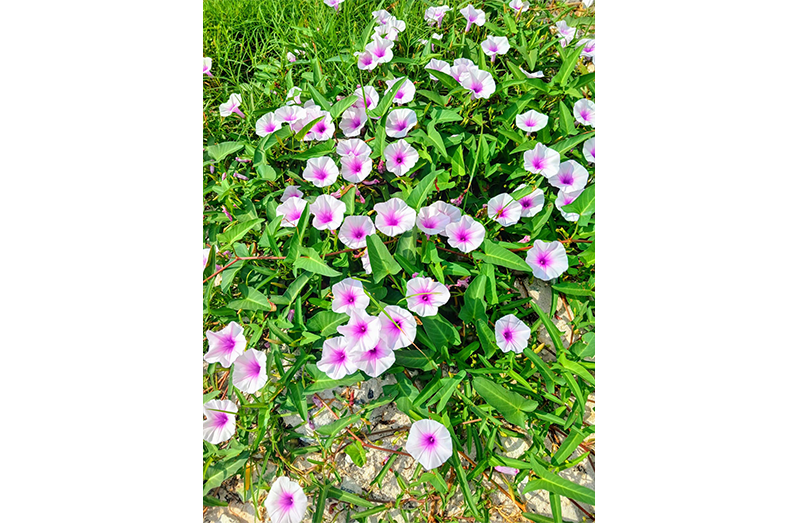
He left at fourteen to join a cricket academy in the city, sponsored by an overseas sports organisation. He had been spotted at school competitions for his batting talent, and that opportunity reshaped his life. He visited home only briefly until his first call-up at the national level, and from then on, he never looked back. But he had promised one person to return one day after becoming successful and established, and he never forgot that promise.
It was a kind old villager, Aunty Sheila.
She had a small fireside under the tamarind tree, not far from her house, and every morning she cooked delicious local food for customers in and out of the village. Chris passed her every morning on his way to school, and because his home always had too little food, his stomach would rumble at the aroma of Aunty Sheila’s cooking. A few times he had paused, wanting something to eat, but didn’t ask. Then, one morning, she called him and asked, “Yuh hungry, beta?”
He had nodded.
“Yuh doan get enough food at home?”
He had shaken his head, and the old lady had clicked her tongue sympathetically. “Yuh need good food tuh grow and become a big bai.”
She told him to sit on one of the tree stumps, wrapped fried bora with shrimps, potato, and tomatoes in a roti, and gave it to him with a tin cup of lime tea.
Food, for Chris, had never tasted as good as it did that morning.
It stayed etched in his memory, and even more so because, that morning, wildflowers bloomed riotously all around, making it a good day.
From that day on, she gave him food regularly, and his strength and agility improved enough for him to be selected for cricket matches and not be ignored for poor performances.
It was the kind act of an old lady that helped him to perfect his game, and that talent opened doors of opportunity for him.
Today, that poor boy had become rich and popular, but the one person he wanted to thank was not there. The fireside under the tamarind tree was gone, and her house had grown old and desperately needed repairs.
“What happened here?”
He was puzzled because he had been sending money regularly to care for her health and her house, and he had told her she was always in his thoughts. He stood there, trying to figure out what might have gone wrong, when a lady passed by pushing a fish cart. He stopped her. “Excuse me, aunty. Do you know the old lady that used to sell food under the tamarind tree?”
“Oh yeah,” she answered without hesitation. “She gone.”
“Gone where?”
“Don’t know, she jus gone.”
“Damn,” Chris muttered under his breath, and called his mother.
“There’s something I need to know.”
“What is it?”
“I am at our old home in the village.”
“Wah yuh doing there?”
“I came to see the old lady who used to give me food when I was literally starving, but she’s not here.”
His mother was silent for a while. Then she said, “Ah don’t know wah happen to she.”
“Oh yes, you do,” Chris said, a stern tone in his voice.
“You did not give her the money I sent, nor did you visit to see how she was doing. You lied to me!”
“Chris, please, listen—”
“How could you do something like that?”
He cut off the call and sat under the tamarind tree, a distressed feeling in his heart. The wildflowers blooming all around gave him a little lift, and as he got up to go, he said quietly but firmly, “I will talk to the relevant authorities to get some work done to uplift the village, and I’ll do my part as well.”
As he walked down the old road, he spotted a lady coming from church whom he recognised as Aunty Sheila’s neighbour, and he spoke to her.
She told him Aunty Sheila had become sick and, because no relative wanted to care for her, she was taken to a home.
“Which home?”
“Ah don’t know, son.”
Chris checked all the homes in the city, but she was nowhere to be found, and the next morning he drove to Berbice, to the Dharamshala, but she was not there either, nor in the Corentyne.
“Where are you?” he whispered, growing desperate.
He would soon have to leave for a tour of Australia, and his heart’s desire was to see her and spend some time with her before he left again. He sent messages to friends for information on elderly homes and received three addresses, but found no luck until he reached the third.
A long bridge across a canal took him to a white colonial-type house in a sprawling garden.
“This seems like a nice place. I hope she’s here.”
He spoke to the supervisor, who summoned the young doctor who had opened that home just a year ago.
“Do you have a Sheila Singh here? I’ve been searching for her.”
The doctor smiled and said, “I’m happy you’re here. She has been hoping to see you too.”
Chris breathed a deep sigh of relief, finally having found her. He was taken to a section of the living room that overlooked the garden, and he saw her lying on a recliner. The distress in his heart dissipated, and happiness surged through him as he knelt and took her hand.
“I’m sorry I took so long to return, and sorry my mother did not take care of you as I asked her to.”
Happiness shone in the old lady’s eyes, and she touched his hand, her arms now frail and feeble.
“Is okay, son, yuh follow yuh dream and ah suh happy fuh yuh.”
“She watched the CPL final,” the doctor told Chris, “and cheered every boundary you hit.”
“What?” Chris looked at her, surprised.
“You did great, son,” she said, touching his head and giving him her blessing.
He embraced her, tears in his eyes, and stayed, talking with her until she fell asleep.
“How did she get here?” Chris asked the doctor. “And who’s paying for her stay?”
“I was at a mandir in Strasphey, and a colleague’s friend told me of her story. That same friend created a fund for people to pay for her treatment and comfort.”
“She had helped many, and that good has come back to her. I will be making payments from now on for her.”
He visited her every day until it was time for him to leave on the tour, and he said, “When I come back, we’ll go visit your old village and rebuild your house.”
She watched him go and whispered weakly, “Goodbye, son.”
Two weeks later, the doctor called Chris. “I’m sorry, sir, she passed away.”
He brought her ashes to her old home, walked with them under the tamarind tree and among the wildflowers, then scattered them in the sea, because he had promised to bring her home to visit her old village.
She had helped a poor boy to follow his dreams, and his bat would now always speak her name.