






-calls for review of commission’s investigative powers
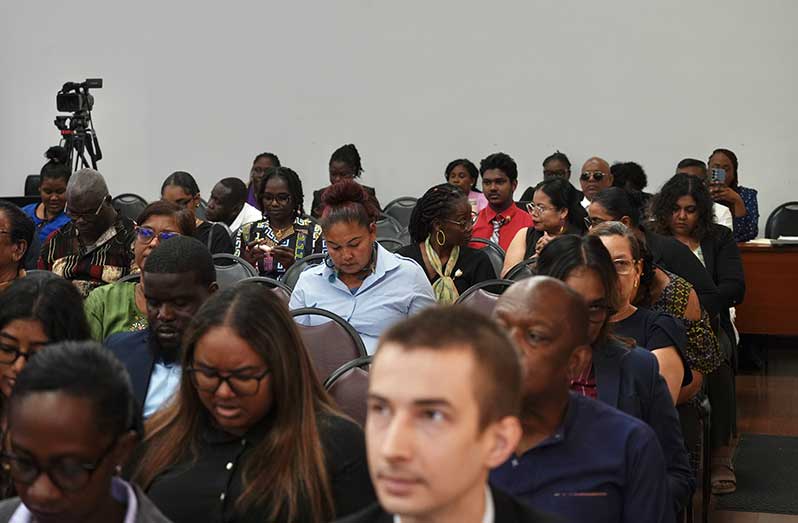
CONSTITUTIONAL reform and ethnic sensitivity took centre stage on Tuesday as the Ethnic Relations Commission (ERC) brought together representatives of its constituency bodies for a one-day consultation on key constitutional matters and the commission’s Glossary of Ethnically Sensitive Terms.
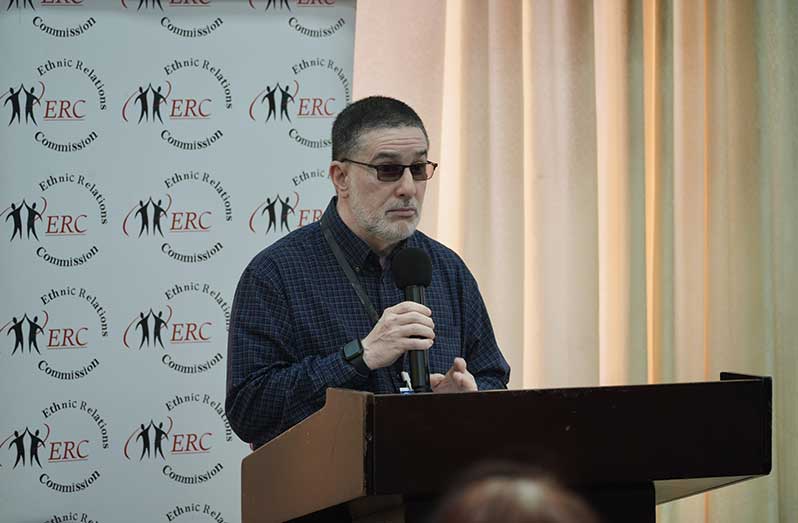
The ERC Chairman Shaikh Moeenul Hack used the opportunity to call for consideration to be given to strengthening the commission’s investigative powers.
The engagement formed part of the ongoing national conversation on constitutional reform, with participants contributing views and recommendations relevant to the ERC’s mandate. These submissions will be compiled and presented to the Constitutional Reform Commission before December 31, 2026, adding to the national dialogue on constitutional change and the role of ethnic relations in Guyana’s development.
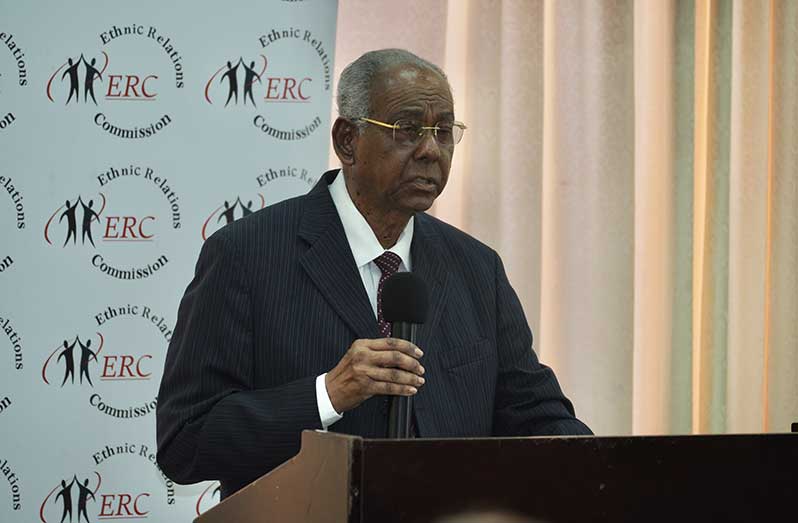
Hack said the commission’s experience has highlighted limitations in securing the attendance of persons who decline invitations to assist with investigations, which could delay the process or limit the information available to establish the facts. Former chairman of the Constitutional Reform Commission, Ralph Ramkarran, S.C., also addressed the consultation, reflecting on the country’s constitutional history and the importance of public education and participation in the reform process.
Hack said the consultation was intended to give representatives an opportunity to contribute their views rather than simply listening to the commission. He acknowledged the government for initiating the national exercise and the National Assembly for enacting the legislation that established the Constitutional Reform Commission, while recognising the participation of political parties, religious bodies, labour, the private sector, Indigenous organisations, women’s and youth groups, and other bodies nominated to serve on the commission. Their involvement, he noted, provides a broad platform for reviewing the country’s supreme law.
“The national constitutional reform process presents an important opportunity for Guyanese to contribute their views on the constitutional framework that governs our country,” Hack said. He noted that Guyana is undergoing significant growth and transformation, making it necessary to consider whether the constitutional framework has continued to serve every citizen fairly and effectively. “A constitution must remain a living document, one that reflects the aspirations of its people and earns their confidence,” he said.
One area Hack was keen to note merited consideration was the commission’s investigative tools. He explained that the ERC investigates complaints of discrimination and matters affecting ethnic relations, and that many people willingly assisted with its work. However, he said the commission has experienced limitations when persons decline invitations to assist with an investigation.
“The absence of a general mechanism to compel such attendance can delay the investigative process or limit the information available to establish the facts,” he said. Hack stressed that the concern was not directed at any individual, but related to the effectiveness of the institution, adding, “This is not a criticism of any individual. It is a question of institutional effectiveness,” he said.
He added that where the constitution assigned an institution important responsibilities, the legal framework should be examined to determine whether the appropriate powers and safeguards were available to allow those responsibilities to be carried out effectively.
The consultation also included a presentation by Ramkarran, who placed the current reform process in the context of Guyana’s constitutional history and the earlier reform exercise in 1999.
Highlighting the importance of public education and involvement in the reform process, Ramkarran recalled that the 1999 Constitutional Reform Commission operated within a six-month timeframe established by the Herdmanston Accord, a political agreement that gave rise to the commission.
He said the limited timeframe meant there had not been an opportunity to conduct the same kind of consultations with the public and organisations to discuss expectations for the process. Although a large number of meetings were held across the country, he said public education was limited or virtually non-existent, leaving people unaware of what constitutional reform involved. “We did not have the opportunity to have meetings like these to go out and talk to people, talk to the population, talk to organisations about what we expect to come out of the process. We did have a large number of meetings all over the country, but because public education was limited or virtually non-existent, people were unaware of what constitutional reform was about,” he noted.
In closing, Hack encouraged participants to move beyond identifying challenges and work towards recommendations that could strengthen equality, inclusion, ethnic security, and good relations in Guyana.
“Today’s consultation is an opportunity to move beyond identifying challenges and towards proposing practical recommendations that can strengthen equality, inclusion, ethnic security, and good relations in Guyana,” he said.
The ERC’s report is expected to bring together the contributions from the consultation and the commission’s own assessment of matters relevant to its mandate before the December 31, 2026, deadline. “Our intention is to make a constructive contribution to the commission’s work by ensuring that the concerns, experiences, and proposals shared by participants are properly documented and formally submitted for consideration,” Hack added.
The engagement forms part of the broader national conversation on constitutional change, with the commission seeking to ensure that the views of its constituency representatives and communities contribute to discussions on the country’s constitutional framework.




