RESIDENTS across Region Seven are benefitting from upgrades to roads, healthcare facilities, schools and community services, with regional officials reporting progress on several projects following a recent Cabinet outreach led by President Dr Irfaan Ali.
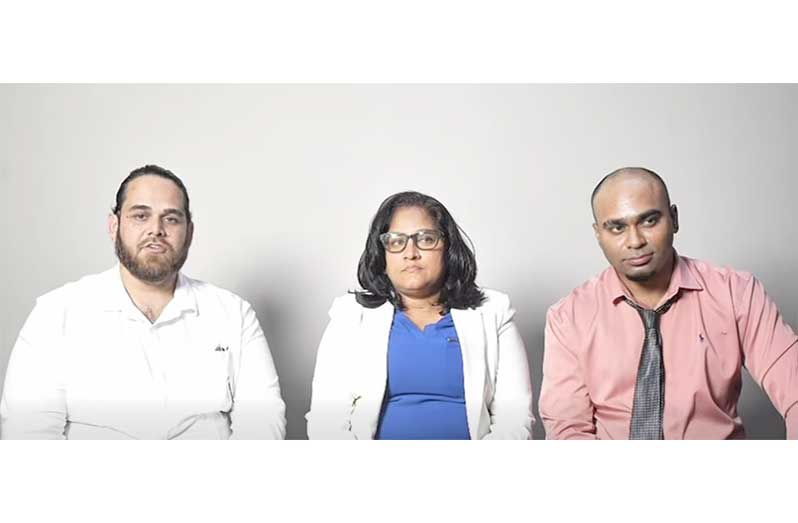
Regional Executive Officer, Dr Josh Kanhai; Regional Health Officer, Dr Mark Allen and Regional Education Officer, Samantha Phagu-Singh, recently outlined developments across Cuyuni-Mazaruni, including new schools, improved medical services, road works, drainage projects and expanded access to electricity and digital services.
Kanhai said several concerns raised by residents during the President’s outreach in Batavia have since been addressed or placed on the implementation schedule.
In Batavia, approximately two kilometres of roadway are being upgraded to an all-weather crusher-run standard, while concerns about sea defence are being addressed by the Sea Defence Board and the Sea Defence Department of the Ministry of Public Works.
Similar sea defence works assessed for central Bartica are also being prepared for tender, he said.
In Karrau, an assessment for transmission lines and community lighting has been completed, with work underway to connect the community to the electricity grid.
Kanhai also pointed to the opening of a new secondary school in Karrau at the start of the current academic year, while noting that health and education facilities in the community have also been upgraded.
EQUIPMENT BOOST FOR ROAD WORKS
Bartica and communities in the Lower Mazaruni have also received additional heavy equipment to support infrastructural works.
Kanhai said an excavator, grader and roller were delivered within three to four weeks of the President’s visit to Bartica. The equipment is being used to improve road access and clear mud from power pits to facilitate the laying of crusher-run surfaces.
The region has also received hundreds of street lights, with Kanhai reporting that approximately 350 units — including about 160 new lights and more than 150 serviced units — have so far been distributed.
He said additional lights are expected from the Ministry of Public Works and projected that almost 98 per cent of communities in the Lower Mazaruni district would have street lighting by the end of the year.
BARTICA HOSPITAL EXPANDS SERVICES
In the health sector, Kanhai said longstanding electricity and power-related problems at the Bartica Regional Hospital have been addressed in collaboration with the Ministry of Health.
The ministry deployed electrical engineers and biomedical personnel to assist with the issues, while the hospital’s X-ray system is expected to return to service shortly. Backup systems are being used in the interim.
The hospital now provides a range of specialist services, including surgery, orthopaedics, gynaecology, paediatric care and ophthalmology.
Kanhai also noted that dental services are available in the Lower, Upper and Middle Mazaruni districts.
KAMARANG HOSPITAL UPGRADED
Dr Allen reported significant improvements at Kamarang Hospital, including the installation of laboratory equipment comparable to that at the Bartica facility.
The hospital now has oxygen supplies, a new incubator, a delivery room, 13 new beds and a functioning operating theatre. Two surgical outreaches have already been conducted there.
Plans are also being developed to introduce eye surgeries in the region with the arrival of a new doctor.
Allen highlighted the use of CORTEX, a digital platform that allows health facilities to request medication electronically, with orders sent directly to the Materials Management Unit for preparation and dispatch.
Electronic medical records are also expected to be introduced as part of the continued digitalisation of healthcare services.
Medication availability in the Upper Mazaruni has increased from the low 50 per cent range to the high 90s, according to Allen, despite transportation challenges during the dry season.
He said health outreaches have also become more frequent, with communities such as Phillipai now receiving visits twice annually, compared with once every two to three years previously.
Specialist and dental outreaches are also being expanded, with plans to rotate services among communities more frequently.
NEW SCHOOLS OPEN
Education infrastructure has also expanded, with two new secondary schools — Issano Secondary and Karrau Secondary — opening this year.
Phagu-Singh said plans are advancing for the replacement of the DC Caesar Fox Secondary School, which currently accommodates 624 students, including 517 in its dormitories.
She said architectural plans have been completed and the project is expected to proceed to the tender board.
The region’s schools continue to receive support through feeding programmes, with most institutions providing breakfast and lunch. Alternative arrangements are in place for the two newly opened schools, while funding has been earmarked in the 2027 budget to extend meals to non-resident secondary school students.
Kanhai said students across the region have received new textbooks and exercise books, while almost $200 million was invested in preparing schools for the new academic year.
DIGITAL ACCESS EXPANDING
The region’s Digital School platform currently serves about 1,000 students, with enrolment expected to double this year.
Kanhai said the programme is expected to reach all students in Region Seven by 2027, with internet connectivity supported through the Wi-Fi GY programme, including in remote communities.
Agricultural development has also received attention, with National Agricultural Research and Extension Institute officers distributing more than 7,000 citrus plants and 4,000 cash-crop seeds to farmers.
Drainage works are also being undertaken in Lower Bartica to address flooding concerns.
Kanhai said the developments across the region reflect increased investment in infrastructure and public services, while regional officials continue to monitor the implementation of projects aimed at improving living conditions and access to essential services in Cuyuni-Mazaruni.