






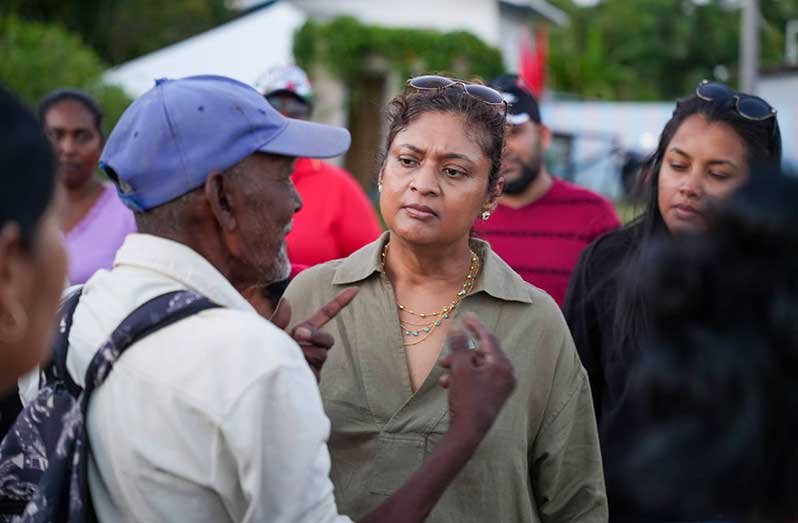
— Manickchand says reliable garbage collection can help change public attitudes
THE Government expended $696.1 million on sanitation and solid waste management during the first half of 2026, as it continued investments aimed at improving garbage collection and disposal systems across the country.
The investment, outlined in the Ministry of Finance’s 2026 Mid-Year Report, covered several interventions aimed at strengthening solid waste management infrastructure and improving the capacity of local authorities to provide reliable services.
Minister of Local Government and Regional Development, Priya Manickchand, has said that reliability in the delivery of services such as garbage collection is also critical to changing public attitudes towards littering and waste disposal.
Speaking on a recent episode of the Guyana Dialogue, Manickchand said people are more likely to properly dispose of their waste when they have confidence that collection systems are reliable and predictable.
“If you start giving people the hope that we can do better, we can be better, we can look better, our services are reliable and predictable, for example, garbage will be picked up on time, and people believe that; then I think people themselves begin to change their own attitudes, with the ad campaigns and so on,” she said.
“If you know your garbage is going to be picked up and there is a bin provided to you, chances are high that you would use that.”
EXPANDING CAPACITY
According to the Mid-Year Report, works advanced on access roads and landfill sites at Zorg-en-Vlygt, Laurentia Catherina, Lusignan, Zorg-en-Hoop and 10 Miles during the first six months of the year.
Upgrades also continued at the Haags Bosch Sanitary Landfill, including construction of a hazardous-waste cell.
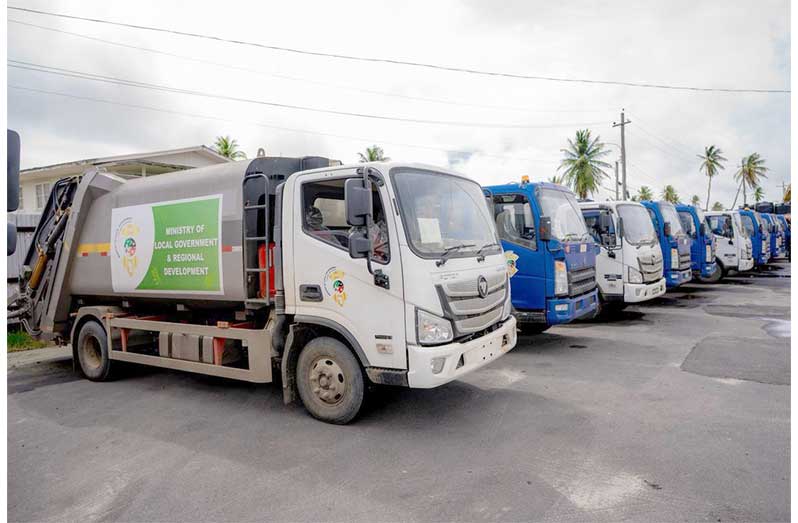
Waste-collection capacity was also expanded with the distribution of 75 garbage compactor trucks across the country’s regions.
The report said the investments form part of comprehensive sanitation and solid waste management programmes intended to strengthen local democratic organs and improve waste-management practices through enhanced disposal infrastructure.
Bulk-waste removal programmes were also implemented across Georgetown, while local government bodies received guidance on the effective operation and maintenance of equipment distributed to them.
The Government has also turned to technology to strengthen the fight against littering.
The Clean592 platform, introduced in April, allows citizens to report littering, illegal dumping and other environmental violations to the Environmental Protection Agency (EPA) for investigation and possible enforcement action.
In June, the Government also began preparation of a National Solid Waste Management Strategic Plan aimed at further improving waste-management systems and guiding long-term investment and policy decisions.
MORE WORK PLANNED
According to the Mid-Year Report, work will continue during the second half of 2026 on regional landfill sites and access roads, recycling programmes, public-awareness and community-engagement initiatives, as well as the continued solid-waste clean-up programme.
Manickchand has maintained that infrastructure and Government spending alone will not create cleaner communities, with changes in individual behaviour also necessary.
She said, however, that dependable public services can help encourage those changes by giving residents practical and reliable options for properly disposing of their waste.
The combination of infrastructural investment, increased collection capacity, enforcement, public education and more reliable services forms part of the Government’s wider effort to improve waste management and create cleaner communities.




