





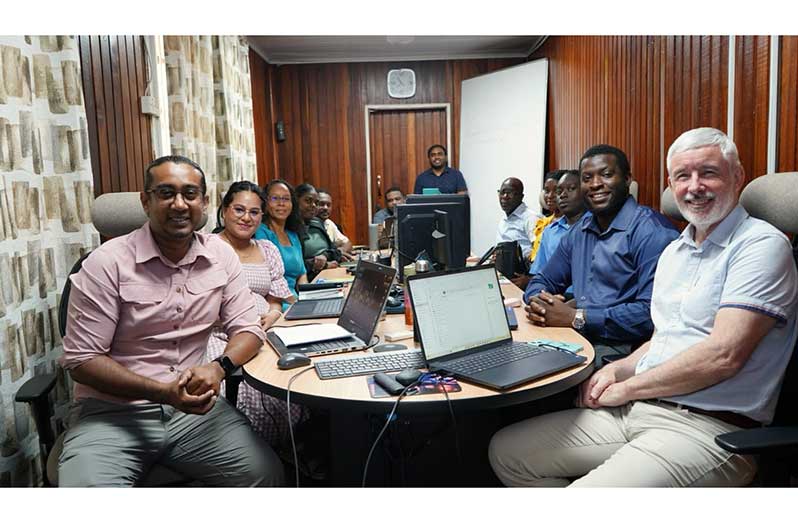
THE Hydrometeorological Service of the Ministry of Agriculture has commenced specialised training in seasonal hydrological forecasting, aimed at strengthening Guyana’s ability to anticipate water-related conditions and improve decision-making in water-resource management.
The programme is being facilitated by Dr Simon Mason of the Stockholm Environment Institute (SEI) and focuses on developing practical skills in forecasting river flows, water levels, drought conditions and rainfall.
The training also examines tools and approaches that could improve the operational use of hydrological forecasts in Guyana, allowing relevant agencies to make better-informed decisions based on anticipated water conditions.
Seasonal hydrological forecasting is important for water-resource planning, agricultural activities and disaster preparedness. By providing advance information on possible changes in rainfall, river flows and water availability, such forecasting can support efforts to manage flood and drought risks and strengthen the resilience of communities and critical infrastructure.
The initiative is also expected to contribute to the continued development of Guyana’s climate services by enhancing technical capacity within the national hydrometeorological system.
The training forms part of broader efforts to improve the use of scientific information in managing the country’s water resources and preparing for climate-related risks.
The involvement of the Stockholm Environment Institute provides an opportunity for Guyanese specialists to strengthen their knowledge of forecasting methods and explore approaches suited to the country’s operational needs.
As Guyana continues to address the challenges associated with variable rainfall and water-related hazards, improved hydrological forecasting capacity could support more effective planning across agriculture, water management and emergency preparedness.





