THE Government spent more than $21 billion on student cash grants and examination fee support during the first half of 2026, with more than 206,000 children benefiting from financial assistance, according to the Government’s 2026 Mid-Year Report.
The report said the expenditure formed part of a broader education investment, with $85.4 billion of the $183.6 billion allocated to the sector for 2026 spent during the first six months of the year.
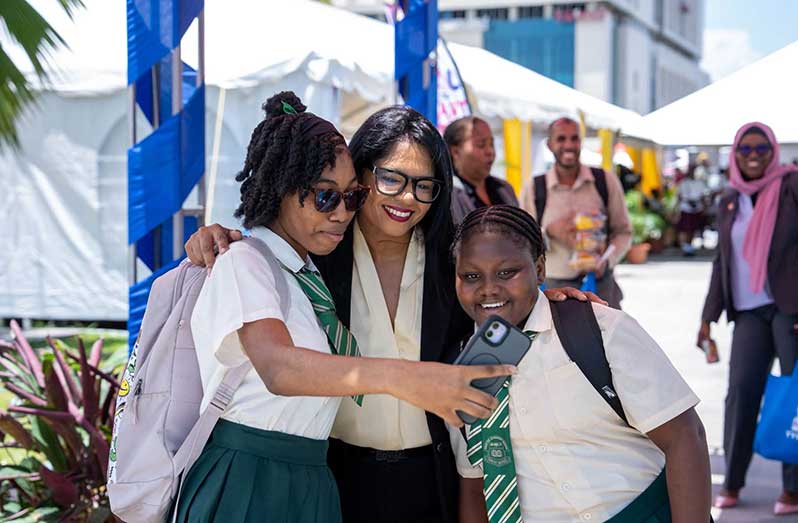
The support included the distribution of the Because We Care, uniform and transportation grants, which began in June. Each eligible child received a combined $85,000, including a new $20,000 transportation component.
More than 206,000 children attending public and private schools benefited from the grants.
Government also covered examination fees for students sitting the Caribbean Secondary Education Certificate (CSEC) and Caribbean Advanced Proficiency Examination (CAPE).
The report said $853.3 million was spent to cover examination fees for 13,071 CSEC candidates and 666 CAPE candidates, with students able to sit up to eight subjects.
The Government’s education expenditure also extended to school infrastructure, teacher development, learning materials and digital education programmes.
Of the $24.3 billion budgeted for school infrastructure, $6.1 billion was spent during the first half of the year on construction, rehabilitation and maintenance works across the country.
Among the facilities completed were the Falls Top and Kanapang Nursery Schools, Karaudarnau Secondary School and the Santa Rosa Dormitory.
Work was also continuing on more than 30 other education facilities nationwide.
Teacher training remained another area of investment, with more than 1,700 teachers participating in continuous professional development programmes during the first six months of 2026.
A further 2,000 teachers are expected to graduate later this year.
From September, the Cyril Potter College of Education is scheduled to introduce specialised Science and Mathematics training for teachers pursuing Early Childhood and Primary Education. Consultations are also continuing on the proposed introduction of an associate degree in STEM Education.
The report said the initiatives are intended to strengthen problem-solving, critical-thinking and technological competencies among teachers and students.
Government also completed a comprehensive needs assessment for textbooks, workbooks and other reading materials during the first half of the year. Distribution is expected during the second half to 511 nursery, 436 primary and 146 secondary schools.
Digital learning initiatives also continued to expand. More than 30,000 Grade 10 and 11 students were registered on the Guyana Digital School platform, where they have access to class presentations, digital textbooks and other learning resources.
By the end of June, 181 schools were also actively using the Guyana Learning Channel.
At the tertiary and technical education levels, the report highlighted the continuation of several programmes aimed at widening access to higher education and skills training.
These include the $7 billion expansion of the University of Guyana’s medicine and engineering programmes, the student loan debt write-off initiative, and training opportunities through the Guyana Online Academy of Learning (GOAL) and the Board of Industrial Training (BIT).
Technical and vocational training also continued through institutions such as the Guyana Technical Training College and BIT, with hundreds of people receiving training in areas including heavy-duty equipment operation, electrical work and information technology.
New training initiatives in drone technology and robotics were also being pursued for persons with disabilities in Region Six.
The Mid-Year Report said the Government’s education spending during the first half of 2026 reflected continued investment in student support, school infrastructure, teacher development, learning resources and expanded opportunities for tertiary and technical education.