
-GPL says, highlights US$800M investment in new transmission and distribution infrastructure
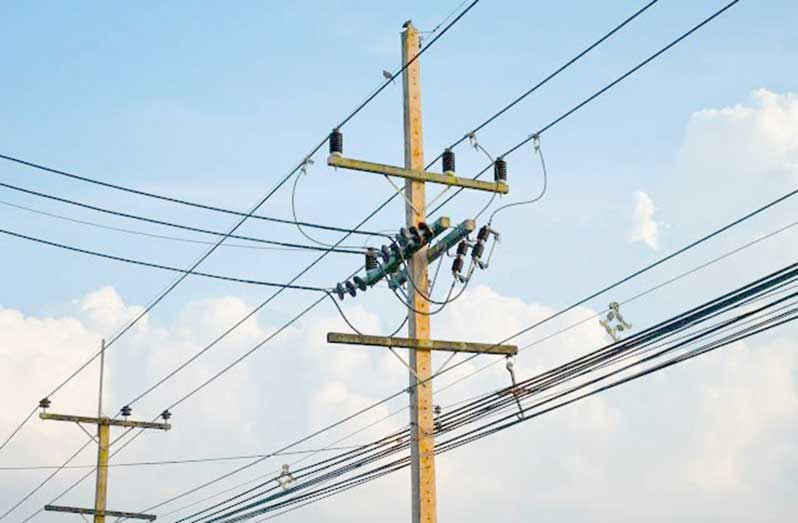
THE Guyana Power and Light (GPL) says the country currently has sufficient generation capacity to meet electricity demand, but the overloaded distribution network is contributing to power outages being experienced by customers across the country.
Speaking to reporters during a news conference on Monday, GPL’s Chief Executive Officer, Kesh Nandlall said that while the power company has increased its generation capacity to 265.6 megawatts, challenges continue to persist.
“The reality is that the distribution system is now facing challenges. That is, feeders are now being overloaded. Transformers are being taxed and overloaded. Some people get voltage fluctuations,” he explained.
By Wednesday, he noted that GPL will add another five megawatts to its generation capacity, bringing its total capacity to 270 megawatts to meet an estimated peak demand of 250 megawatts.
“We are seeing the peak averaging around 250 to 255. Right, so the generation is currently there, and we are also looking at an additional generation option right now,” he added.
Distribution feeders and neighbourhood transformers he explained are buckling under record evening loads fuelled by heat and widespread air-conditioning use between 19:00hrs and 21:00hrs.
Peak demand has surged from 221 MW last year to 257 MW by September 1, 2026.
SHUTDOWNS
Meanwhile, GPL’s Deputy Chief Executive Officer, with responsibility for strategic operations, Bharat Harjohn, linked two recent shutdowns to critical faults centred on the Kingston substation, warning that a fragile balance between soaring demand and available generation is leaving the system highly unstable.
“Between the two power plants at Kingston and Vreed‑en‑Hoop, we have about 30 per cent of the generation that we need to meet our peak demand,” Harjohn said, noting that almost “one‑third” of the system’s power flows through that corridor.
When the transformer faulted and the protection system operated, generation could no longer export from the substation. The generators then “protected themselves” by shutting down, causing the system to collapse.
He explained that restoration on Saturday night was hampered by repeated trips at the Garden of Eden plant, as the utility company attempted to bring units back and re‑energise sections of the grid. Consumers experienced power cycling on and off as the process unfolded. GPL said technical teams have since revisited the plant and reported improvements in its performance during subsequent restoration efforts.
A second major disturbance occurred on Monday morning, again linked to the Kingston–Vreed‑en‑Hoop corridor. Engineers recorded a heavy spike in current on the submarine cable connecting the two points, followed by the trip of transformers at both Vreed‑en‑Hoop and Kingston.

That sequence once more triggered the system’s protective processes, which led to an outage. Investigations are under way to determine the root cause of the spike and the simultaneous transformer trips.
Harjohn stressed that the grid’s current configuration leaves little room for error. Much of GPL’s network is built as a radial system, without adequate “ringed” or looped redundancy.
“So, when a fall develops at the at the critical juncture, especially the substation, it affects the system, and it’s because of our system is designed is more of a radial circuit. It doesn’t have the motor going circuit or redundancy,” he explained.
INVESTMENT
Notably, GPL has been pouring some US$800 million into new transmission and distribution infrastructure.
Head of the power company’s Engineering and Projects Department, Ryan Ross, explained that the investment programme includes new 230-kilovolt transmission lines, additional substations, new 69-kilovolt transmission infrastructure and approximately 350 kilometres of medium-voltage distribution network.
The expansion is also aimed at replacing critical elements of infrastructure dating back to the 1970s.
Crucially, the investment programme is being aligned with the wider gas‑to‑energy initiative and an aggressive push towards a smarter grid. GPL has been instructed to implement a smart grid by 2030 and is embedding that requirement into the current works, so that new lines and substations come with built‑in monitoring and control capabilities.
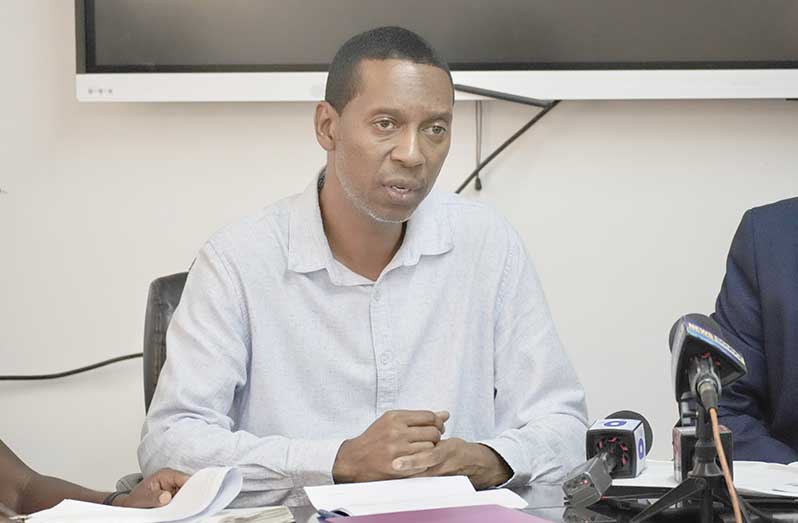
“We’re doing more substations. We’re doing 69 kV lines, which is an extension of the sub transmission system that we currently have. But very importantly, we’re also building out approximately 350 kilometres of distribution network, medium voltage network, that will address the immediate problems that Bharat referenced with overloading of feeders. So, we’re doing it a much higher specification,” he said adding, “With everything that we do now, we need to have visibility as to what is happening, where it is happening, what are the projected demands, and so on and so forth. And we need to do this without the human element, without somebody picking up the phone and tell us there’s an issue here. Rather, we can detect it either before it happens or immediately when it happens in real time.”
These works he noted are being done simultaneously to address the growing concerns of consumers.