







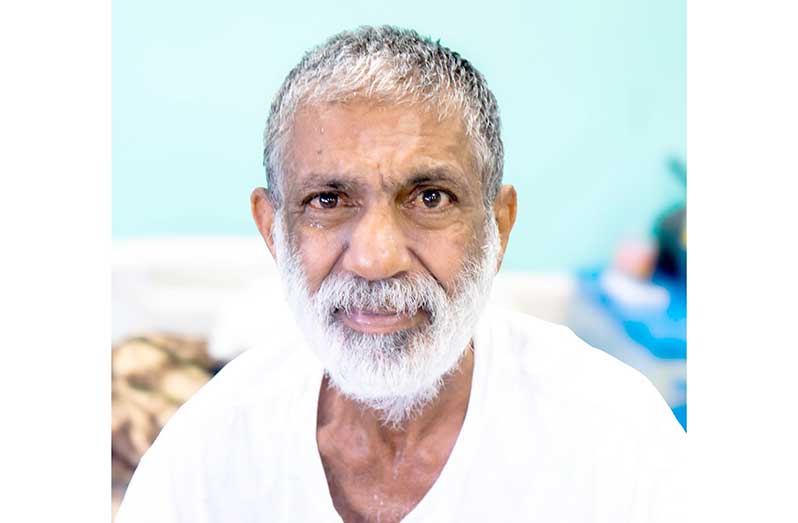
– from ward to theatre, praises teams behind recovery
FOR Shivnarine Shamar, recovering from surgery at the Georgetown Public Hospital Corporation (GPHC) has been about more than treatment. It has also been about the people who have cared for him throughout his stay.
Shamar was admitted to GPHC on July 29 after seeking medical attention and being diagnosed with jaundice and a hernia. Placed under the care of the General Surgery team, he subsequently underwent surgery to repair the hernia and is now recovering.
While the procedure marked an important stage in his treatment, Shamar said the kindness and attention he received from hospital staff have been among the most memorable aspects of his experience.
“Every day they treat me really well,” he said.
During his stay on the Male Surgical Ward, Shamar recalled nurses checking on him regularly, assisting when he needed help and ensuring that his basic needs were met, including receiving his meals on time.
For a patient dealing with illness away from the familiarity of home, such gestures can provide reassurance and comfort.
His experience, however, also offers a glimpse into the extensive network of staff involved in caring for patients at GPHC.
The hospital’s surgical wards are among its busiest areas and often operate at or near full capacity. Maintaining care for hundreds of patients requires the coordinated efforts of staff working around the clock.
Nurses are central to the day-to-day patient experience, providing care and monitoring patients 24 hours a day, seven days a week. Patient Care Assistants, cleaners and other ward-based employees also contribute to maintaining a safe and supportive environment.
For patients requiring surgery, care extends beyond the ward to the operating theatre, where surgeons, anaesthesia personnel, theatre nurses and other members of the surgical team work together to ensure procedures are carried out safely.
Behind that process is the Central Sterile Services Unit (CSSU), which is responsible for processing and preparing the instruments and supplies required for surgical procedures.
The network of care continues after an operation.
Pharmacy staff provide prescribed medications, laboratory teams conduct tests needed to guide diagnosis and treatment, while nutrition personnel help address patients’ dietary needs. Other hospital teams also contribute to the patient’s recovery, even when their work takes place largely out of sight.
For patients, these different services may appear as separate parts of their hospital experience. In reality, they form a connected chain of care, with each team contributing to the overall treatment and recovery process.
Shamar’s experience therefore extends beyond his surgery or the ward where he is recovering. It reflects the collective effort of the doctors, nurses, support staff and specialised teams involved in his care.
As he continues his recovery, his simple observation that staff treat him well serves as a reminder that healthcare is not defined solely by medical procedures.
It is also shaped by the people who check on patients, provide assistance, prepare essential supplies, conduct tests, administer medication, maintain clinical areas and perform the many tasks necessary to keep the hospital functioning.
From the surgical ward to the operating theatre, and from CSSU to the laboratory, pharmacy and nutrition services, each plays a part in helping patients through their journey.
At GPHC, Shamar’s story illustrates a fundamental reality of healthcare: patient care is a collective effort, supported by many hands, including those that patients see and many that they do not.



