






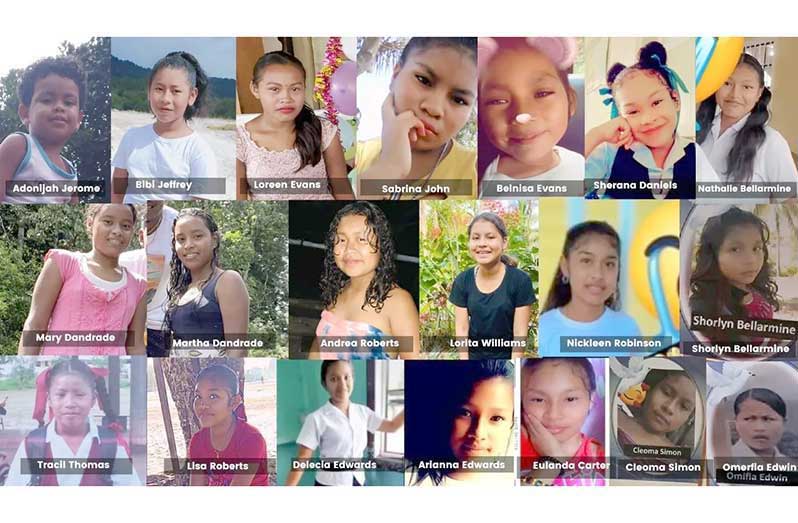
— in defence of lawsuit; cites fire-safety measures & police finding that blaze was deliberately set by student
THE State has maintained that safety measures had been in place at the Mahdia Secondary School before the deadly female dormitory fire, pointing to fire-safety training, evacuation plans and monthly fire drills as it rejected allegations of negligence and wrongdoing.
The position was contained in a Defence filed on August 31, 2026, by Attorney General Anil Nandlall, SC, on behalf of the State, in response to a lawsuit filed by the estates and representatives of 11 children who lost their lives in the May 21, 2023 Mahdia dormitory fire.
The fire claimed the lives of 20 children.
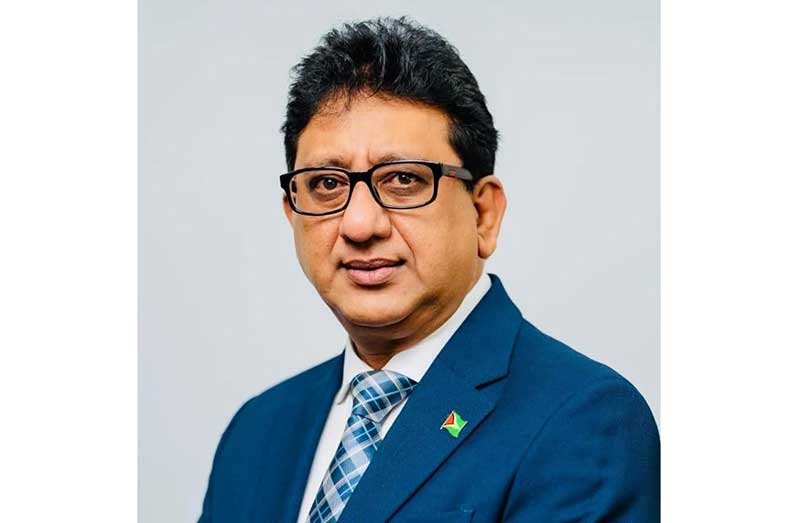
The matter is before the High Court in Demerara, with Nandlall named as the sole respondent and represented by King’s Counsel Darshan Ramdhani and Attorney-at-Law C.V. Satram.
The claimants are represented by Attorney-at-Law Darren Wade.
According to the Defence, members of the Guyana Fire Service (GFS) had visited State agencies in Mahdia, including the school dormitories, during Fire Safety Week in October 2022.
The State said fire-safety training was conducted during those visits, while teachers and students were taught how to properly use fire extinguishers.
It also maintained that evacuation plans had been provided for the school and dormitories and that fire drills had been conducted once every month at the Mahdia Nursery, Primary and Secondary Schools.
The State relied on those measures in rejecting allegations that the students had been exposed to an unreasonable, foreseeable or avoidable risk of death or serious bodily injury.
The Defence also detailed what it said was the response of school personnel and emergency services when the fire erupted.

According to the filing, the fire started at about 11 p.m. on May 21, 2023, after which the House Mother and others responded to screams coming from the female dormitory.
The State said the House Mother took “reasonable action to facilitate the safe exit” of students, while several students escaped or were pulled from the building through windows.
The Defence said firefighters and civilians rescued 28 people from the burning building.
It stated that the fire was reported to a civilian at the Mahdia Fire Station at about 11:12 p.m., after which fire officers went to the scene and attempted to extinguish the blaze.
Injured students were transported to the Mahdia District Hospital for emergency treatment.
The State further pointed to the emergency medical response that followed.
The Defence stated that shortly after midnight, Dr. Shilindra Rajkumar, then Head of General Surgery and the Plastic and Burns Unit at the Georgetown Public Hospital Corporation, was informed of the tragedy and asked to organise a medical response.
A team comprising two burns specialists and two Emergency Room doctors was assembled at Ogle Airport to travel to Mahdia.
By approximately 1:15 a.m. on May 22, President Dr. Irfaan Ali, Prime Minister Brigadier (Ret’d) Mark Phillips, and other senior State officials were at Eugene F. Correia International Airport awaiting transportation to Mahdia.
“Preparations were also made for the transport of these doctors, government officials and medical supplies into Mahdia,” the Defence stated.
The State said that by the time the medical aircraft arrived, medical personnel were treating injured students at the Mahdia District Hospital.
Most critically injured students had already been transported to the airstrip for evacuation to Georgetown.
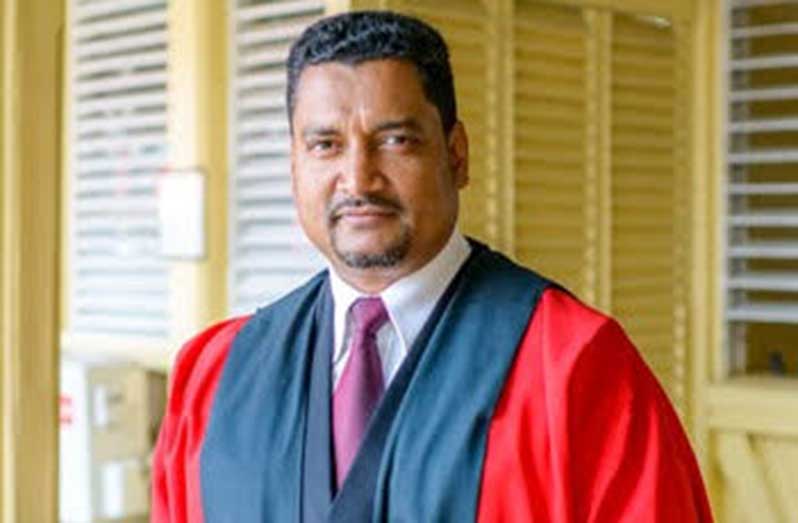
The Defence submitted: “Indeed, by this time, the Government had mobilised doctors, nurses, pilots and other flight crew, members of the Guyana Defence Force, Cabinet members, and their teams—all in an effort to have all hands-on-deck to assist with the swift and careful treatment and evacuation of the students at the Mahdia dormitories.”
The Defence said the Fire Service extinguished the blaze by about 3 a.m. and discovered the bodies of 14 deceased persons inside the dormitory.
It added that 19 injured students remained at the Mahdia District Hospital, including 13 considered stable and six considered critical. All 19 were subsequently transferred to the Georgetown Public Hospital Corporation for advanced medical care.
One student was later transferred to Mount Sinai Health Center in New York for specialised treatment.
The State also outlined the support provided to survivours and families following the tragedy. According to the Defence, relatives were transported to Georgetown from their respective villages so they could be with their children.
Families and survivours were provided with accommodation at hotels and guest houses, while the State covered accommodation, meals, transportation, medical expenses and other related costs.
Medical, social and psychiatric support and counselling were also made available, while a Cabinet member was assigned to each affected family.
The Defence said families received clothing, laptops, cellular phones, phone cards, school supplies, food hampers, essential care packages, school kits, medication, comfort toys and other necessities.
The State also maintained that it fully covered funeral and burial expenses for the deceased students and the five-year-old boy who died in the blaze.
The State further addressed financial assistance offered to families of the deceased and injured survivours.
The Defence stated that families of the deceased were offered a $5 million lump-sum payment, separate from the assistance provided in the immediate aftermath of the fire.
For injured survivours, $3 million was offered to students who suffered serious injuries, while those with less serious injuries were offered $500,000.
The State said the financial assistance was intended, among other things, to assist with medical treatment and medication required outside public medical facilities.
The Defence stated that families accepting the offer were asked to sign agreements acknowledging that they had received independent legal advice from a lawyer of their choice.
It said the exercise was repeated on July 31 and August 1, 2023, and that all families except two had accepted the offer. The State maintained that those two families had been contacted at least three times and that arrangements had been made to transport them to Mahdia for the meetings, but they had refused.
The State’s Defence also relied on the findings of the police investigation into the cause of the fire. It maintained that the investigation had established that the blaze was caused by “the deliberate, intentional and malicious act of a third party.”
The person was identified in the Defence as a student housed in the female dormitory, following the confiscation of her cellular phone.
The Defence said the Director of Public Prosecutions (DPP) subsequently recommended that the student be charged and that, by July 4, 2023, she had been charged with 20 counts of murder.
Against that background, the State rejected the claim that it had acted negligently or improperly.
“In all the circumstances, as tragic as the events of 21st May 2023 at the Mahdia Female Dormitory were, the Defendant denies any allegation of negligence, constitutional violation or impropriety on the part of its servants and/or agents.”
The State also described the lawsuit as “specious, misconceived in law” and asked the High Court to dismiss the proceedings with costs.
The High Court will ultimately determine the competing positions and whether the State bore legal responsibility for the deaths and injuries arising from the Mahdia dormitory fire.
The Defence follows a June 2026 ruling by Acting Chief Justice Navindra Singh, who dismissed applications by the State to strike out legal proceedings brought by relatives of children who died in the Mahdia dormitory fire. The State had argued that the claims were barred by agreements under which the families accepted financial assistance.
The applicants, however, challenged the validity of those agreements, contending that they were signed under duress and without independent legal advice. They also raised questions about whether the persons who signed the agreements had the legal capacity to settle claims on behalf of the estates of the deceased children.
In dismissing the State’s applications, Chief Justice Singh found that the proceedings raised substantial questions of both law and fact that could not be resolved solely by examining the settlement agreements. The court also considered whether the agreements could settle constitutional claims, as distinct from negligence and wrongful-death claims.
The Chief Justice ordered that the proceedings be converted into civil claims, allowing the parties to fully litigate the disputed issues through Statements of Claim and Defences.
Importantly, the ruling did not determine that the compensation agreements were invalid; the agreements remain relevant and may form part of the State’s substantive defence as the matter progresses. The case is scheduled for a Case Management Conference in November 2026, when the court will address the next steps in the proceedings.




