–reveals more than 2,000 squatting areas have been regularised, but occupants of reserves, other restricted areas will have to move
THE government has identified more than 1,000 squatters who will have to be relocated, while more than 2,000 regularisation exercises have been conducted over the past five years to provide legal ownership to persons occupying land that can be regularised.
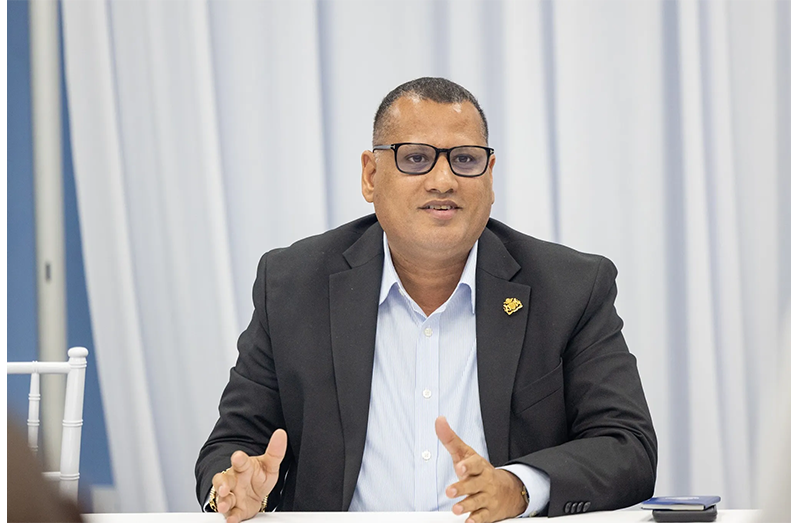
Minister of Housing, Collin Croal, made the disclosure while appearing recently on the Guyana Dialogue, where he defended the government’s approach to squatting and rejected claims that authorities have been uncompassionate in dealing with persons occupying State lands.
Responding to claims that the government has not shown compassion towards squatters, Croal said the issue must first be viewed in the context of persons occupying unregulated areas without any legal ownership rights.
“When we talk about squatting, we are talking about persons who are in unregulated areas. The fact is that, knowingly, these are persons who are occupying land that they have not been legally assigned or over which they have no shape or form of ownership. And so, it is illegal,” he said.
Minister Croal said the government has an “aggressive programme” to address squatting and has maintained that no new squatting will be recognised.
He said a dedicated community development department within the Central Housing and Planning Authority (CH&PA) monitors existing squatting areas and works to determine which communities can be regularised.
Croal added, “We have had an aggressive programme for addressing squatting. We have had an aggressive programme for regularisation. We have had a number in the thousands whereby persons have been able to be regularised and be provided ownership. And so, we have done, for example, over the last five years, we have done over 2,000-plus regularisation exercises.”
According to him, regularisation involves assessing an area to determine whether occupants can remain there and ultimately obtain ownership.
He said that in some instances, minor adjustments may be required to allow for roads, drainage or other infrastructure, but occupants can generally remain in the area.
Regularisation is not possible in all cases, however.
ZERO TOLERANCE POLICY
Persons occupying reserves, areas required for drainage and irrigation, riverbanks and locations close to the seabed fall under what Croal described as the government’s “zero policy tolerance” areas and will have to be relocated.
“If you are living on the riverbank, if you are living near to the seabed, then those are areas that have zero policy tolerance to allow squatting. So, they have to move,” Croal said.
Croal said the ministry has identified more than 1,000 occupants in areas where relocation will be necessary.
“We have logged over 1,000 plus that we recognise that will have to move,” he noted.
He pointed to several locations where persons are occupying reserves, dams and other areas that cannot be regularised, noting that Ministry teams are working with those affected to address the situation.
The minister also addressed concerns about persons who have been occupying State lands for extended periods, noting that some squatters knowingly occupy lands to which they have not been legally assigned and over which they have no form of ownership.
He said the government’s approach involves engaging occupants, issuing notices and, where possible, offering avenues through which they can regularise their situation or apply for housing through the established system.
Croal cited Kaneville, Lusignan, Joe Vieira Park, Annandale, Good Hope and Riverview among the areas where the Ministry is addressing squatting, noting that more than 75 occupants have been documented in Kaneville.
He said persons who can be accommodated through regularisation are being considered, while those occupying areas that cannot be regularised are being addressed through a relocation programme.
Croal also pointed to areas around Ogle, Cummings Lodge, and Plum Park, Sophia, where the Ministry had initially identified between eight and nine households or structures.
According to him, that number has since been reduced to about six following engagements with the occupants.
Those persons, he said, were warned and engaged and, in some cases, given house lots, but he stressed that affected occupants also have a responsibility to engage the Ministry and put their housing arrangements in order.
“Government is working with you to ensure that we give you access or provide an avenue. But the least that you can do is come here at the Ministry and put your house in order. Apply and be like a pending applicant, like anyone else,” Croal said.
The minister maintained that the government’s efforts to address squatting should not be viewed as displacing law-abiding citizens who have been waiting for housing.
He said more than 75,000 applicants have followed the formal process and are currently waiting to be addressed in their respective regions.
According to Croal, those applicants have waited while renting or staying with relatives and other persons, and the government must, therefore, ensure that its housing interventions are fair to those who followed the formal process.
“What makes these other persons different?” Croal questioned, referring to people who occupy State lands illegally while others wait through the official housing system.
He said the government has to balance the needs of formal applicants with the circumstances of persons occupying State lands without legal ownership.
At the same time, Croal said the government will continue regularisation where possible.
However, where occupants are located in areas that cannot safely or legally be regularised, relocation will remain necessary.
The minister said the government has a structured process through which affected persons can be engaged and, where appropriate, assisted with relocation or entry into the formal housing system.
Croal warned that persons who refuse to comply with the process could ultimately face enforcement action.
He reiterated the government’s willingness to work with squatters to regularise their occupation or provide alternative housing, but warned that those who fail to cooperate could ultimately face removal from the property.
“If you don’t abide and you don’t put your house in order, then we will have to come up with the ultimate means of breaking. And that’s a fact,” Croal said.