RECENTLY, my wife accompanied a friend to court over a strange situation involving a man who was claiming the house where she is living as a tenant and pretending to be a colleague of the rightful owner. She, however, recognised after some questioning that something was terribly wrong, and so they went to court.
The magistrate concluded, based on the inconsistencies presented, that this was a trickster. The alleged crook’s lawyer subsequently withdrew from the case and from representing his client, and, after offering some stern advice to his client, left the court’s jurisdiction. The person in question, who, it seems, had befriended the homeowner, was taking advantage of the gentleman’s age, and believed that his tenants could be easily overwhelmed and lacked immediate, trustworthy support nearby.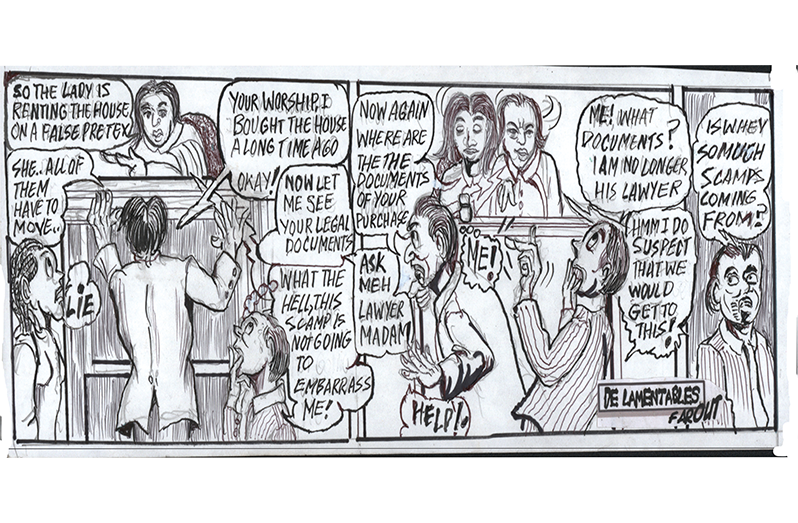
Thus came the scheme of entrapment to launch a brutal criminal act by intimidating the next person in line. He had even borrowed the man’s vehicle, and had not returned it.
I knew of such a gang some years ago that arose in the Kitty area and targeted older people, posing as an official City Hall entity or group, and even claiming to work in their interests. Luckily, this time, a tenant, who was also targeted by a similar crook, was at the location. These individuals came with well-prepared documents designed to intimidate and subdue their targets, leading them to assume the role of innocent victims whose fear would contribute to the criminal act of deception. It did not work because a tenant was astute enough to recognise the flaws that accompanied the trickster’s other errors.
Factually, there are such human crooks in many areas, and we must be vigilant, as these tenants were, to rebuke such creatures.