






–AG says, declares their behaviour unruly, riotous
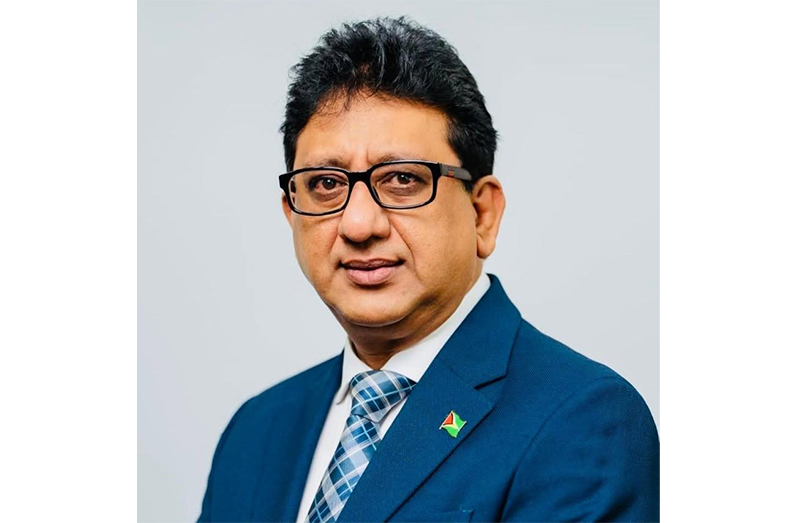
ATTORNEY General and Minister of Legal Affairs Anil Nandlall, SC, has questioned the capacity of opposition leaders to lead the country, accusing them of failing to demonstrate the restraint and responsibility expected of persons in positions of political leadership.
He made the remarks during his weekly programme Issues in the News, while addressing the constitutional right to peaceful protest and recent confrontations surrounding government political meetings.
His comments came amid tensions following protests by a small group led by WIN at an August 4 government outreach led by Vice-president Dr Bharrat Jagdeo in Linden, Region 10 (Upper Demerara-Upper Berbice).
The Attorney General said political leaders have a particular responsibility to exercise restraint when leading supporters, arguing that their conduct must reflect an understanding of the law and the rights of other citizens.
He said, “I put this out there so that leaders will exercise due restraint and will act responsibly when they are shepherding their flocks.”
He subsequently criticised what he described as increasingly unruly behaviour among some Opposition leaders.
“But they are behaving more unruly and more riotous than those whom they are leading,” he added.
Nandlall singled out Terrence Campbell, the parliamentary leader of A Partnership for National Unity (APNU), the country’s second-largest opposition party, for criticism.
He questioned whether Campbell’s conduct demonstrated an adequate understanding of his responsibilities under the law and the Constitution of Guyana.
“I look at one gentleman who is the leader in the parliament for the APNU. His behaviour, and I am not sure whether that fellow has all his faculties intact,” Nandlall said.
He said the conduct and utterances of the opposition parliamentarian were particularly concerning because they occurred in the public domain and were being recorded and broadcast.
“Knowing full well that he is in the public domain and is being videoed and broadcast live, that is not a person who understands his responsibility under the law or the Constitution,” the Attorney General said.
According to him, the conduct also suggested an unwillingness to recognise the rights of others.
“He doesn’t exhibit any evidence that he is prepared to allow anyone else to exercise their rights,” he said.
Nandlall said such conduct does not represent the type of leadership that should be accepted in a modern society.
“This is not the type of leadership that a modern world will ever countenance,” he said.
He went further, arguing that the behaviour of opposition leaders demonstrated that they were not capable of providing national leadership.
“And that is why I say to you that the present crop of leaders in the opposition is not qualified or capable of leading the people of this country,” Nandlall said.
He stressed that his assessment was not intended merely to advance the interests of the governing People’s Progressive Party/Civic (PPP/C).
Nandlall added, “And I don’t say that to promote my party or myself. I say that based upon the objective evidence that is available.”
His criticism formed part of a broader argument about the limits of the constitutional right to protest.
He said while citizens have a fundamental right to assemble and demonstrate peacefully, that right must coexist with the rights of other people.
“You have a right to protest and to do so peacefully, but in the exercise of your right to protest, you can’t interfere with the other people’s right to assemble, to attend the meetings,” he said.
He argued that political leaders should therefore ensure that supporters do not cross the line from peaceful protest into conduct that interferes with another person’s constitutional rights.
Nandlall also criticised politicians whom he accused of placing ordinary supporters at the front of confrontations while remaining behind them.
“They mislead people. You hardly ever see the politicians getting arrested. They go behind the barrier but they put the ordinary people in front,” he said.
He contrasted the recent incidents with protests involving the PPP/C while it was in opposition between 2015 and 2020.
Nandlall said he, President, Dr Irfaan Ali, Vice-president Jagdeo and other PPP/C leaders participated in protests during that period, but maintained that the demonstrations were conducted peacefully and with police permission.
He recalled that protesters also wore armbands identifying their demonstrations as peaceful protests.
The Attorney General further cited a Court of Appeal judgment in Frank Hope v New Guyana Company Limited, quoting Justice R.H. Luckhoo as stating: “Freedom uncontrolled will sooner or later result in anarchy or totalitarianism leading to its overthrow.”
Nandlall used the judgment to reinforce his argument that constitutional freedoms cannot be exercised without regard for the rights of others.
“So, you cannot have uncontrolled freedom,” he noted.
He maintained that the issue was not whether citizens should be allowed to protest, but whether they could exercise that right in a way that prevents others from exercising their own rights.
“When we exercise our rights to protest etc., we must understand that we have other people [who] have rights too,” Nandlall said.
Nandlall also cautioned that freedom of expression has legal boundaries, particularly where a person’s reputation is damaged.
“Not because you have a right to express yourself means that you will do so and tarnish the reputations of others. That is not freedom of speech. That is defamation,” he said.
The Attorney General warned that people who go beyond peaceful protest and engage in unlawful assembly, disorderly behaviour or riotous conduct can be arrested and charged.
His comments come as political tensions remain heightened over protests linked to the MV Barima tragedy and disagreements surrounding government’s outreach meetings.




